We analyzed this claim: is it true that
Karl Deisseroth, Peter Hegemann and Georg Nagel won the 2026 Nobel Prize in Physiology or Medicine for discoveries concerning light-gated ion channels and optogenetics?
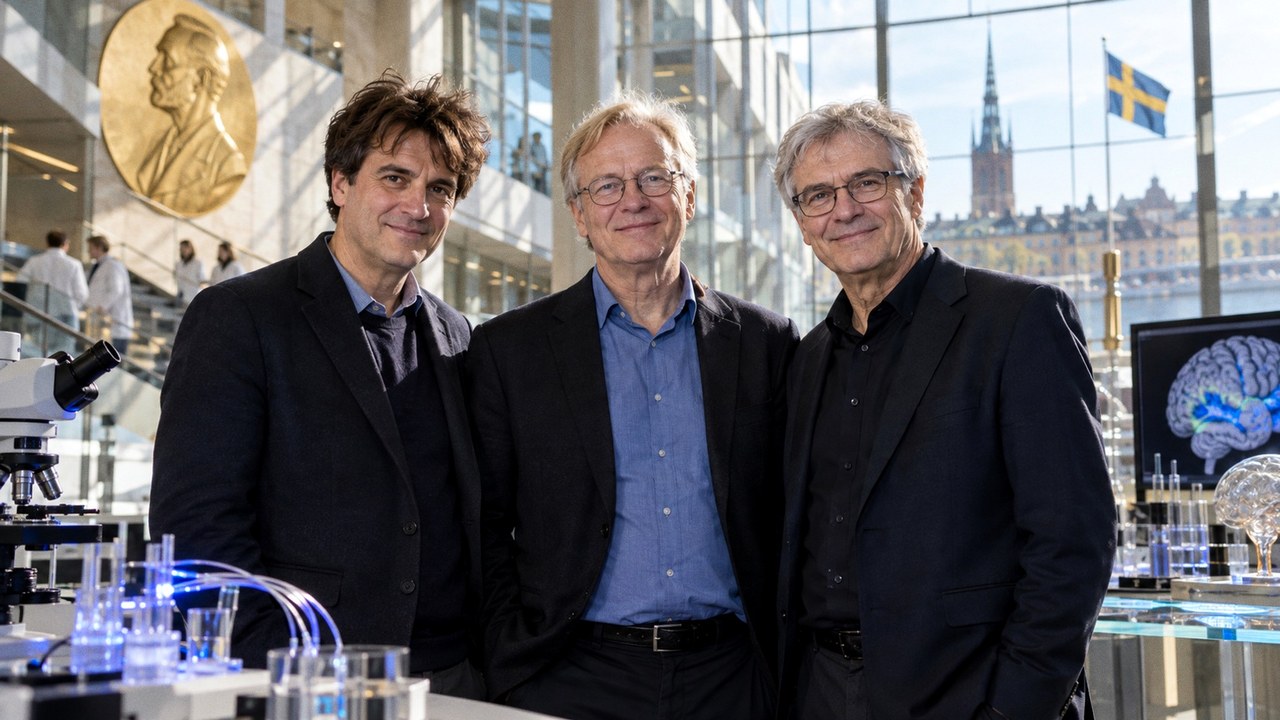
Official announcements by the Nobel Assembly at Karolinska Institutet confirmed the joint award to the three scientists for their discoveries concerning light-gated ion channels and optogenetics.
Nobel Medicine Prize awards light switches for living brain cells
Sweden's Karolinska Institutet awarded the 12-million-kronor 2026 medicine prize to Karl Deisseroth, Peter Hegemann and Georg Nagel for developing optogenetics, which uses light to control brain cells.
In a nutshell
Three scientists won the 2026 Nobel Prize in Physiology or Medicine for turning light-sensitive proteins from pond algae into switches that control living brain cells. The technology, called optogenetics, allows researchers to shine light through thin fibers to trigger specific neurons within milliseconds. This gave neuroscience a way to prove whether certain brain cells cause a behavior instead of just watching them activate. While a 2021 test gave partial sight back to one blind patient, direct cures for human brain disorders remain experimental.
Highlights
- Karl Deisseroth, Peter Hegemann and Georg Nagel share the 12-million-kronor 2026 Nobel Prize in Physiology or Medicine.
- Researchers identified the first light-activated channel protein in green algae in 2002 and a second version in 2003.
- Experiments in 2005 proved that flashes of light can switch mammalian nerve cells on and off in milliseconds.
- A 2021 clinical study reported partial recovery of sight in a patient blinded by retinitis pigmentosa.
From the Editor’s Diary
True understanding of complex systems begins when scientists can test cause and effect directly instead of simply watching events happen side by side.
Who's involved
Karl Deisseroth
a Stanford University neuroscientist and bioengineer who adapted algal light proteins for mammalian nerve cells
goal → map brain circuits to uncover causes of mental and neurological disease
Peter Hegemann
a German biophysicist at Humboldt University of Berlin who studied how single-celled algae detect light
goal → identify light-sensing proteins and turn them into biological tools
Georg Nagel
a German physiologist at the University of Würzburg who proved algal gate proteins function inside animal cells
goal → understand light-gated channels and use them to direct electrical cells
Nobel Assembly at Karolinska Institutet
the Swedish academic panel that selects the Nobel laureates in Physiology or Medicine
goal → recognize major scientific discoveries that benefit humankind
In short
Scientists can now switch individual brain cells on and off with flashes of light, proving which circuits guide thought and action rather than guessing from brain scans. This tool, called optogenetics, transforms brain research by establishing true cause and effect in living tissue.
The technology makes experimental treatments for blindness and neurological illness likely to advance into wider clinical trials next.
That step remains uncertain because delivering light and genes safely into human brains requires years of careful testing.
Flagged by: Life & Health Science Barometer · 11 October 2026
How it unfolded
Scientists discover light gates in green algae
The road to the prize began when researchers found a natural light sensor in pond algae that acts as an electrical gate. Georg Nagel, Peter Hegemann and their team reported channelrhodopsin-1 in 2002, followed by a stronger version in 2003. Years later, on October 5, 2026, the Nobel Assembly formally honored that discovery chain. Official announcements from Karolinska Institutet and news reports confirmed the trio's joint win.
Pond algae yield a light-driven switch
Nagel and Hegemann discovered that light directly opens channelrhodopsin-1 in green algae. In 2003, they isolated channelrhodopsin-2, which lets electrical charges pass into cells when illuminated. Crucially, they showed the protein works when placed inside frog and mammal cells, proving this natural algal switch could operate outside pond water.
Pulses of light steer living brain cells
Karl Deisseroth and colleagues placed channelrhodopsin-2 into mammalian neurons in 2005, triggering nerve signals with millisecond light pulses. By 2007, researchers sent light through implanted optical fibers into living rodent brains. That breakthrough allowed scientists to activate specific brain circuits and directly alter animal behavior.
Laboratory light switches reach human testing
Optogenetics soon spread across global research laboratories to map brain circuits. In 2021, doctors reported that an optogenetic treatment combined with light-emitting goggles partially restored sight to a blind patient with retinitis pigmentosa. Later that year, the Lasker Foundation honored Deisseroth, Hegemann and pioneer Dieter Oesterhelt, highlighting the wide community behind the field.
Stockholm awards the 2026 medicine prize
On October 5, 2026, the Nobel Assembly awarded the medicine prize jointly to Deisseroth, Hegemann and Nagel. The official citation honored their discoveries concerning light-gated ion channels and optogenetics. The Assembly credited Hegemann and Nagel with discovering the algal switches and Deisseroth with turning them into precise controls for mammalian brain circuits.
Scientists separate proven insight from future cures
The day after the prize, scientific discussions focused on what optogenetics can do now and what still lies ahead. Experts noted that while the technique helps map circuits behind Parkinson's disease, depression and epilepsy, human clinical therapies remain experimental. The method's immediate value lies in proving how brain circuits produce behavior rather than curing illness in hospitals today.
Where things stand
Karl Deisseroth, Peter Hegemann and Georg Nagel are the confirmed 2026 Nobel laureates in Physiology or Medicine. The award recognizes their work turning light-sensing algal proteins into biological switches that control individual nerve cells.
The prize honors a proven research method, not an approved medical cure. Beyond an early trial that restored limited sight in one blind patient, applying optogenetics directly to human brain disorders remains an experimental goal rather than daily medical care.
Nobel Prizes 2026

Nobel Academy awards $1.2 million for crisis models
12 October 2026Robert Hall and Michael Woodford share the 2026 economics prize for showing how public expectations shape recessions and interest rates.
Navi Pillay wins Nobel Peace Prize
9 October 2026The South African judge won the 2026 peace prize as US sanctions hit the court she once served.
Anne Carson plans to give away $1.2 million Nobel Prize
9 October 2026The Canadian author won the 2026 Nobel Prize in literature and said she wants to pass the award money to others.
Henri B. Kagan and Kenso Soai share chemistry Nobel
8 October 2026The Swedish academy honours two chemists who showed how life's mirror-image molecules tip decisively to one side
Francis Halzen wins Nobel physics prize
7 October 2026Antarctic ice observatory opens a new view of deep space.