We analyzed this claim: is it true that
Navi Pillay won the 2026 Nobel Peace Prize for her work in international law, including a Rwandan court ruling that recognized rape as an act of genocide?
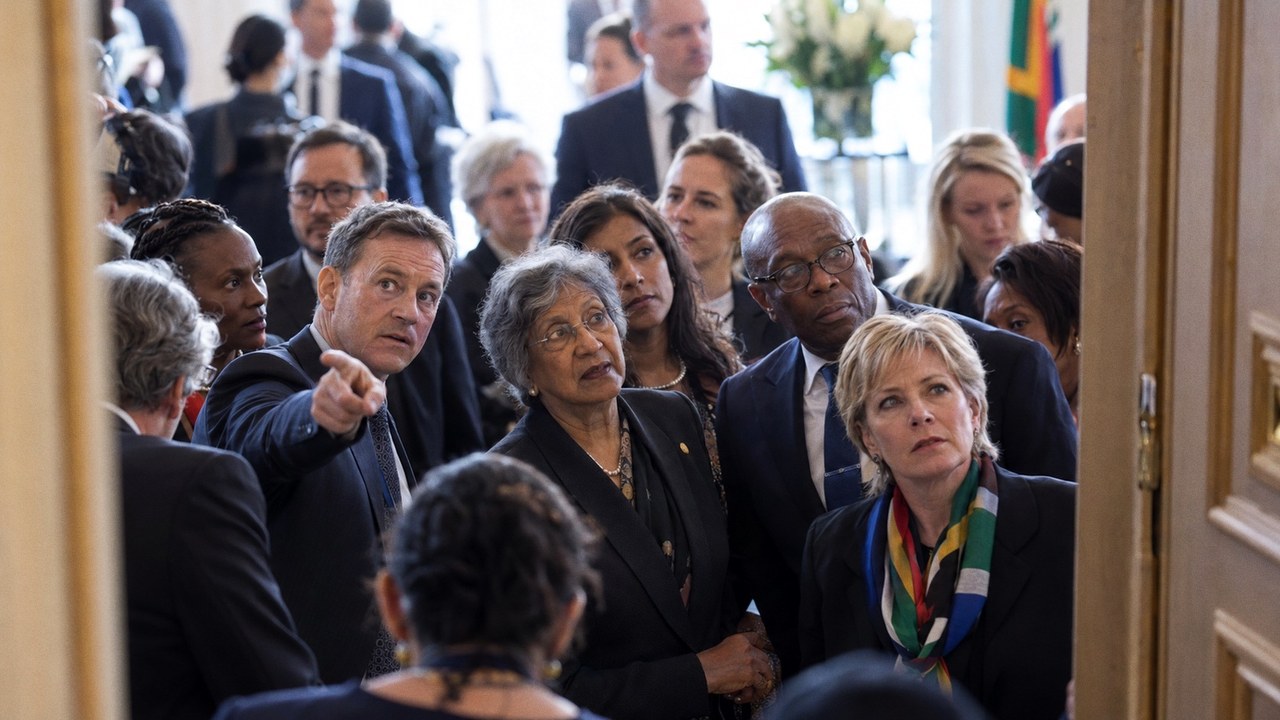
The Norwegian Nobel Committee named Pillay as its 2026 laureate, citing her career and her role as one of three judges on the 1998 Rwanda panel.
Navi Pillay wins Nobel Peace Prize
The South African judge won the 2026 peace prize as US sanctions hit the court she once served.
In a nutshell
South African jurist Navi Pillay won the 2026 Nobel Peace Prize for a career that established landmark rules against war crimes, including a historic 1998 ruling that recognized rape as an act of genocide. The award arrived on the same day the United States imposed sweeping sanctions on the International Criminal Court, illustrating the sharp divide between international bodies honoring global law and powerful governments resisting its authority.
Highlights
- Navi Pillay won the 2026 Nobel Peace Prize for her work defending international law.
- As a judge in 1998, Pillay helped establish that rape can constitute an act of genocide.
- The Nobel Committee selected Pillay from 287 total candidates considered in 2026.
- Hours after the award, the United States imposed broad financial sanctions on the International Criminal Court.
2026 Nobel Peace Prize Candidates
candidatesThe findingIndividual candidates made up the majority of the field considered for the award.
- The breakdown of the 287 nominees considered by the Norwegian Nobel Committee for the 2026 Peace Prize.
- It shows the scope of nominees the committee weighed before choosing to honor international law.
From the Editor’s Diary
International courts can establish enduring legal rules, but their ability to function day to day still depends on the political and financial cooperation of nation-states.
Who's involved
Navanethem "Navi" Pillay
An 85-year-old South African international judge and former United Nations rights leader
goal → Protect international law from political interference and defend victims of atrocities
Norwegian Nobel Committee
The five-member body in Norway that selects the annual peace laureate
goal → Defend international courts and show that lasting peace requires binding rules for all states
International Criminal Tribunal for Rwanda (ICTR)
A United Nations court created in 1994 to try suspects in the Rwandan genocide
goal → Hold perpetrators accountable and establish legal rules to punish mass atrocities
UN Independent International Commission of Inquiry on the Occupied Palestinian Territory
A United Nations fact-finding panel examining rights abuses in Israel and Palestinian lands
goal → Investigate violations and produce evidence for international accountability
Government of Israel
The state whose military conduct in Gaza was examined by Pillay's UN inquiry
goal → Reject allegations of genocide and oppose findings it calls biased
Trump administration
The United States government headed by President Donald Trump
goal → Protect American and Israeli personnel from international prosecution through sanctions
International Criminal Court (ICC)
A permanent global court in The Hague that prosecutes war crimes when nations will not
goal → Keep operating independently and preserve vital banking and political support despite US sanctions
Jean-Paul Akayesu
A former Rwandan town mayor convicted of genocide and crimes against humanity
goal → Avoid prison by appealing against his convictions
In short
The global legal system set up to hold leaders accountable for war crimes received the world's highest honor just as its authority faced direct resistance from powerful states.
This prize makes an escalating diplomatic standoff between world powers and international courts likely to deepen, as governments decide whether to shield these institutions or enforce new restrictions against them.
Whether international justice can withstand that pressure is too early to tell, because its survival depends on whether member nations continue providing funding, banking access, and political backing under US sanctions.
How it unfolded
The Rwanda ruling on sexual violence
The legal foundation of Pillay's recognition began after the 1994 genocide against the Tutsi minority in Rwanda. The United Nations created a special tribunal to try top perpetrators, including former town mayor Jean-Paul Akayesu. During his trial, witnesses recounted systematic sexual violence, prompting prosecutors to add rape charges. On September 2, 1998, a three-judge panel including Pillay convicted Akayesu and ruled that sexual violence constitutes genocide when carried out with the intent to destroy a group. Akayesu received a life sentence the next month.
Expanding the reach of global courts
Appeals judges upheld Akayesu's conviction in 2001, cementing the legal precedent across world law. Pillay later served as president of the Rwanda court before joining the newly formed International Criminal Court in 2003 as a permanent judge. In 2008, she became the United Nations High Commissioner for Human Rights, shifting from presiding over trials to investigating state conduct worldwide. By 2019, she returned to judicial duties when The Gambia named her as an ad hoc judge in its genocide case against Myanmar at the International Court of Justice.
The Gaza inquiry draws fierce debate
Pillay stepped into intense political controversy after the United Nations appointed her in 2021 to chair an independent panel examining human rights violations in Israel and Palestinian territories. Following the October 7, 2023 attacks by Hamas and the ensuing war, the commission examined actions by both Palestinian armed groups and the Israeli military. In September 2025, the panel released a report finding that Israeli forces committed genocide against Palestinians in Gaza. Israel rejected the conclusions as biased, noting the report was an investigative finding rather than a final court verdict.
A prize awarded under political pressure
The Norwegian Nobel Committee chose Pillay from 287 official candidates, emphasizing that international treaties are essential to stop powerful states from acting without limits. The award recognized her work against apartheid, her Rwanda rulings, and her recent Myanmar duties. In Nuremberg, Pillay dedicated the 12 million Swedish kronor prize to victims of atrocities and cautioned governments against weakening global legal norms.
Oslo names a veteran jurist
The Norwegian Nobel Committee announced in Oslo on October 9 that Navi Pillay won the 2026 Nobel Peace Prize. Committee leader Jørgen Watne Frydnes delivered the decision at 11:00 CEST (09:00 UTC), citing her career defending international law. Reuters reported the confirmation three minutes later, followed by other global news outlets. Pillay learned of her selection while attending a legal conference in Nuremberg, Germany, and initially questioned if the news was real before dedicating the honor to victims of war crimes.
Washington issues sanctions on the court
Global reaction divided immediately after the announcement. South African President Cyril Ramaphosa and United Nations officials praised the decision, while Israel criticized the committee for honoring a jurist who accused its military of genocide. Hours later, the Trump administration placed broad financial sanctions on the International Criminal Court, barring transactions with the body. US Secretary of State Marco Rubio said the court improperly pursued American and Israeli figures. The court rejected the sanctions as an assault on its judicial independence, leaving member countries to decide how to keep the institution functioning.
Where things stand
Navi Pillay is officially the 2026 Nobel Peace Prize laureate. The award will be formally presented in Oslo on December 10, 2026, accompanied by a prize of 12 million Swedish kronor.
The immediate uncertainty facing international justice is how the International Criminal Court will maintain daily operations under new US sanctions that block transactions and freeze assets. Those measures give counterparties six months to wind down business with the court, leaving its future capacity dependent on how member states respond.
Nobel Prizes 2026
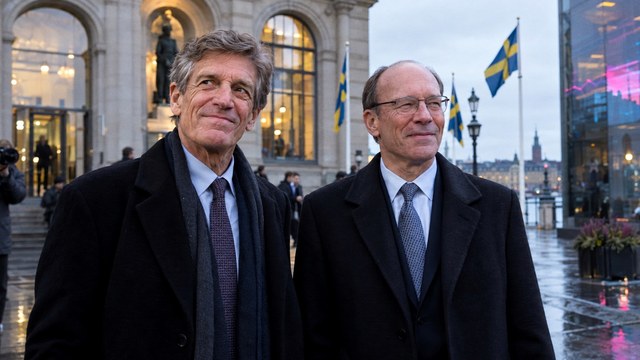
Nobel Academy awards $1.2 million for crisis models
12 October 2026Robert Hall and Michael Woodford share the 2026 economics prize for showing how public expectations shape recessions and interest rates.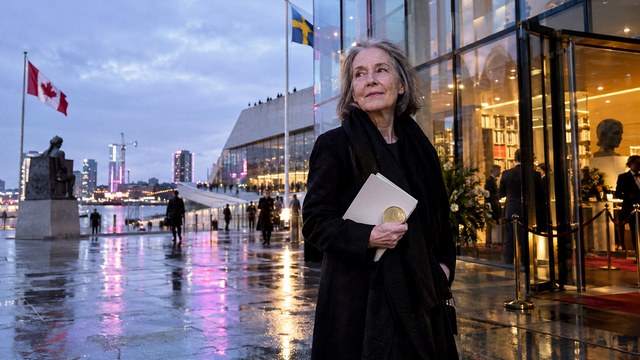
Anne Carson plans to give away $1.2 million Nobel Prize
9 October 2026The Canadian author won the 2026 Nobel Prize in literature and said she wants to pass the award money to others.
Henri B. Kagan and Kenso Soai share chemistry Nobel
8 October 2026The Swedish academy honours two chemists who showed how life's mirror-image molecules tip decisively to one side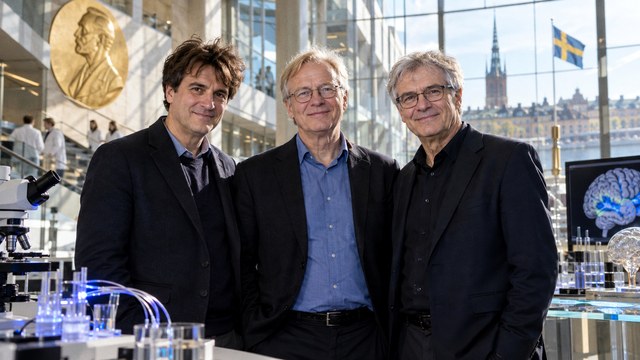
Nobel Medicine Prize awards light switches for living brain cells
8 October 2026Sweden's Karolinska Institutet awarded the 12-million-kronor 2026 medicine prize to Karl Deisseroth, Peter Hegemann and Georg Nagel for developing optogenetics, which uses light to control brain cells.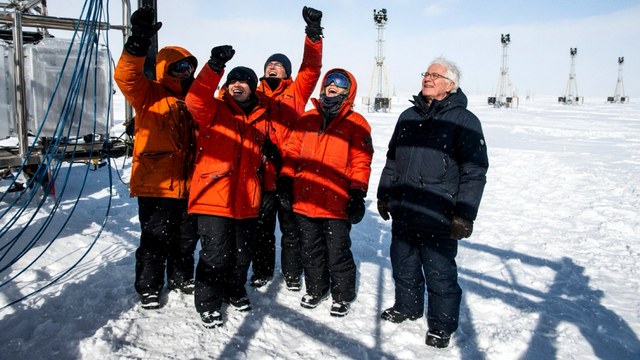
Francis Halzen wins Nobel physics prize
7 October 2026Antarctic ice observatory opens a new view of deep space.
Sources
- United Nations Independent International Commission of Inquiry, report A/HRC/60/CRP.3
- United Nations, commission announcement of findings and investigative background
- Norwegian Nobel Committee, official 2026 Peace Prize announcement and full citation
- Nobel Peace Prize, official Navi Pillay laureate biography and explanation
- Associated Press, Stefanie Dazio, Jamey Keaten and Kostya Manenkov, reporting from Oslo and Nuremberg
- AFP, international wire coverage and Pillay's reaction
- Al Jazeera and Reuters, coverage of the award and Rwanda precedent
- US Department of State, Secretary Marco Rubio's statement imposing sanctions on the International Criminal Court; indexed official text, direct page access restricted
- Reuters, Humeyra Pamuk, Steve Holland and Anthony Deutsch, original reporting on new ICC sanctions, published 14:02 UTC
- Associated Press, Matthew Lee, reporting on sanctions, operational restrictions and evidence of advance preparation