Lab Wins Clashed with Epidemic Reality
A week of hard-won cancer approvals collided with failed drug trials and deadly viral spread.
Other links
World Health OrganizationDemocratic Republic of the Congo health authoritiesUS Food and Drug AdministrationArgenxIn a nutshell
Neutral (−9). Pressure: Outbreaks and epidemics (−71) and Global health (−48); support: Approvals and access (+44) and Gene and cell therapy (+29).
Highlights
- No gauge moved beyond its usual range.
The score of every gauge
−100 … +100- The needle starts at 0 at the top: right in blue for a plus, left in red for a minus, the ticks counting the way from 0; a dashed scale is quiet.
- Score — −100 maximum stress … +100 calm
Where the activity was
0–100| Outbreaks and epidemics | 100 |
|---|---|
| Cancer | 91 |
| Global health | 89 |
| Clinical trial results | 84 |
| Approvals and access | 83 |
| Funding and freedom | 79 |
| Public trust and misinformation | 78 |
| Mental health | 76 |
| Basic biology | 73 |
| Gene and cell therapy | 68 |
- How much happened to each gauge in this window, 0–100.
- Activity — 0–100
- Activity is not direction: a busy gauge can be calm, a quiet one tense.
From the Editor’s Diary
The busiest gauge: Outbreaks and epidemics — activity 100 of 100.
In short
A seven-day stretch brought genuine progress against cancer, drug-resistant infections and inherited blindness, yet trial failures and runaway viral outbreaks quickly checked that optimism. US regulators cleared new uses for established oncology drugs based on randomized trials covering 712 and 654 patients, while an experimental gene therapy improved light sensitivity in six of ten patients with severe vision loss. But rigor dictates distinction: the cancer approvals rest on firm late-stage proof, while the vision study remains a preliminary test.
The clinical setbacks arrived with equal force. A late-stage study evaluating efgartigimod for the autoimmune disorder Sjögren's disease was abandoned for futility. A glioblastoma vaccine failed its primary overall-survival target in a randomized mid-stage trial, and regulators flagged patient deaths during testing of an experimental schizophrenia drug. Meanwhile, a promising pneumococcal vaccine missed two specific strain benchmarks despite matching standard immune responses on others.
The most urgent human toll came from infectious disease. The World Health Organization reported 8,728 confirmed Bundibugyo Ebola cases and 4,205 deaths in the Democratic Republic of the Congo through 6 October, with a fatal case crossing into Kenya. In the United States, the Centers for Disease Control and Prevention confirmed 4,080 measles cases in 2026 as of 8 October. Neither crisis means scientific discovery has stalled, but both prove that broken vaccination coverage and brittle health systems can render existing medicine powerless.
Stories from this reading
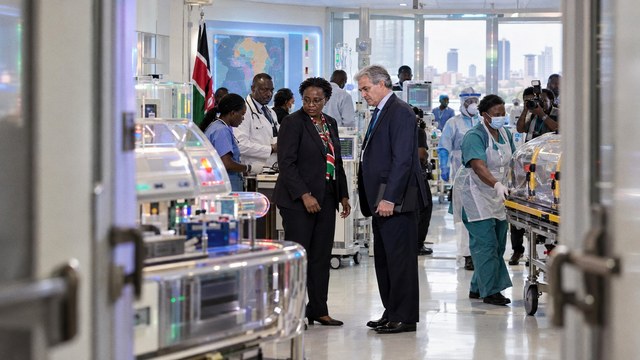
Kenya confirms fatal Ebola case in traveler
7 October 2026Health officials race to trace flight contacts after an infected citizen arrives from Congo.
MimiVax brain cancer vaccine misses key survival goal
11 October 2026A clinical trial found SurVaxM extended life for younger glioblastoma patients, but missed statistical significance across all adults.
How Pond Algae Gave Medicine a Light Switch
10 October 2026A light-activated protein found in green algae is helping scientists restore partial sight to blind patients.
Pennsylvania measles cases pass 1,004 as risk spreads
6 October 2026Rising infections in two states push the nation toward losing elimination status.
How it unfolded
Late-Stage Vaccine Hopes Clash with Autoimmune Defeat
Late-phase clinical testing yielded conflicting signals rather than straightforward breakthroughs. Vaxcyte announced that its candidate shot VAX-31 matched immune responses across most targeted bacteria in adults aged 50 and older. But it missed two prespecified antibody comparisons against Merck's rival vaccine, and the lab data showed only immune markers, not proven prevention against real-world lung infections.
That partial success was immediately countered on 8 October when an independent monitoring panel pulled the plug on Argenx's late-stage UNITY trial. The study tested efgartigimod in moderate-to-severe Sjögren's disease, an autoimmune condition causing debilitating dryness. An analysis of more than 500 patients out of roughly 630 enrolled concluded the drug could not achieve its primary goal. The company halted development for futility, clarifying that no new safety issues had surfaced, while a separate 220-person mid-stage study of the weight-loss compound petrelintide showed promising results without yet proving itself in late-stage trials.
The sudden cancellation closed the door on a major new autoimmune use for efgartigimod, leaving patients without a targeted option and re-establishing the high bar for late-stage drug validation.
Argenx halts major drug trial as sector splits
12 October 2026Shares tumble as a key autoimmune study folds while vaccine rival Vaxcyte surges.4 sources
Nobel Prize Celebrates Cellular Tool Rather Than Clinical Cures
The 2026 Nobel Prize in Physiology or Medicine was awarded on 5 October to Karl Deisseroth, Peter Hegemann and Georg Nagel for [[7719018d | pioneering optogenetics]]—the use of light-sensitive proteins to control living brain cells with light. The technology has transformed basic neuroscience by enabling researchers to map circuit functions in laboratory animals with millisecond precision.
The small retinal gene-therapy study published later in the week highlighted how this tool might eventually help humans. But the Nobel prize honored foundational discoveries made over decades, not a newly minted medical cure, and the mechanism does not yet provide treatments for neurodegenerative diseases like Parkinson's, Alzheimer's or psychiatric illnesses.
The award affirmed optogenetics as an indispensable tool for experimental laboratories, even as practical therapeutic applications remain in their infancy.

Nobel Medicine Prize awards light switches for living brain cells
8 October 2026Sweden's Karolinska Institutet awarded the 12-million-kronor 2026 medicine prize to Karl Deisseroth, Peter Hegemann and Georg Nagel for developing optogenetics, which uses light to control brain cells.13 sources
Mental Health Reform Confronts Severe Drug Safety Flags
Ambitious mental health plans encountered immediate safety hurdles and institutional strain. The FDA opened public comment on protocols for federally funded trials of ibogaine, a psychedelic compound eyed for opioid addiction and post-traumatic stress disorder, where dangerous heart rhythm irregularities remain an unresolved risk.
On 8 October, regulators raised serious alarms over evenamide, an experimental drug for treatment-resistant schizophrenia, reporting four patient deaths in drug-treated groups compared to one in placebo arms across clinical trials. While the data do not prove the drug caused the fatalities, the signal immediately clouded its clinical path. These safety alerts coincided with new guidance from the World Health Organization on 9 October urging a transition from long-stay psychiatric wards to community support, alongside a UK review warning of severe backlogs across youth mental-health and neurodevelopmental services.
The week opened regulatory doors to study unapproved therapies like ibogaine, but unresolved drug toxicities and fragile community services kept true clinical reform out of reach.
Ebola Leaps an International Border as Measles Surges
The week's most critical public health crisis escalated on 8 October when the WHO reported 8,728 confirmed cases and 4,205 deaths from Bundibugyo Ebola in the Democratic Republic of the Congo through 6 October. The epidemic carried an unadjusted fatality rate of 48.2% across 64 health zones in seven provinces.
The crisis became an international emergency when [[fffc018d | a traveler arriving from Congo died]] of laboratory-confirmed Ebola in Kenya on 5 October, triggering urgent cross-border contact tracing. A separate suspected case in Kenya returned negative test results on 8 October, but the initial fatality stood. Meanwhile in the United States, CDC records updated on 9 October tallied 4,080 confirmed measles cases during 2026 as of 8 October, with 96% tied to localized outbreaks. A subsequent 10 October WHO bulletin noted that a Russian lab technician's death was caused by pneumonia of undetermined origin, with tests showing no plague pathogen.
What began as a contained regional outbreak transformed into an active international contagion, confronting health authorities with cross-border transmission while basic immunization gaps fueled preventable disease at home.
The full story is being researched
coming soon
Academic Publishing Probes Reinforce Need for Independent Scrutiny
Integrity concerns reached the academic literature on 6 October when Retraction Watch reported that journal publishers were reviewing dozens of rheumatology studies linked to researcher Tamer Gheita. Editors noted statistical anomalies, unusual citation networks and accelerated peer-review approvals.
Publisher Elsevier confirmed active investigations, while Gheita denied wrongdoing, arguing that legitimate critiques should proceed through standard editorial corrections. His prior resignation was background context rather than a new finding, and on 8 October, Nature Medicine issued a formal author correction on an unrelated immunology study, underscoring the vital distinction between minor errata and full paper retractions.
The investigations brought formal scrutiny to published medical literature, reminding clinicians that peer-reviewed claims require sustained independent auditing before altering clinical guidelines.
Cellular Ageing Research Advances Without a Formula for Longevity
Laboratory research into biological ageing uncovered cellular trends across species without offering any immediate remedy for human decline. A Nature Aging study showed that specific cellular fat molecules, known as lipids, lengthen as humans, mice, flies and nematode worms age. Suppressing the lipid-modifying gene Plb1 in worms shortened these fatty chains and extended their lifespans, suggesting an underlying metabolic trigger.
An accompanying scientific commentary highlighted the biological insight, but researchers warned the findings do not demonstrate that altering lipid length can lengthen human lives or stall cognitive decline. Simultaneously, a historical review of centenarians in the Sardinian village of Bolotana highlighted extreme female longevity, though the retrospective parish records could not identify whether specific diets, genetics or community bonds drove the outcome.
The findings deepened scientific understanding of metabolic changes during ageing, while proving that a verified anti-ageing therapy remains completely unproven.
Policy Hurdles and Funding Gaps Paralyze Epidemic Defenses
International containment efforts faltered under diplomatic and operational friction. A Reuters investigation on 6 October revealed that US policies governing medical evacuation and repatriation for exposed personnel severely hindered non-governmental groups from deploying frontline clinical volunteers into Congo's Ebola hot zones.
The consequences surfaced throughout WHO field data: high mortality rates, steady geographic spread and widespread deaths occurring outside isolation wards. Highlighting systemic vulnerability, a Lancet Commission report cataloged seventeen severe global health risks, including antimicrobial resistance and shrinking foreign aid. While the commission's casualty estimates are forward-looking models rather than observed casualties, the analysis stressed that cutting-edge therapies mean little without field surveillance, stable funding and international cooperation.
These operational constraints tied the hands of frontline responders, showing how political bottlenecks can disable emergency medical missions even as viral transmission accelerates.
Regulators Greenlight Targeted Therapies for Narrow Patient Groups
Regulators delivered concrete options for specific patient groups on 7 October when the US Food and Drug Administration cleared tucatinib combined with trastuzumab and pertuzumab. Intended as maintenance therapy for adults with advanced HER2-positive breast cancer, the regimen extended median progression-free survival to 24.9 months versus 16.3 months for placebo in a 654-patient randomized trial. The treatment cut the risk of disease progression or death by 36%, though overall-survival figures remain immature.
The agency followed on 8 October by approving immunotherapy drug atezolizumab alongside chemotherapy for stage-three mismatch-repair-deficient colon cancer following surgery. The decision rested on a 712-patient trial showing a 50% drop in recurrence or mortality risk. One day later, the FDA authorized pritelivir for treatment-resistant herpes simplex lesions in vulnerable immunocompromised adults after a 101-patient study demonstrated a 62.7% healing rate at 28 days compared to 34% on existing treatments, alongside approval for the monthly schizophrenia injection Weltruza.
These regulatory clearances transformed previously experimental combinations into immediate clinical options, shifting the central challenge from trial validation to real-world insurance coverage and patient access.

FDA clears Pfizer pill to delay breast cancer
10 October 2026Regulators approve tucatinib to help keep advanced disease from growing after initial treatment, but warn of severe liver risks.13 sources
Proven Colon Cancer Therapy Contrasts with Brain Tumor Setback
The stark contrast in cancer research became obvious when positive colon cancer data met an inconclusive trial for brain tumors. The FDA's green light for postoperative atezolizumab in stage-three colon cancer was driven by the 712-patient ATOMIC trial, which demonstrated a clear disease-free survival advantage over chemotherapy alone.
By contrast, the experimental vaccine [[fa1e018d | SurVaxM failed to hit its primary goal]] of prolonging overall survival in newly diagnosed glioblastoma, an aggressive brain cancer. In the 233-patient SURVIVE trial, patients receiving the vaccine lived a median of 22.8 months versus 20.3 months for the control arm, missing statistical significance with a p-value of 0.076. A prespecified analysis of patients aged 65 and younger pointed to longer survival, but researchers conceded the subgroup finding cannot overturn the negative overall result.
The divergence established atezolizumab as an immediate postoperative standard for select colon cancers, while leaving SurVaxM unable to claim a place in routine brain-tumor care.
FDA cuts colon cancer relapse risk with Roche drug
11 October 2026Regulators cleared atezolizumab alongside standard chemotherapy for stage III patients whose tumors carry a specific DNA repair defect.2 sources
Light-Sensitive Eye Injections Show Early Visual Response
Early clinical results offered a glimpse of biological activity in restoring limited vision to patients with advanced retinitis pigmentosa, an inherited retinal condition causing blindness. Ten volunteers received an eye injection of a harmless viral vector carrying ChrimsonR, a light-sensitive algal protein, paired with specialized goggles that project amplified light pulses onto the retina.
Seven participants demonstrated increased sensitivity to light, and six reached a functional response threshold. However, the open-label study was designed primarily to evaluate safety and lacked an untreated control group. Furthermore, investigators did not specify the functional improvement benchmark before the study began. Nine participants reported a combined 34 eye-related adverse events, including one severe temporary arterial blockage, and while several patients could identify or locate objects, none regained normal vision.
The trial proved that light-activated gene therapy can alter human retinal response, but it stopped far short of providing a licensed treatment or a general cure for blindness.
Lab-Grown Lungs Gain Immune Defenses as Cell Modeling Expands
Laboratory researchers funded by the US National Institutes of Health engineered microscopic lung models that retain resident human immune cells capable of defending against respiratory viruses. In cell-culture experiments, an immune-stimulating compound blunted subsequent viral infections inside the cultured tissue. Because these mini-lungs rely on human cells, they can uncover disease behaviors that standard animal testing overlooks, though the dish experiments do not yet demonstrate clinical disease prevention in living people.
Simultaneously, the private-public Biohub alliance linked academic teams, tech companies and government agencies to commit roughly $1.8 billion in funding and computational resources for cellular modeling. The initiative aims to simulate complex cellular responses to novel drugs before physical testing begins. Yet organizers stressed the capital represents a research platform investment rather than proof that computer models can reliably replace clinical testing.
These developments unlocked richer laboratory tools for testing respiratory infections, while highlighting how far computer simulations remain from replacing direct clinical drug validation.
Global Guidelines Restrict Child Obesity Drugs as Adult Trials Advance
On 7 October, the World Health Organization issued its first global guidelines on managing childhood and adolescent obesity, estimating that 170 million young people aged five to nineteen lived with the condition in 2024. The agency advised against prescribing weight-loss drugs or conducting bariatric surgery in children under ten, emphasizing lifestyle and nutritional support instead and reserving medical therapy strictly for older adolescents under comprehensive clinical care.
Against that cautious baseline, mid-stage drug development pushed ahead for adults. A randomized phase-two trial of petrelintide in 220 adults with type-two diabetes and excess weight demonstrated an average body-weight reduction of 7.4% to 9.2% over 28 weeks, compared with just 2% on placebo. Yet researchers noted that larger phase-three studies remain essential to verify long-term safety and cardiovascular impact.
The WHO's guidance placed tight international boundaries on pediatric drug interventions, even as promising mid-stage data widened the commercial horizon for adult weight loss.
Hard Evidence, Early Signals and Public Health Reality
Science made no single leap to remake medicine this week. Instead, seven days of contradictory evidence demonstrated why clinical results require careful grading. Definitive, randomized patient studies cleared new paths for targeted cancer care, whereas an unblinded ten-person trial in eye disease delivered only an initial sign of biological activity.
At the same time, laboratory antibody measurements for an experimental vaccine failed to confirm actual protection from disease. Outright trial cancellations and regulatory safety warnings served as sober counterweights to corporate claims. Beyond hospital walls, thousands of preventable deaths from Ebola and an escalating [[3cc1018d | surge in domestic measles cases]] exposed the stubborn gap between bench science and frontline healthcare. These developments unfolded across the United States and central Africa, but their lessons on research integrity and epidemic readiness apply worldwide.
Where things stand
The seven-day window closed with a clear hierarchy of medical evidence: rigorous, randomized late-stage trials delivered verifiable cancer advances, while early optogenetic experiments and lab models offered biological proof of concept without therapeutic scale. Counterbalancing these gains were severe clinical setbacks, including a failed phase-three autoimmune trial, missed trial endpoints and drug safety alerts. Meanwhile, foundational research funding remained complicated by legal challenges even as early-career grants set records. Beyond laboratory walls, none of the week's metabolic findings produced a viable treatment to reverse human ageing.
The immediate focus shifts to containment and safety verification: upcoming WHO Ebola transmission updates and cross-border contact tracing in Kenya; CDC's next surveillance tally for US measles; regulatory follow-up on evenamide clinical trial deaths; complete peer-reviewed datasets for VAX-31 and SurVaxM; real-world commercial access following the cancer and antiviral drug approvals; and public responses to the FDA's ibogaine trial design review closing on 20 November 2026. The larger unresolved dilemma is whether modern medical science can translate bench discoveries into equitable public health protection when logistics, funding and health systems break down.
Who's involved
World Health Organization
United Nations public-health agency tracking global epidemics
goal → Stop the spread of Ebola and expand international prevention and psychiatric support
Democratic Republic of the Congo health authorities
National and provincial agencies leading the central African epidemic response
goal → Accelerate disease tracking, patient isolation and contact tracing
Kenya health authorities
National and regional disease-surveillance teams
goal → Halt local transmission following a fatal imported Ebola infection
US Food and Drug Administration
US federal agency regulating prescription drugs and clinical studies
goal → Approve effective therapies while investigating clinical trial safety flags
US Centers for Disease Control and Prevention
US federal public-health agency monitoring domestic outbreaks
goal → Track measles infections and strengthen community vaccination efforts
Genentech and Pfizer
Pharmaceutical manufacturers sponsoring the newly authorized cancer therapies
goal → Broaden commercial access to clinically proven cancer treatments
Argenx
Biotechnology company developing autoimmune antibody treatments
goal → Wind down an ineffective Sjögren's disease trial while protecting approved drug uses
MimiVax and Roswell Park Comprehensive Cancer Center
Biotechnology firm and cancer research hospital testing an experimental brain-tumor vaccine
goal → Assess whether patient age trends justify further clinical trials for SurVaxM
GenSight Biologics and optogenetics investigators
Biotechnology company and clinical researchers evaluating light-activated gene therapy
goal → Confirm safety and meaningful visual recovery across larger patient groups
Vaxcyte
Biotechnology developer behind the experimental 31-strain pneumonia vaccine
goal → Advance late-stage clinical development and resolve missed antibody benchmarks
National Institutes of Health
Primary US government funder of basic and clinical medical research
goal → Finance early-career researchers and build long-term biological computing platforms
Biohub and its research partners
Public-private research alliance linking tech leaders, universities and government agencies
goal → Generate cell datasets and predictive computer models for drug testing