Global Crises Converge on Key Energy Corridors
Escalating regional clashes and border incursions raise supply disruption fears worldwide.
Later readings
Oil Spikes as Gulf Attacks Threaten Global Supply
23 October 2026Evacuations at Saudi Aramco and mounting regional conflicts push energy markets to fresh highs.Saudi Oilfield Strike Shatters Calm as Diplomacy Stumbles
22 October 2026Fatal drone interception in the Gulf exposes energy risks while fragile peace overtures fail to halt fighting in Ukraine.Choke Points Flare as War Threats Spread
21 October 2026Military moves in the Black Sea and the Gulf signal deepening risks for global trade.Gulf Chokepoints and Yemen Strikes Strain Fragile Diplomacy
20 October 2026A deadly training camp strike and unverified tanker threats pushed oil past $110 as global peace talks stalled.
In a nutshell
Sharply tense (−69) — unchanged since the previous reading. Pressure: Yemen crisis (−79) and Supply chain tensions (−69).
Highlights
- Brent crude · price: 107.88 USD/bbl (+3.16 vs a week ago)
- Drewry World Container Index · value: 4485 USD per 40ft (+134 vs a week ago)
- EU natural gas (TTF) · price: 88.930 EUR/MWh (+7.5 vs a week ago)
- Gold · price: 4182.30 USD/oz (−12.06 vs a week ago)
The score of every gauge
−100 … +100- The needle starts at 0 at the top: right in blue for a plus, left in red for a minus, the ticks counting the way from 0; a dashed scale is quiet.
- Score — −100 maximum stress … +100 calm
Where the activity was
0–100| Ukraine-Russia war | 96 |
|---|---|
| Yemen crisis | 94 |
| Supply chain tensions | 88 |
| NATO & transatlantic ties | 86 |
| Iran nuclear program | 80 |
| Israel-Palestine conflict | 67 |
| Afghanistan-Pakistan tensions | 64 |
| Africa conflicts | 57 |
| Lebanon security and armed-group containment | 45 |
| India-Pakistan tensions | 43 |
- How much happened to each gauge in this window, 0–100.
- Activity — 0–100
- Activity is not direction: a busy gauge can be calm, a quiet one tense.
Every gauge, measured
| Gauge | Score | vs a week ago |
|---|---|---|
| US–China trade war | quiet | — |
| Taiwan tensions | −12 | +25 |
| Technology competition | quiet | — |
| Ukraine-Russia war | −68 | flat |
| EU-Russia relations | quiet | — |
| Israel-Palestine conflict | −47 | flat |
| Iran nuclear program | −66 | flat |
| Syria conflict | quiet | — |
| Yemen crisis | −79 | flat |
| US trade policy | quiet | — |
| Supply chain tensions | −69 | flat |
| India-Pakistan tensions | −30 | — |
| Africa conflicts | −50 | flat |
| NATO & transatlantic ties | −53 | — |
| International justice and court sanctions | quiet | — |
| Lebanon security and armed-group containment | −42 | — |
| Afghanistan-Pakistan tensions | −51 | flat |
| China-North Korea trade normalization | quiet | — |
| China-Philippines maritime and military coercion | quiet | — |
| Korean Peninsula military and nuclear tensions | quiet | — |
| Pakistani domestic security and constitutional stability | quiet | — |
| EU-China trade dispute | quiet | — |
- Each gauge’s score at the end of the window, and how it compares with earlier readings.
- Score — −100 maximum stress … +100 calm
- quiet — nothing to report in the window — not 0
- The changes are computed by nrb.bg from stored readings — a small wobble is shown as flat.
From the Editor’s Diary
The busiest gauge: Ukraine-Russia war — activity 96 of 100.
In short
Simultaneous flare-ups across the Middle East, Eastern Europe and Asia are testing critical energy arteries and the ability of powers to contain widening conflicts. Between Oct. 17 and Oct. 19, fighting around the Strait of Hormuz and Yemen collided with strikes on energy grids and incursions along the borders of the North Atlantic Treaty Organization (NATO), the western military alliance. The overlapping pressure points have heightened risks for global shipping and fuel distribution.
The Gulf emerged as the most volatile theater. Egypt declared its willingness to back Saudi Arabia against Yemen's Iran-aligned Houthi movement, as cross-border fire produced fresh casualties. Tehran repeated an offer to reopen the Strait of Hormuz on condition of sanctions relief, but fundamental disputes with Washington over Iran's nuclear work remained stalled. Unverified Iranian claims that two tankers hit mines in the waterway added to commercial unease.
Along Europe's eastern fringe, war directly tested alliance territory. Romania shot down two drones over the Black Sea, and Lithuania ordered air-raid shelters after an unidentified drone penetrated its airspace. In the wider war, Ukraine targeted Russian petroleum facilities with drones, while Russian strikes across Ukraine included an attack on Kyiv that killed a woman early on Oct. 19. An earlier U.S. waiver on Russian fuel sanctions continued to inject uncertainty into volatile markets.
Earlier readings
Oil Corridors Under Fire as Trump Waives Russia Sanctions
17 October 2026Escalating strikes near critical energy chokepoints collided with a surprise U.S. waiver on Russian oil penalties, exposing deep fractures in Western strategy.Shipping Hits and Palace Strikes Scramble Global Diplomacy
16 October 2026Explosions near NATO waters and an attack in Yemen disrupt trade, ground diplomacy and force emergency fuel releases.Sinking ships and blackout strikes push crises past battlefields
15 October 2026Commercial losses in the Gulf and grid strikes in Ukraine spread physical disruption to global trade and power networks.Shipping and Oil Strikes Ignite Supply Fears
14 October 2026A wave of overnight attacks on tankers and energy hubs pushed crude past $105 as trade routes frayed.
How it unfolded
Chokepoints and borders face severe pressure
Multiple long-running conflicts threatened to spill past local battlegrounds as the reporting period began, directly endangering international transport arteries. Diplomatic channels remained open, but talks failed to prevent a rapid hardening of positions. Over three days, Egypt took public steps toward military assistance for Saudi Arabia, stray drones tested NATO air defenses, and both Russia and Ukraine stepped up attacks on each other's fuel and power systems. Iranian proposals on maritime transit and Lebanese diplomatic preparations kept negotiations alive, but delivered no verified ceasefires.
Beijing maintains regular patrols around Taiwan
Taiwan's defense ministry detected two Chinese military aircraft crossing the median line, the unofficial buffer boundary in the Taiwan Strait, alongside five naval vessels and nine official ships during the Oct. 17-18 tracking cycle. A day later, the count ticked up to five aircraft sorties, three median-line crossings, six warships and nine official vessels. Taipei scrambled monitoring forces to track the missions. The tallies confirmed steady, low-intensity operational pressure around the self-ruled island, but signaled no extraordinary military buildup or immediate blockade. The baseline military standoff across the strait held without fresh escalation.
Russia and Ukraine batter power and refining networks
Ukraine launched a major drone offensive against Russian petroleum storage and refining sites over the weekend, sparking fires at several fuel facilities. Moscow claimed its air defenses shot down more than 1,000 Ukrainian drones, an unverified military figure. The barrages cut both ways: Ukrainian President Volodymyr Zelensky announced on Oct. 18 that Russian forces had struck Ukrainian energy, oil and gas networks 76 times over the previous week, knocking out substations across four regions. Early on Oct. 19, a Russian missile hit Kyiv, killing a woman, wounding three people and damaging a metro station. Unconfirmed reports surfaced regarding a possible three-way summit between the leaders of Russia, China and the United States, but no diplomatic date or agenda was agreed. The sustained infrastructure hits left both countries bracing for severe seasonal energy shortfalls.
Eastern Europe scrambles jets as drones penetrate NATO airspace
The war in Ukraine spilled directly into allied skies when Romanian F-16 fighter jets intercepted and shot down two unidentified drones over the Black Sea on Oct. 17. The confrontation deepened on Oct. 18 as an unidentified drone crossed into Lithuania, reportedly exploded, and sent local residents rushing to shelters while two Italian Eurofighters operating under NATO command scrambled to respond. Ukraine expressed regret and noted that Russian electronic jamming might have thrown the drones off course, though the flight path remained disputed between Lithuania and Poland. While the events fell well short of open conflict between NATO and Moscow, they proved that containment along the alliance's eastern flank is becoming increasingly fragile.
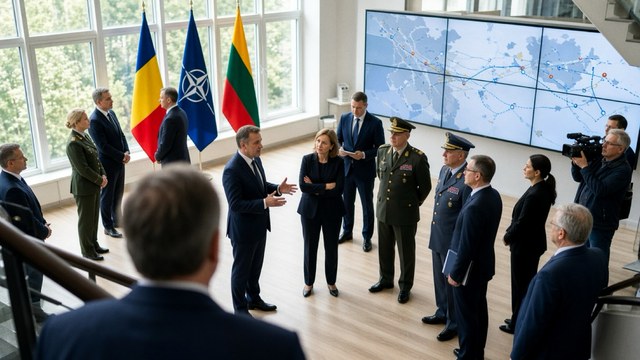
NATO scrambles jets as two drones cross eastern borders
19 October 2026Romanian fighters shot down two drones while Lithuania sounded civilian alarms during separate frontier alerts within 24 hours.12 sources
Economic discontent unleashes violent protests in France and Albania
European governments faced rising internal friction as mass demonstrations turned violent in Paris and Tirana. French President Emmanuel Macron appealed for national calm on Oct. 18 after riots over inflation and public services led to 2,400 arrests, left nearly 1,000 police officers injured, and resulted in one protester's death from cardiac arrest. In Albania, ongoing student-led anti-government rallies turned volatile when police deployed rubber bullets on Oct. 17, prompting the national police chief to discipline seven officers. The domestic crises tied down government resources at a time when European leaders faced mounting geopolitical decisions abroad.
France arrests 1,800 as cost-of-living protests turn violent
20 October 2026Weekend unrest leaves 600 emergency staff injured and historic town hall burned after 550,000 march against prices.4 sources
Settler violence against Western envoys triggers diplomatic outcry
Masked Israeli settlers attacked Palestinians, European diplomats and a French mayor during the annual olive harvest in the occupied West Bank on Oct. 17. The incident prompted swift condemnation on Oct. 18 from the European Union, which demanded that Israel prosecute the attackers and shield agricultural workers and foreign observers. Washington also pressed the Israeli government over unchecked settler violence. Because the physical assaults targeted accredited foreign diplomats, they sharply raised political friction between Israel and its primary Western allies.
The full story is being researched
coming soon
Tehran conditions Hormuz reopening on broad sanctions relief
Iranian Foreign Minister Abbas Araqchi confirmed on Oct. 18 that Tehran would reopen the blocked Strait of Hormuz within roughly one week, but only if Washington met its conditions. Iran demanded an immediate lifting of port blockades, an end to crude export sanctions, and a halt to regional military campaigns. Washington countered that any deal had to start with verifiable curbs on Iran's nuclear enrichment. Because neither side offered concessions on their fundamental red lines, the proposal left the world's most critical oil passage effectively closed to commercial confidence.
Lebanon links border truce to full Israeli pullout
Lebanon's presidency said on Oct. 17 that a military delegation would attend U.S.-sponsored talks in Tampa, Florida, on Oct. 20 to demand an immediate end to Israeli strikes. The American blueprint proposes disarming Hezbollah, the Lebanese armed movement, in exchange for an Israeli troop withdrawal. The core dilemma remained deadlocked: Hezbollah refused to surrender arms while Israeli forces occupy border areas, and Israeli air operations continued. Although the scheduled talks established a diplomatic channel, the lack of operational concessions on the ground left fighting uninterrupted.
Unconfirmed tanker damage heightens global shipping alarm
Iran's Revolutionary Guards asserted on Oct. 17 that two commercial oil tankers struck mines in the Strait of Hormuz and caught fire, though the vessels were not named and independent maritime monitors could not verify the claims. Despite the lack of confirmation, the report accelerated panic across marine insurance markets. Brent crude traded near $107.88 a barrel by early Oct. 19 as ongoing disruptions in Hormuz and fighting near the Bab el-Mandeb strait offset market expectations of higher Russian fuel supplies following a U.S. sanctions waiver. Commercial freight operators faced mounting logistical bottlenecks that kept international fuel costs elevated.
Iran claims naval mines hit two crude oil supertankers
18 October 2026Tehran asserts two vessels carrying four million barrels caught fire in Hormuz, but naval monitors report zero confirmation.3 sources
Pakistan prolongs Indian flight ban across national skies
Pakistan renewed its airspace closure to all Indian-registered and Indian-operated civilian and military aircraft through Nov. 24, extending a regional aviation standoff. The directive took effect at 14:45 UTC on Oct. 17, blocking commercial routes across the Karachi and Lahore flight zones. While the airspace restriction reflected ongoing diplomatic friction rather than a fresh military exchange, it forced Indian carriers onto longer and far more costly detours. The measure cemented a prolonged diplomatic chill between the two nuclear-armed rivals.
Artillery fire breaks out along the Afghan-Pakistani frontier
Tensions along the Durand Line border turned into direct combat on Oct. 17 when Pakistani and Afghan Taliban forces traded heavy artillery fire in the Upper Kurram region. Pakistani security officials accused Taliban troops of firing across the boundary to cover an infiltration attempt by armed militants, claiming Pakistani artillery destroyed several Taliban border posts. Afghan officials did not verify the damage. The border firefight proved how rapidly unresolved security disputes can draw national armies into direct combat despite official calls for dialogue.
Cairo moves toward direct military backing for Saudi Arabia
The regional conflict expanded on Oct. 18 when Egypt's presidency announced it was ready to provide Saudi Arabia with direct security support against Houthi attacks. President Abdel Fattah el-Sisi asked parliament for authorization to deploy armed forces abroad, marking a decisive shift toward an expanded Arab military coalition. Hours earlier, strikes took a heavy human toll: Houthi health authorities said a Saudi strike killed nine people, including children, in Saada, while Saudi officials said a Houthi rocket wounded six civilians in Najran. Egypt's formal move toward military intervention made a wider multinational war in the Red Sea and Gulf far more likely.
Rights report cites civilian toll from Malian and Russian operations
Human Rights Watch published an investigation on Oct. 19 documenting alleged abuses by Malian armed forces and partnered Russian military contractors during counterinsurgency campaigns. Drawing on data from the Armed Conflict Location & Event Data Project (ACLED), the report recorded 47 drone strikes that killed 94 civilians between April and August 2026, more than double the civilian toll from the previous period. Malian military authorities did not issue an immediate response to the findings. The report increased international scrutiny of Moscow's military footprint in West Africa.
Where things stand
As of 05:10 UTC on Oct. 19, multiple regional confrontations were pushing international energy corridors toward sustained disruption. High-stakes diplomacy has managed to slow but not halt the escalation: Iran's conditional offer has not reopened the Strait of Hormuz, while Egypt has stopped short of putting boots on the ground in Saudi Arabia. At the same time, air incidents over Romania and Lithuania have exposed how easily Ukrainian spillover could provoke accidental clashes between NATO and Russian forces.
The immediate trajectory depends on several decisive tests. Washington and Tehran must determine whether they can decouple maritime passage from nuclear talks, while Egypt's parliament weighs formal approval for military action. In Europe, forensic findings will show where the stray drones originated, even as Russian and Ukrainian forces continue targeting refineries and power plants. Above all, global markets remain tethered to physical shipping: until tankers move safely through Hormuz, regional risk premiums will dictate world energy prices.
Who's involved
United States
Global military and economic power leading international diplomacy
goal → Curb energy price surges and limit regional wars while balancing negotiations on Iran and Ukraine
Iran
Middle Eastern regional power controlling the northern shore of Hormuz
goal → Trade waterway access for relief from economic sanctions and port blockades
Saudi Arabia
Leading oil-exporting Gulf kingdom locked in conflict with Houthi forces
goal → Shield borders and critical infrastructure from regional missile and drone strikes
Egypt
Heavily populated Arab military power positioned on key Red Sea routes
goal → Back Gulf partners while keeping any direct troop deployments under sovereign control
Houthis
Armed political movement holding northern Yemen and Red Sea coastline
goal → Sustain armed strikes on Saudi targets to maintain regional leverage
Russia
Nuclear-armed state waging war against Ukraine and exporting global fuel
goal → Press battlefield advantages in Ukraine while navigating international financial restrictions
Ukraine
Eastern European state defending territory against Russian invasion
goal → Shield power grids, strike Russian logistics and secure sustained foreign backing
NATO
Thirty-two-nation Western collective defense and military alliance
goal → Defend allied airspace from cross-border incursions without triggering direct conflict with Moscow
Israel
Middle Eastern state fighting along several regional military fronts
goal → Counter armed adversaries while handling Western pressure over civilian harm in occupied territory
Palestinian communities
Civilian population living under Israeli military occupation in the West Bank
goal → Protect homes and farmland from violent attacks and secure legal accountability
Pakistan
Nuclear-armed South Asian nation facing security challenges on two borders
goal → Secure national airspace and counter cross-border militant incursions
Afghan Taliban authorities
Islamist leadership governing Afghanistan since taking power in 2021
goal → Guard border territory against Pakistani strikes and dispute infiltration charges