Shipping and Oil Strikes Ignite Supply Fears
A wave of overnight attacks on tankers and energy hubs pushed crude past $105 as trade routes frayed.
Later readings
Sinking ships and blackout strikes push crises past battlefields
15 October 2026Commercial losses in the Gulf and grid strikes in Ukraine spread physical disruption to global trade and power networks.
In a nutshell
Sharply tense (−74) — sharply more tense than the previous reading (−52 → −74, −22). Pressure: Yemen crisis (−84) and Iran nuclear program (−82).
Highlights
- Brent crude · price: 105.69 USD/bbl (+4.04 vs a week ago)
- Drewry World Container Index · value: 4351 USD per 40ft (−83 vs a week ago)
- EU natural gas (TTF) · price: 85.85 EUR/MWh (+9.85 vs a week ago)
- Gold · price: 4152.90 USD/oz (−12.63 vs a week ago)
The score of every gauge
−100 … +100- The needle starts at 0 at the top: right in blue for a plus, left in red for a minus, the ticks counting the way from 0; a dashed scale is quiet.
- Score — −100 maximum stress … +100 calm
Where the activity was
0–100| Yemen crisis | 98 |
|---|---|
| Ukraine-Russia war | 96 |
| Supply chain tensions | 95 |
| Iran nuclear program | 94 |
| Africa conflicts | 80 |
| NATO & transatlantic ties | 52 |
| International justice and court sanctions | 49 |
| EU-Russia relations | 47 |
| Taiwan tensions | 44 |
| Israel-Palestine conflict | 34 |
- How much happened to each gauge in this window, 0–100.
- Activity — 0–100
- Activity is not direction: a busy gauge can be calm, a quiet one tense.
Every gauge, measured
| Gauge | Score | vs a week ago |
|---|---|---|
| US–China trade war | quiet | — |
| Taiwan tensions | −30 | flat |
| Technology competition | quiet | — |
| Ukraine-Russia war | −74 | −22 |
| EU-Russia relations | −43 | — |
| Israel-Palestine conflict | −49 | flat |
| Iran nuclear program | −82 | −32 |
| Syria conflict | quiet | — |
| Yemen crisis | −84 | −17 |
| US trade policy | −22 | flat |
| Supply chain tensions | −79 | −35 |
| India-Pakistan tensions | quiet | — |
| Africa conflicts | −73 | flat |
| NATO & transatlantic ties | −39 | flat |
| International justice and court sanctions | −52 | — |
| Lebanon security and armed-group containment | quiet | — |
| Afghanistan-Pakistan tensions | quiet | — |
| Korean Peninsula military and nuclear tensions | quiet | — |
| Pakistani domestic security and constitutional stability | −48 | — |
| EU-China trade dispute | quiet | — |
- Each gauge’s score at the end of the window, and how it compares with earlier readings.
- Score — −100 maximum stress … +100 calm
- quiet — nothing to report in the window — not 0
- The changes are computed by nrb.bg from stored readings — a small wobble is shown as flat.
From the Editor’s Diary
The busiest gauge: Yemen crisis — activity 98 of 100.
In short
A 24-hour surge in strikes on energy infrastructure and merchant shipping has rattled global supply corridors. Saudi-led air raids hit Yemeni oil installations before missiles struck a Saudi Aramco facility in Dhahran. Meanwhile, Iranian officials outlined plans to target Gulf tankers, compounding the impact of an American maritime blockade that has halted Iran's seaborne crude exports.
In Europe, drone attacks hit two cargo ships off Bulgaria, sinking one vessel and leaving 11 sailors missing. Russia fired ballistic missiles into Kyiv's power grid even as Washington debated its Russian diesel policy. These clashes do not signal an all-out world war, but they expand the conflict zone into commercial sea lanes.
The economic cost emerged immediately. Brent crude closed at $105.69 a barrel on October 13, and European natural gas futures climbed to €85.85 per megawatt-hour.
Earlier readings
War strain shakes global trade and energy
13 October 2026Infrastructure strikes and rising transit risks pushed oil past $106 as diplomacy struggled to keep pace.Gulf Strikes and Unconfirmed Ceasefires Shake Global Security
12 October 2026A weekend of airport strikes, disabled tankers, and fragile diplomacy leaves crucial trade corridors and energy networks on edge.Trump Diesel Concession Splinters Allied Front
10 October 2026A White House fuel waiver for Moscow collides with peace talks and tests Western alliances.Global Crises Deepen as Strikes Batter Saudi Airport and Ukraine
9 October 2026A turbulent 24 hours pushed regional conflicts into sharper focus as aviation, energy routes, and civilian hubs came under direct fire.
Stories from this reading
Houthis strike Saudi Aramco headquarters in Dhahran
14 October 2026Yemen's Iran-aligned movement hit an office tower at the world's top crude exporter, triggering retaliatory coalition airstrikes on Sanaa.
How it unfolded
Taiwan pushes European ties as Beijing issues maritime warning
Taiwanese Foreign Minister Lin Chia-lung told European officials in Warsaw that buying critical goods from China creates severe economic dangers. He pitched Taiwan's high-tech manufacturing sector as a dependable alternative for European democracies looking to reduce vulnerability.
Hours later on October 14, Beijing warned Taipei to expect consequences after Taiwanese coast guard crews used water cannons against a Chinese fishing boat near the Pratas Islands. While the water-cannon incident took place earlier in October, Beijing's public warning was new, raising friction over maritime jurisdiction without sparking fresh troop movements.
Commission the full story · researched once readers fund it
Black Sea sinkings and Kyiv strikes test fragile diplomacy
A drone strike sank a merchant vessel off the Bulgarian coast overnight, leaving 11 crew members missing while a second struck ship was evacuated. Bulgaria launched search efforts but withheld formal blame, even as Kyiv pointed at Moscow.
Hours later, Russian ballistic missiles battered Kyiv, killing two civilians and damaging a thermal power plant that supplies home electricity and heat. Ukrainian President Volodymyr Zelensky said allies provided no warning. Although the Kremlin acknowledged contacts regarding an energy truce proposed by US President Donald Trump, strikes on civilian plants continued.
Resistance mounted in Washington as well. A bipartisan group of 12 senators demanded Trump scrap an earlier plan easing rules on Russian diesel, warning fuel sales would fund Moscow's military. The push narrowed the White House's room to maneuver on sanctions before an October 18 deadline.
Commission the full story · researched once readers fund it
France escorts intercepted tanker as Moscow alleges piracy
French naval forces escorted the oil tanker DF Peak toward Réunion on October 13 to investigate whether the ship belongs to a shadow fleet of covert vessels circumventing Western oil sanctions. Moscow condemned the operation, calling the interception an act of piracy.
The clash over the vessel highlighted the growing friction between Western maritime enforcement and Russian crude exports. Because the ship remained in French custody, Moscow found another export route squeezed under international surveillance.
Commission the full story · researched once readers fund it
Black Sea attacks push Bulgaria to seek NATO surveillance
The sinking of a commercial vessel turned an isolated shipping incident into a regional defense problem. Bulgarian Prime Minister Rumen Radev called NATO chief Mark Rutte and European Commission head Ursula von der Leyen to request emergency air and maritime radar coverage.
Rutte pledged that the transatlantic military alliance would adapt its eastern defenses. Bulgaria and Romania then opened talks with Turkey to protect Black Sea commercial corridors, raising naval alertness without triggering a formal alliance mutual-defense clause.
European lawmakers urge shield for war-crimes court against US sanctions
Fifty-eight members of the European Parliament petitioned the European Commission on October 13 to invoke the EU Blocking Statute, a regulation that protects European entities from following foreign sanctions laws. The measure aims to defend the International Criminal Court, the war-crimes tribunal in The Hague, against US sanctions imposed on October 9.
Former court judge and Nobel laureate Navi Pillay visited the tribunal's staff in The Hague to voice support, urging Washington to uphold global justice norms. The petition placed pressure on Brussels to shield international legal institutions from American financial penalties.
Israeli forces enter Ramallah medical grounds and raid civil groups
Israeli troops entered the occupied West Bank city of Ramallah, raiding offices of Palestinian advocacy organizations, including the prisoner rights group Addameer and the Union of Palestinian Women's Committees.
During the operation, Israeli forces moved into the courtyard of the Palestine Medical Complex, stationing armed troops outside clinic entrances while gunfire caused casualties in surrounding streets. The raids intensified friction across the West Bank, compounding civilian distress without altering wider military positions.
The full story is being researched
coming soon
Tehran shifts tanker tactics as US blockade chokes oil trade
An energy market assessment by tracking firm Vortexa showed an American naval blockade kept Iranian seaborne crude exports at zero through early October. Cut off from normal shipping, Tehran adjusted its strategy.
Iranian officials revealed new plans to step up surveillance and launch strikes against commercial tankers moving through the Strait of Hormuz, the narrow waterway handling a fifth of global petroleum. Intelligence reports indicated Iranian units were targeting ship-to-ship fuel transfers in a deliberate push to lift global crude prices before US elections, expanding Gulf shipping attacks.
Tehran separately rejected British accusations linking it to an alleged security incident near the RAF Fairford airbase in England. By openly threatening the strait, Iran turned merchant shipping into its main lever of economic pressure.
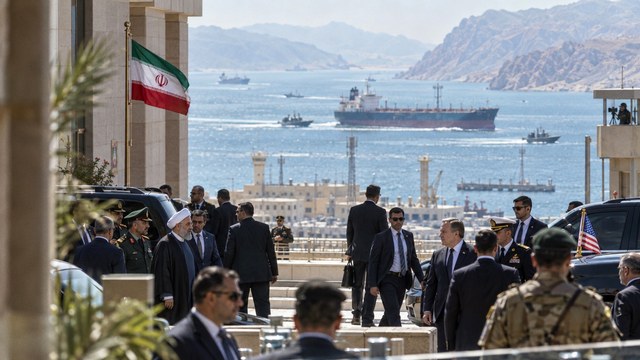
Iran pushes oil past 106 dollars with tanker strikes
14 October 2026Attacks on ships around the Strait of Hormuz threaten global fuel supplies and challenge American naval patrols.20 sources
Saudi-Houthi exchange hits Aramco office and Yemeni oil depots
Saudi fighter jets bombed fuel storage tanks outside Yemen's capital, Sana'a, after ordering civilian workers to clear the area. The strikes aimed to disable fuel networks controlled by the Houthi movement.
The Houthis retaliated immediately, launching long-range missiles into Saudi territory. Falling debris from intercepted missiles damaged residential houses and wounded four people in Riyadh, while another strike hit an administrative office of state oil producer Saudi Aramco in Dhahran, sparking a small fire.
The hit on the energy giant marked a critical shift in the conflict: despite sophisticated air defenses, the Houthis proved they could still strike the administrative core of the world's top crude exporter.
Washington sets India fuel talks amid tariff deadlock
The US State Department announced Secretary of State Marco Rubio will travel to India and Uzbekistan from October 17 to 22. Discussions in India will center on clean energy partnerships and New Delhi's refining ties, including a scheduled tour of the giant Jamnagar refinery.
The trip comes against a backdrop of stalled trade negotiations, with New Delhi worried about potential American penalties over its continued purchases of Russian crude. The visit opens a diplomatic channel, but leaves tariff and sanctions disputes entirely unresolved.
Commission the full story · researched once readers fund it
Chokepoint threats send European fuel prices higher
Dual threats in the Black Sea and the Strait of Hormuz hit transport operators at once. The drone sinking off Bulgaria and Iranian warnings near Hormuz left crews vulnerable and pushed maritime insurance premiums higher.
The pressure fed directly into wholesale energy trading. Front-month Dutch TTF gas contracts, the benchmark price for European natural gas, settled at €85.85 per megawatt-hour on October 13 as traders weighed thin winter reserves against potential export stoppages from the Gulf. Container rates remained elevated, having reached $4,351 per 40-foot box on October 8.
Global trade lanes did not shut down, but transit risks mounted across two of the world's most critical sea passages simultaneously.
Ethiopian troops advance to disputed Eritrean border
Ethiopian federal troops captured the border town of Zalambessa, seizing the frontier post from Tigrayan rebel fighters. Six sources confirmed the army's arrival, though it was unclear whether Eritrean troops remained nearby.
The advance placed Ethiopian forces directly along the disputed border with Eritrea. With both governments already trading accusations of proxy meddling, the troop movement raised the likelihood of direct border clashes and threatened stability across the Red Sea basin.
Commission the full story · researched once readers fund it
Pakistan defends indefinite emergency rule in Khyber Pakhtunkhwa
Pakistani federal ministers held a press conference on October 13 to justify imposing emergency rule in northwestern Khyber Pakhtunkhwa province two days earlier. Law Minister Azam Nazeer Tarar said the measure was lawful and declined to set an end date.
Information Minister Attaullah Tarar argued the suspension of provincial governance was essential to curb armed militancy. The decision entrenched central control over the province, leaving democratic oversight suspended indefinitely.
Pakistan strips Imran Khan party of provincial rule
12 October 2026Prime Minister Shehbaz Sharif seized federal control of northwestern Khyber Pakhtunkhwa province to blunt planned opposition marches on the capital.3 sources
Commercial sea lanes become front lines
Warfare spread directly into commercial energy networks and shipping channels over the 24 hours ending at 04:20 UTC on October 14. Strikes caught oil depots in Yemen and administrative grounds in Saudi Arabia, while drone strikes in the Black Sea triggered an immediate allied defense response.
Diplomats worked the phones, but no ceasefire took hold and no trade breakthrough emerged. The attacks turned routine merchant routes into active risk zones, forcing freight operators and insurers to recalculate their exposure in real time.
Where things stand
The global security landscape enters October 14 under compounding strain. The immediate danger stems from overlapping strikes on critical transport links and energy sites: oil depots in Sana'a and Dhahran, commercial vessels in the Black Sea and near Hormuz, and Ukraine's power grid.
Key questions remain unanswered. Black Sea investigators have yet to assign formal responsibility for the drone sinking that left 11 sailors missing. In Washington, lawmakers face an October 18 deadline to decide whether to block Russian diesel trade or tighten restrictions. Whether regional diplomacy can keep Ethiopian-Eritrean border tensions from exploding, or prevent tanker strikes from choking Middle Eastern waterways, will determine whether these localized conflicts escalate into a wider supply crisis.
Who's involved
Iran
Middle Eastern power facing a US sea blockade
goal → Use naval pressure on shipping to maintain regional leverage
Saudi Arabia
Leading oil producer fighting Yemen's Houthi forces
goal → Shield its oil facilities and halt cross-border strikes
Houthi movement
Armed Yemeni group controlling the capital, Sana'a
goal → Strike back at Saudi energy sites and resist coalition attacks
Russia
Nation waging war against Ukraine
goal → Keep attacking Ukraine's power grid while protecting energy revenues
Ukraine
Nation defending itself against Russian invasion
goal → Safeguard civilian power plants and secure maritime passage
Bulgaria
Black Sea country belonging to NATO and the EU
goal → Recover missing crew members and expand coastal surveillance
United States
Global power setting energy and maritime sanctions
goal → Enforce measures on Iran while managing Russian fuel policy
European Union
27-nation economic bloc reliant on maritime trade
goal → Guard merchant trade and shield the International Criminal Court
NATO
Transatlantic military alliance of 32 nations
goal → Bolster eastern defense lines without expanding the war
Ethiopia
East African nation fighting rebels in its northern Tigray region
goal → Reclaim border territory and reinforce security lines
Eritrea
Red Sea state bordering Ethiopia
goal → Reject Ethiopian accusations of backing Tigrayan insurgents
Taiwan
Self-governing island claimed by China
goal → Build European technology partnerships and guard coastal waters