Shipping Hits and Palace Strikes Scramble Global Diplomacy
Explosions near NATO waters and an attack in Yemen disrupt trade, ground diplomacy and force emergency fuel releases.
Later readings
Choke Points Flare as War Threats Spread
21 October 2026Military moves in the Black Sea and the Gulf signal deepening risks for global trade.Gulf Chokepoints and Yemen Strikes Strain Fragile Diplomacy
20 October 2026A deadly training camp strike and unverified tanker threats pushed oil past $110 as global peace talks stalled.Global Crises Converge on Key Energy Corridors
19 October 2026Escalating regional clashes and border incursions raise supply disruption fears worldwide.Oil Corridors Under Fire as Trump Waives Russia Sanctions
17 October 2026Escalating strikes near critical energy chokepoints collided with a surprise U.S. waiver on Russian oil penalties, exposing deep fractures in Western strategy.
In a nutshell
Sharply tense (−79) — unchanged since the previous reading. Pressure: Yemen crisis (−94) and Iran nuclear program (−89).
Highlights
- Brent crude · price: 105.92 USD/bbl (+1.64 vs a week ago)
- Drewry World Container Index · value: 4485 USD per 40ft (+134 vs a week ago)
- EU natural gas (TTF) · price: 85.46 EUR/MWh (+6.61 vs a week ago)
- Gold · price: 4169.48 USD/oz (+42.7 vs a week ago)
The score of every gauge
−100 … +100- The needle starts at 0 at the top: right in blue for a plus, left in red for a minus, the ticks counting the way from 0; a dashed scale is quiet.
- Score — −100 maximum stress … +100 calm
Where the activity was
0–100| Yemen crisis | 100 |
|---|---|
| Supply chain tensions | 97 |
| Ukraine-Russia war | 96 |
| NATO & transatlantic ties | 96 |
| US trade policy | 83 |
| Iran nuclear program | 71 |
| Lebanon security and armed-group containment | 67 |
| EU-Russia relations | 65 |
| Israel-Palestine conflict | 55 |
| EU-China trade dispute | 48 |
- How much happened to each gauge in this window, 0–100.
- Activity — 0–100
- Activity is not direction: a busy gauge can be calm, a quiet one tense.
Every gauge, measured
| Gauge | Score | vs a week ago |
|---|---|---|
| US–China trade war | quiet | — |
| Taiwan tensions | quiet | — |
| Technology competition | quiet | — |
| Ukraine-Russia war | −85 | flat |
| EU-Russia relations | −70 | −25 |
| Israel-Palestine conflict | −72 | −23 |
| Iran nuclear program | −89 | flat |
| Syria conflict | −39 | — |
| Yemen crisis | −94 | flat |
| US trade policy | −57 | −26 |
| Supply chain tensions | −88 | −50 |
| India-Pakistan tensions | quiet | — |
| Africa conflicts | quiet | — |
| NATO & transatlantic ties | −88 | −62 |
| International justice and court sanctions | quiet | — |
| Lebanon security and armed-group containment | −74 | — |
| Afghanistan-Pakistan tensions | −62 | — |
| China-North Korea trade normalization | quiet | — |
| Korean Peninsula military and nuclear tensions | quiet | — |
| Pakistani domestic security and constitutional stability | quiet | — |
| EU-China trade dispute | −36 | flat |
- Each gauge’s score at the end of the window, and how it compares with earlier readings.
- Score — −100 maximum stress … +100 calm
- quiet — nothing to report in the window — not 0
- The changes are computed by nrb.bg from stored readings — a small wobble is shown as flat.
From the Editor’s Diary
The busiest gauge: Yemen crisis — activity 100 of 100.
In short
A 24-hour wave of strikes against civilian shipping and government infrastructure shattered diplomatic timetables and forced emergency economic defenses into motion. In the Black Sea, search teams combed the water for seven missing sailors after suspected drone strikes hit commercial tankers near Romania, prompting urgent consultations across the NATO military alliance. Hours later, a missile strike on Yemen's presidential palace complex killed five people, compounding a regional security crisis that forced European and Gulf leaders to scrap an upcoming summit in Saudi Arabia.
The escalating strikes quickly unraveled efforts to contain the economic fallout of the wars. Ukraine openly abandoned a proposed energy truce by hitting a major Russian refinery, drawing direct rebukes from Washington. The International Energy Agency, the group that oversees global energy reserves, moved to speed up emergency releases of more than 20 million barrels of diesel to stabilize fuel markets. With U.S.-Mexico trade negotiations grinding to a halt and fresh civilian casualty tallies emerging from Central Asia, international mediators found their room for maneuver abruptly narrowed on multiple fronts.
Earlier readings
Sinking ships and blackout strikes push crises past battlefields
15 October 2026Commercial losses in the Gulf and grid strikes in Ukraine spread physical disruption to global trade and power networks.Shipping and Oil Strikes Ignite Supply Fears
14 October 2026A wave of overnight attacks on tankers and energy hubs pushed crude past $105 as trade routes frayed.War strain shakes global trade and energy
13 October 2026Infrastructure strikes and rising transit risks pushed oil past $106 as diplomacy struggled to keep pace.Gulf Strikes and Unconfirmed Ceasefires Shake Global Security
12 October 2026A weekend of airport strikes, disabled tankers, and fragile diplomacy leaves crucial trade corridors and energy networks on edge.
How it unfolded
Commercial routes and diplomatic calendars buckle under spreading conflict
Regional conflicts spilled directly into international transport lanes and diplomatic halls within hours. What began as battlefield confrontations in Eastern Europe and the Middle East quickly threatened commercial tankers operating near the borders of the Western military alliance. The expanding hazards also hit government compounds and grounded long-planned summitry.
Instead of producing diplomatic breakthroughs, the surge in violence sharpened disagreements between the United States and its closest partners. Every newly targeted transport corridor and disputed policy proposal narrowed the path toward an effective ceasefire or stable trade relations.
Ukrainian refinery hit breaks energy truce and draws U.S. rebuke
A Ukrainian strike on a Rosneft oil refinery southeast of Moscow marked the formal collapse of an informal agreement to spare power infrastructure. Ukrainian President Volodymyr Zelenskyy had declared that Kyiv would no longer respect the energy-strike halt announced by U.S. President Donald Trump, arguing that relentless Russian barrages on Ukraine's power grid left the country no choice.
The strike quickly sparked open friction with Washington. In a broadcast interview, Trump sharply condemned Kyiv's decision to resume hitting Russian refining assets, warning that the attacks were driving up global fuel prices. The rift deepened as reported restrictions on Ukraine's access to Starlink, the satellite internet service vital for battlefield communication, highlighted Kyiv's reliance on American technology. The attack made any near-term revival of a mutual energy ceasefire impossible.
European allies reject softer stance on Moscow and asset control
As Washington searched for ways to contain fuel costs, European leaders moved in the opposite direction. Speaking at a meeting of the Group of 20 major economies, Germany's finance minister warned allies against normalizing diplomatic or economic ties with Moscow, while Britain pressed for tougher trade restrictions on the tankers carrying Russian oil.
The divide widened at a European Union summit in Brussels, where German Chancellor Friedrich Merz rejected a reported U.S. initiative to transfer European-held frozen Russian state funds to a framework supervised by Washington. While neither side enacted new formal penalties, the standoff exposed a fundamental split over economic leverage. Merz's refusal made it far harder for the United States to repurpose frozen Russian wealth without broad European consent.
Black Sea tanker attacks trigger urgent NATO security reviews
The conflict moved to the edge of alliance territory when Romanian emergency teams scrambled to find seven missing sailors from the chemical tanker Wine Trader. The vessel was hit near the mouth of the Danube river, coming hours after an earlier strike against a commercial ship inside Romanian waters, while NATO officials said two more merchant vessels had been targeted overnight.
Romanian authorities confirmed drone strikes had taken place without publicly naming the source, but an alliance military official attributed the drones to Russia. NATO Secretary General Mark Rutte met immediately with the leaders of Romania and Bulgaria, pledging to adapt allied defenses along the Black Sea coast. The strikes turned commercial waters that handle grain and fuel into an active danger zone, making tighter alliance naval precautions inevitable.
Gaza commercial cargo route halts amid merchant and security disputes
Civilian supply chains in Gaza faced renewed paralysis as commercial freight movements through an Israeli-managed corridor came to a complete stop. Israeli authorities stated that local merchants refused to send trucks because Hamas was demanding illicit fees on incoming goods.
Hamas denied that characterization of the payments, while Palestinian merchants pointed to tightening Israeli border checks and logistical hurdles. Although basic humanitarian relief supplies and truckloads entering from Egypt continued to trickle through, the freeze on commercial trade choked off market-bought food and goods, making everyday civilian survival inside the enclave significantly harder.
Investigation details Iranian infrastructure strikes as regional patrols expand
New findings put Tehran's long-running regional pressure campaign under fresh international scrutiny. A Reuters investigative report documented at least 135 strikes by Iran and its proxy forces against Gulf energy, transport and utility facilities since the regional war widened.
A Saudi diplomat publicly accused Iran of directing the Houthi movement's strikes, keeping diplomatic tensions between the regional rivals high. The growing threat to international trade corridors led South Korea's defense ministry to review whether its anti-piracy naval warships should expand patrols toward the Gulf of Oman, though no deployment was ordered. The disclosures made international maritime escorts in Gulf waterways much more likely to expand.
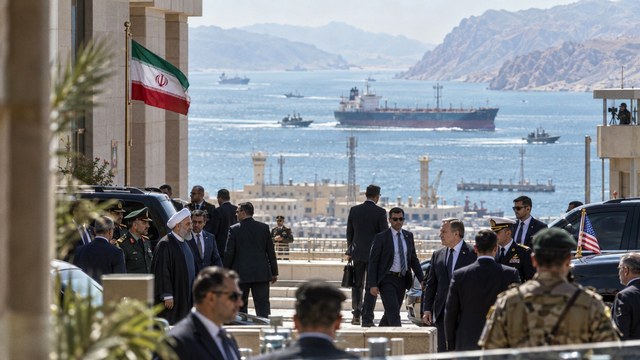
Iran pushes oil past 106 dollars with tanker strikes
14 October 2026Attacks on ships around the Strait of Hormuz threaten global fuel supplies and challenge American naval patrols.20 sources
Syrian court issues death sentences over coastal sectarian killings
An Aleppo military tribunal delivered the first major judicial verdicts over the sectarian bloodshed that swept Syria's coastal regions in March 2025. The court sentenced two loyalists of the ousted government of Bashar al-Assad to death, while also handing down heavy prison sentences to officers connected to the current state security forces.
The legal proceedings represented a rare domestic attempt to punish perpetrators from both sides of the country's sectarian divides. The rulings established legal culpability for the massacre, but they left unresolved whether state courts can secure broader domestic stability without stoking new tensions.
Houthi missile hits Aden palace as Saudi summit is called off
A Houthi missile attack struck the presidential palace compound in the southern Yemeni port of Aden, killing five people and leaving government buildings damaged. While senior cabinet ministers escaped harm, the deadly strike underscored the government's acute vulnerability.
Across the border, repeated missile and drone assaults against Saudi cities forced international diplomacy to retreat. Citing constant security hazards and a prolonged shutdown of Riyadh's main airport, European Union and Gulf officials postponed a major international summit scheduled for October 24. What was once a local insurgency had now disabled international air routes, making high-level diplomacy in the Gulf kingdom temporarily impossible to conduct.
Hezbollah admits to seized weapons as U.S. urges Lebanese restraint
Hezbollah confirmed that a large shipment of military explosives seized by Lebanese state police had belonged to the militant group. A Hezbollah lawmaker said the munitions were earmarked for attacks against Israeli military positions, acknowledging the group's covert logistical operations inside Lebanon.
The public admission triggered swift pressure from Washington. U.S. Secretary of State Marco Rubio urged Lebanese President Joseph Aoun to retain custody of the seized arms and set up direct lines of communication with Israel to avoid miscalculations. The dispute made clear that Lebanon's fragile government cannot easily assert control over armed militias without risking internal conflict.
Washington advances Indian trade pact but hits impasse with Mexico
The Trump administration encountered sharply contrasting fortunes on trade. India's commerce minister announced that the initial text of a bilateral trade pact was in legal drafting, though he cautioned that New Delhi would sign only if Indian companies secured clear tariff advantages over rivals.
Across the southern border, negotiations fell apart. Talks between the United States and Mexico ground to a halt after Commerce Secretary Howard Lutnick opposed demands to lower import tariffs on Mexican automobiles, steel and aluminum. Although negotiators from both nations said contacts continued, Lutnick's firm stance made any quick North American trade breakthrough highly unlikely.
Emergency oil reserves accelerated as shipping costs climb
Mounting attacks on maritime transit pushed global energy authorities to take emergency measures. The International Energy Agency decided to expedite the release of its remaining emergency stockpiles, promising to push out more than 20 million barrels of diesel as quickly as possible. Member nations had already deployed 330 million barrels under an emergency plan agreed in March.
The agency's move came as geopolitical hazards took a measurable toll on world commerce. The World Trade Organization warned of permanent damage to trade lanes, predicting Middle Eastern exports would drop by 17% this year, while shipping research firm Drewry recorded a 3% weekly increase in global container rates to $4,485 per standard container. The emergency taps will help cushion fuel stockpiles, but higher transport costs look increasingly likely to stick.
IEA rushes emergency diesel reserves to calm fuel markets
17 October 2026Major economies expedite 100 million barrels of strategic oil reserves as refinery bottlenecks squeeze diesel supplies.5 sources
EU weighs tougher defenses against subsidized Chinese manufacturing
Meeting in Brussels, European Union leaders debated ways to protect their domestic manufacturers from an influx of low-cost Chinese goods without triggering an all-out trade war. Draft statements showed leaders balancing further trade negotiations with plans to deploy tougher defensive measures against subsidized imports.
Beijing, meanwhile, signaled an urgency to retain open access to European consumers despite mounting tariff threats. European officials held back from passing new duties during the summit, keeping the current import rules in place while laying the groundwork for future protectionist trade barriers.
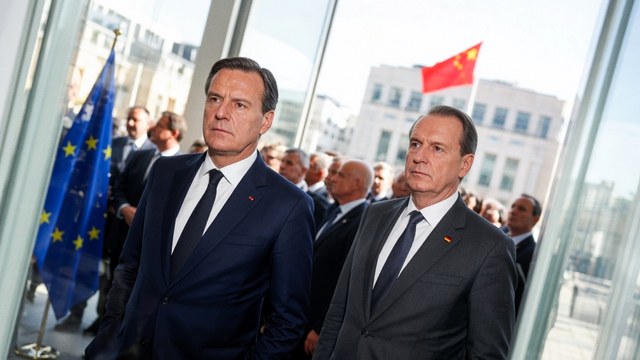
France and Germany push EU market curbs
14 October 2026Paris and Berlin urge fast trade powers to counter foreign distortions13 sources
UN report tallies civilian toll of Afghan-Pakistani border fighting
The human toll of border clashes between Afghan and Pakistani forces came into sharp focus with the release of a United Nations mission report. Independent news agencies reported that cross-border shelling and gunfire had killed 512 civilians and wounded 1,236 others between October 2025 and September 2026.
In the most recent quarter from July to September, the report documented 13 civilian deaths and 20 injuries. The verified numbers demonstrated that past diplomatic mediation has failed to protect border villages, leaving communities trapped in a persistent cycle of violence.
Where things stand
As of Friday morning, the international landscape was defined by expanding attacks on commercial shipping, fractured alliances and rising strains on global supply chains. No verified ceasefire had emerged in any theater, nor had major trade partners resolved their core economic disputes. NATO allies chose diplomatic consultations over immediate military moves, while the International Energy Agency opted to speed up previously scheduled oil reserves rather than commit to new stockpiles.
The coming days will show whether maritime strikes continue to drift into NATO waters and whether rescue crews locate the seven missing merchant sailors. In the Gulf, regional stability hinges on whether Saudi airports can resume normal operations to salvage derailed diplomatic schedules, and whether Washington and Kyiv can repair their rift over refinery attacks. Above all, markets will watch to see if emergency diesel deliveries can successfully tame rising transportation costs before trade disruption becomes permanent.
Who's involved
Ukraine
Eastern European country defending against Russia's invasion
goal → Strike Russian oil refineries and maintain military defenses
Russia
Country waging war against Ukraine
goal → Keep battlefield pressure high and safeguard energy revenues
NATO
Transatlantic military alliance of North American and European nations
goal → Defend member borders and deter attacks in the Black Sea
Romania
NATO member state bordering the Black Sea
goal → Protect sovereign waters and find missing civilian crew
United States
Global military and economic power leading negotiations
goal → Prevent fuel price spikes and secure allied trade terms
Houthis
Armed movement controlling northern Yemen
goal → Weaken the Saudi-backed Yemeni government and target regional shipping
Saudi Arabia
Oil-producing Gulf kingdom backing Yemen's government
goal → Shield domestic airports and safeguard international diplomatic ties
Iran
Middle Eastern regional power backing allied militant groups
goal → Retain strategic leverage against the United States and Israel
International Energy Agency
Group of 32 nations monitoring global energy markets
goal → Expedite emergency fuel reserves to ease market shortages
Hezbollah
Lebanese armed and political movement backed by Iran
goal → Preserve weapons arsenals to challenge Israeli forces
European Union
Economic and political bloc of 27 European nations
goal → Secure shipping routes, stabilize fuel costs and deepen Gulf alliances
Lebanese government
National administration trying to maintain internal order
goal → Enforce domestic laws without igniting an armed conflict