We analyzed this claim: is it true that
Associated Press published a complete list of all six 2026 Nobel prize categories after the final economics announcement, establishing a verified group of ten laureates that can be compared consistently?
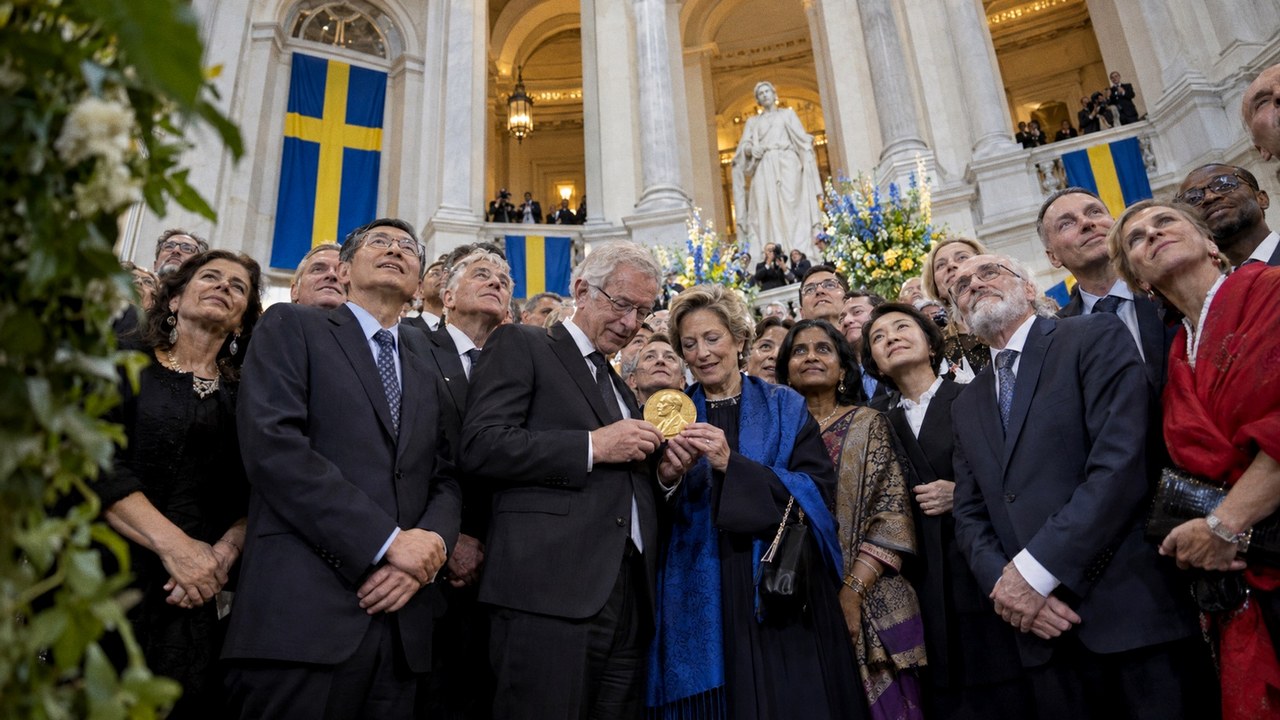
Associated Press published its completed list on 12 October 2026 after the Royal Swedish Academy of Sciences named the two economics laureates. All ten names and six decisions match the original awarding institutions. The opportunity to build a consolidated comparison is genuine, although the claim that no other publication has produced one cannot be established conclusively.
Six Decisions Reveal Ten Nobel Laureates
Ten thinkers share six world prizes as economics completes the list.
In a nutshell
Six prize announcements over eight days named ten new Nobel laureates for 2026, honoring achievements from brain science and Antarctic physics to international justice and economic modeling. Four Nordic committees chose the winners across six categories, each backed by a 12 million kronor award. The final group includes eight men and two women, eight campus researchers alongside one writer and one jurist. The season ended with fresh debates over international court sanctions and the limits of economic theory, pointing toward the traditional presentation ceremonies on 10 December.
Highlights
- Ten individual winners share the six Nobel prizes awarded in 2026.
- Each category carries an award of 12 million Swedish kronor.
- The six awards together allocate a total of 72 million Swedish kronor.
- Eight of the ten laureates are men and two are women.
2026 Nobel Prize Cash Shares by Laureate
| Laureate | Cash Share |
|---|---|
| Francis Halzen | 12 million kronor |
| Anne Carson | 12 million kronor |
| Navi Pillay | 12 million kronor |
| Henri B. Kagan | 6 million kronor |
| Kenso Soai | 6 million kronor |
| Robert E. Hall | 6 million kronor |
| Michael Woodford | 6 million kronor |
| Karl Deisseroth | 4 million kronor |
| Peter Hegemann | 4 million kronor |
| Georg Nagel | 4 million kronor |
- Individual prize money depends on whether an award was won alone or shared.
- The figures show how equal category funds translate into different personal payouts.
From the Editor’s Diary
A Nobel prize honors singular breakthroughs, but shared awards mean the practical reward depends as much on the size of the team as on the scale of the discovery.
Who's involved
Associated Press
International news agency that reports global announcements
goal → Publish an accurate, accessible list of all six categories
Royal Swedish Academy of Sciences
Swedish body choosing physics, chemistry, and economics winners
goal → Pick outstanding researchers and explain the science behind its choices
Nobel Assembly at Karolinska Institutet
Fifty-member group choosing the medicine laureate
goal → Recognize medical breakthroughs and open the annual prize season
Swedish Academy
Swedish cultural body choosing the literature winner
goal → Select exceptional writing and defend its literary choices
Norwegian Nobel Committee
Five-member panel named by Norway's parliament choosing the peace prize
goal → Honor work for peace and international law amid public debate
Robert E. Hall and Michael Woodford
American university economists who won the final 2026 prize
goal → Provide clearer models of how household choices shape wider economies
Nobel Foundation
Swedish body managing the money and ceremonies
goal → Protect the prize fund and stage the yearly ceremonies
In short
The world now has its full roster of 2026 Nobel laureates, honoring ten people across six fields that shape human knowledge, peace, and culture.
The winners will gather in Stockholm and Oslo on 10 December to receive their medals, diplomas, and cash awards.
This collective gathering is near-certain because 10 December is the fixed annual Nobel presentation date honoring founder Alfred Nobel.
Previously in this story
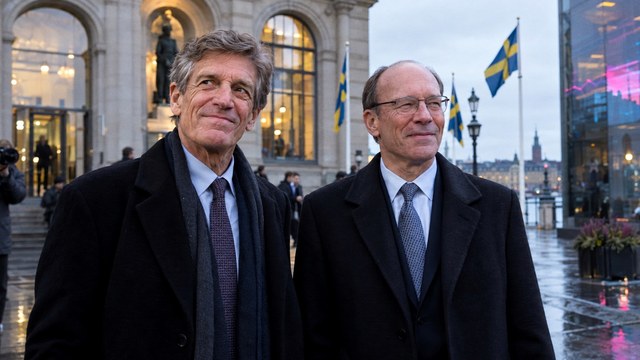
Nobel Academy awards $1.2 million for crisis models
12 October 2026Robert Hall and Michael Woodford share the 2026 economics prize for showing how public expectations shape recessions and interest rates.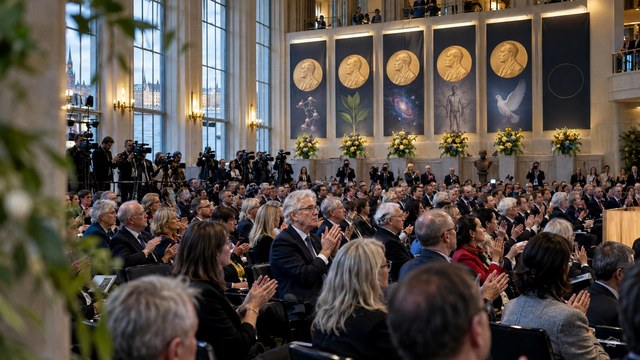
Economics Prize Wraps Up 2026 Nobel Week
11 October 2026Stockholm prepares to reveal its final award as economics takes center stage.
How it unfolded
Medicine announcement begins Nobel 2026
The prize week began on 5 October in Stockholm when Karolinska Institutet awarded the medicine prize to Karl Deisseroth, Peter Hegemann, and Georg Nagel. They pioneered optogenetics, a method that uses light to control living brain cells. The decision proved that basic studies in green pond algae could grow into tools that map how the brain creates memory and fear.
Three scientists open a year of contrasting achievements
Rewarding three scientists in one field showed how modern science relies on shared discovery. Hegemann and Nagel studied how light triggers channel proteins in single-celled algae. Deisseroth then placed those sensors into animal neurons, turning light into an electric switch for brain circuits. The choice highlighted how laboratory work often spans borders, institutions, and decades of effort.
From Antarctic ice to the molecular machinery of life
The focus widened next from the brain to the cosmos and molecular design. On 6 October, the physics prize went to Belgian-born researcher Francis Halzen for building the IceCube observatory, which uses a giant block of South Pole ice to capture ghostlike space particles called neutrinos. A day later, chemists Henri B. Kagan and Kenso Soai won for showing how chemical reactions can favor one mirror-image shape over another, a vital tool for making safer medicines. Halzen took the whole physics purse alone, while Kagan and Soai split chemistry down the middle. This showed why the 2026 science Nobels took decades to arrive as ideas moved from paper to proof.
Literature broadens the field before peace brings political conflict
The prizes then turned to words and world affairs. On 8 October, Canadian author Anne Carson won the literature prize for work that blends classical myths with modern poetry. The mood shifted on 9 October when South African jurist Navanethem "Navi" Pillay won the peace prize for her work defending international law. The choice drew praise from human rights lawyers and anger from political leaders critical of her inquiries into Gaza. On the same day, the United States placed sanctions on the International Criminal Court, where Pillay once served as a judge.
Economics closes the list and the first complete comparison becomes possible
The season closed on 12 October when American economists Robert E. Hall and Michael Woodford won the prize in economic sciences. Their models help central banks and governments see how individual choices by consumers and companies influence inflation and economic slowdowns. Moments after hearing the news, Woodford gave a scheduled college exam in New York, capturing how ordinary routines mix with sudden worldwide fame. Later that day, news commentators pointed out that while their economic models set a standard for years, modern research continues to test their core assumptions.
Where things stand
All six prize choices for 2026 are settled, naming ten people across six fields. News agencies and scientific registries have confirmed the full roster of names, reasons, and prize amounts.
The next formal step comes on 10 December, when Sweden and Norway host the annual award banquets and medal ceremonies. While the awards are permanent, the debates they sparked over international law, economic policy, and representation will continue.