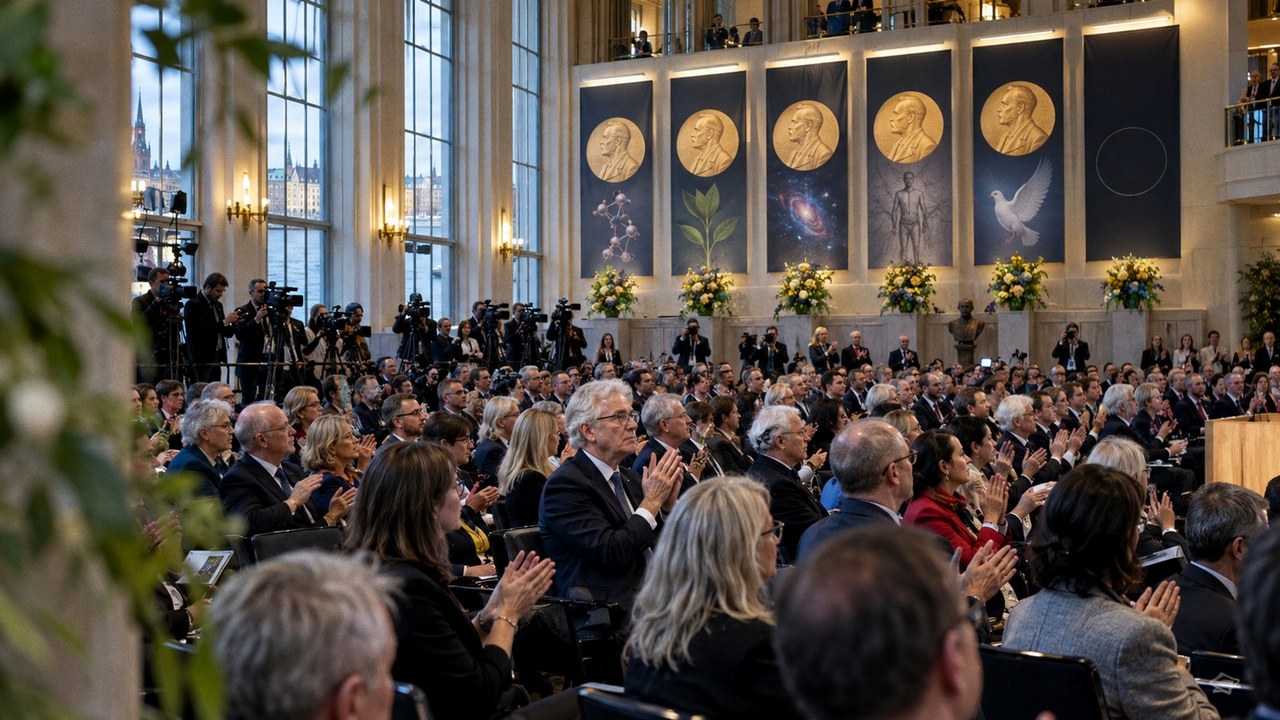
Economics Prize Wraps Up 2026 Nobel Week
Stockholm prepares to reveal its final award as economics takes center stage.
The story continues
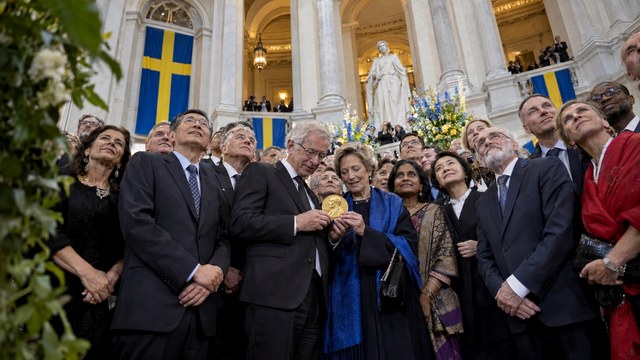
Six Decisions Reveal Ten Nobel Laureates
12 October 2026Ten thinkers share six world prizes as economics completes the list.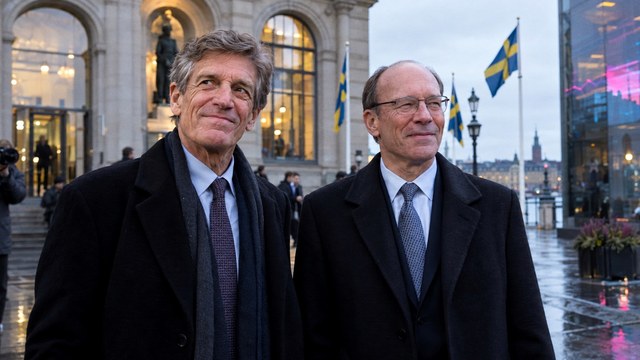
Nobel Academy awards $1.2 million for crisis models
12 October 2026Robert Hall and Michael Woodford share the 2026 economics prize for showing how public expectations shape recessions and interest rates.
In a nutshell
Five 2026 Nobel prizes have honored work spanning brain circuits, cosmic particles, molecular chemistry, poetry, and international law. On October 12, the Royal Swedish Academy of Sciences will name the winner of the final award, the Sveriges Riksbank Prize in Economic Sciences in Memory of Alfred Nobel. Created in 1968 by Sweden's central bank rather than Alfred Nobel's original will, the prize confers global scientific authority on research that explains how societies, markets, and individuals make choices.
Highlights
- Five of the six major 2026 awards associated with the Nobel Prize have announced their winners.
- The economics prize was created in 1968 by Sweden's central bank to celebrate its 300th anniversary.
- The Royal Swedish Academy of Sciences will announce the 2026 economics laureate on October 12.
- Up to three people can share the annual economics prize.
- All Nobel prizes and the economics memorial award will be formally presented on December 10.
From the Editor’s Diary
Prizes do not simply reward researchers; they signal to the world which questions matter enough to define human progress.
Who's involved
Royal Swedish Academy of Sciences
Independent Swedish science body founded in 1739 that selects physics, chemistry, and economics winners
goal → Pick and explain landmark research while keeping deliberations private
Economic Sciences Prize Committee
Specialist panel of economists inside the Academy that evaluates nominees
goal → Assess candidates and propose winners to the wider Academy
Sveriges Riksbank
Sweden's central bank, which founded and funds the memorial prize
goal → Maintain the prize's standing and honor outstanding research
John Hassler
Swedish economist who chairs the 2026 selection committee
goal → Guide candidate evaluations and present the final scientific choice
Nobel Foundation
Organization managing Alfred Nobel's estate and coordinating prize activities
goal → Safeguard the formal distinction between original prizes and the memorial award
Nobel Prize Museum
Stockholm museum hosting public educational discussions
goal → Explain the winning research to the general public
In short
The choice of this year's economics laureate matters because it gives global scientific prestige to one way of understanding how money, work, and human decisions shape daily life. On October 12, the Royal Swedish Academy of Sciences will name the winner, completing the 2026 Nobel announcement cycle. It is near-certain that a recipient will emerge on schedule because the Academy has already arranged the ceremony, but the winning field remains completely uncertain because committee talks stay secret.
Five earlier prizes recognized work in brain science, cosmic particles, chemistry, literature, and international law. Economics will finish the sequence by focusing on how society makes choices. Until the envelopes open in Stockholm, no outsider knows whether the judges will reward research on growth, poverty, markets, or behavior.
The prize itself has a unique past. Alfred Nobel did not mention economics in his 1895 will. Sweden's central bank created the memorial award in 1968, funding it separately while using the same rigorous Academy selection process as the physics and chemistry prizes.
How it unfolded
Sweden's Central Bank Creates an Economics Award
Alfred Nobel's 1895 will funded only five subjects: medicine, physics, chemistry, literature, and peace. Seven decades later, Sveriges Riksbank, Sweden's central bank, marked its 300th anniversary by proposing an award for economic sciences. On June 6, 1968, the bank signed a founding deed establishing a prize in Nobel's memory, to be chosen by the Royal Swedish Academy of Sciences.
How Economics Joined the Nobel Stage
Because Nobel's will could not be rewritten, the central bank created a separately funded memorial prize that adopted the same standards as the original awards. The Swedish Crown approved the rules in December 1968, and the first prize followed in 1969. The Academy selected Jan Tinbergen and Ragnar Frisch for building mathematical models of economies, showing that economics could test theories against real-world data rather than rely solely on political ideas.
Innovation Takes the 2025 Prize
In 2025, the Academy honored Joel Mokyr, Philippe Aghion, and Peter Howitt for showing how technological inventions replace older businesses to drive long-term prosperity. That award honored progress, but it gave no clue about what 2026 would bring. In early 2026, the Academy set October 12 as the next announcement date, while its specialist committee reviewed nominations in strict secrecy.
Science Opens the Week With Decades of Work
The 2026 announcements began in laboratory science. Medicine went to Peter Hegemann, Georg Nagel, and Karl Deisseroth for developing optogenetics, a method using light to control brain cells. Physics recognized Francis Halzen for using sensors frozen in Antarctic ice to find cosmic neutrinos. Chemistry honored Henri B. Kagan and Kenso Soai for explaining mirror-image chemical reactions. These awards celebrated basic discoveries that took decades to prove.
Literature and Peace Move Into the Public Arena
The next two awards moved from lab benches to society. Literature went to Canadian author Anne Carson for reinventing modern literary form. The Peace Prize went to South African jurist Navi Pillay for defending international law. That peace choice drew immediate political reaction when Donald Trump criticized the decision during a campaign rally in Syracuse. While cultural and peace awards often spark debate, science and economics usually draw attention to long-term ideas.
Where things stand
As of early October 11, economics remains the only prize category without a named winner. The Academy plans to hold its press conference in Stockholm on Monday, October 12, starting no earlier than 11:45 CEST. Until the official statement appears, no public forecast can reliably predict the topic or the researchers selected.
When the announcement arrives, the Academy will publish both a summary for the public and a technical paper for specialists. Later that day, the Nobel Prize Museum and Sveriges Riksbank will hold an explanatory panel in Stockholm, followed by a university lecture on October 13. All 2026 laureates will receive their medals at the formal ceremonies on December 10.