We analyzed this claim: is it true that
the 2026 Nobel science prizes recognized foundational discoveries made decades earlier because their lasting scientific impact became clearer through subsequent research, rather than through immediate commercial success?
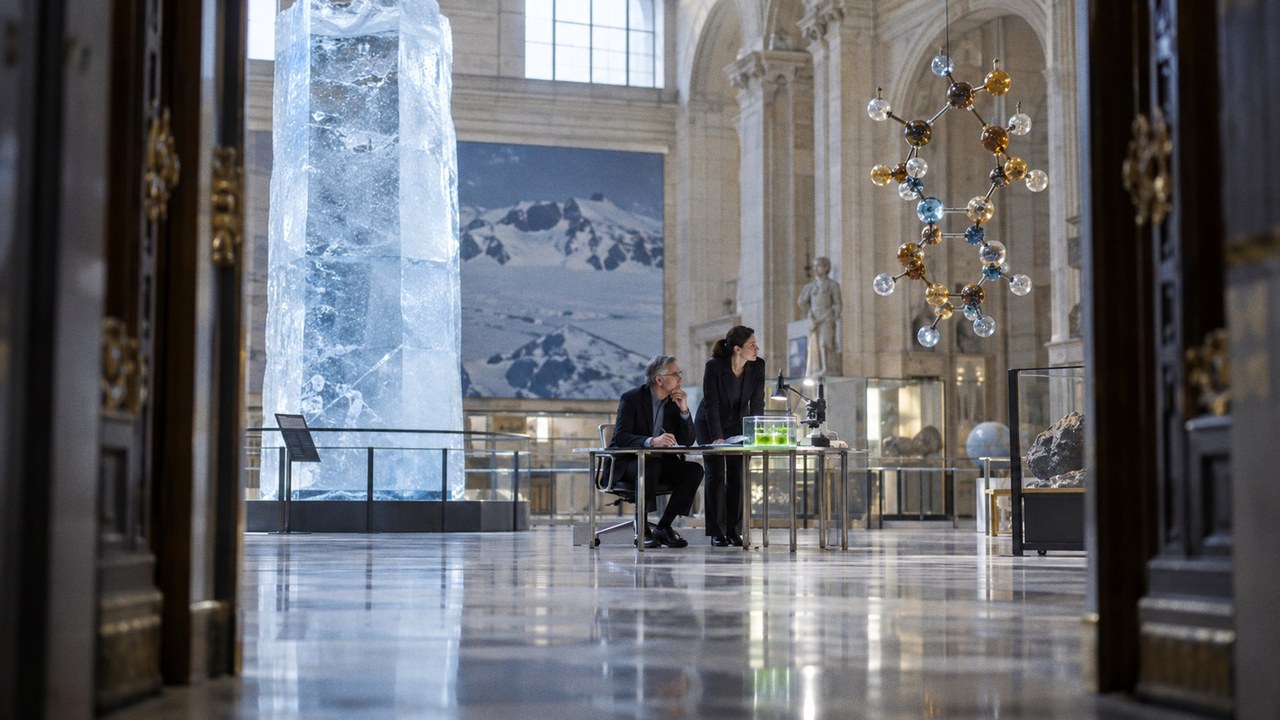
Nobel committees reward lasting influence and benefit to humanity rather than commercial speed, making long waits common but not an official requirement.
Why the Nobels Made Science Wait Decades
Nobel prizes honor discoveries that change scientific questions over time rather than instant products.
In a nutshell
The 2026 Nobel science prizes went to six researchers whose work began between 1986 and the early 2000s, covering brain control with light, cosmic neutrino detection in South Pole ice, and mirror-image chemistry. Prize committees waited decades because transformative ideas prove their value only when other laboratories use them to build new fields, rather than when a product hits the market. While this long timeline protects the credibility of the awards, it also highlights the challenge of fitting modern, team-based science into rules that limit prizes to three individuals.
Highlights
- Six scientists shared the 2026 Nobel prizes across medicine, physics and chemistry.
- The IceCube observatory uses more than 5,000 light sensors buried in a cubic kilometer of Antarctic ice.
- IceCube includes about 450 scientists from 58 institutions across 14 countries.
- A clinical trial of optogenetic therapy restored measurable light sensitivity in seven of ten patients with an inherited eye disease.
From the Editor’s Diary
Scientific value is measured not by how quickly an idea sells, but by how many new questions it allows other people to ask.
Who's involved
Nobel Assembly at Karolinska Institutet
A panel of Swedish medical researchers that selects the Nobel Prize in Physiology or Medicine
goal → Pick discoveries that transform biology and medicine while keeping its choices credible
Royal Swedish Academy of Sciences
An independent Swedish group of scientists that awards the Nobel Prizes in physics and chemistry
goal → Honor research of lasting scientific value and defend its choices
Peter Hegemann
German biophysicist who co-discovered light-sensitive proteins in green algae and shared the 2026 medicine prize
goal → Reveal how living cells detect light and see basic research recognized
Georg Nagel
German scientist who showed that algal proteins act as light-driven molecular gates
goal → Build biological tools controlled by light for other scientists to use
Karl Deisseroth
American psychiatrist and Stanford professor who used light-sensitive proteins to control brain cells
goal → Map brain circuits to help understand psychiatric and brain disorders
Francis Halzen
Belgian-born physicist at the University of Wisconsin-Madison who led the IceCube South Pole observatory
goal → Establish neutrino astronomy as an active field and support its global team
Henri B. Kagan
French chemist who proved reactions can strongly favor one mirror-image molecular shape
goal → Explain and control how chemical reactions select specific molecular shapes
Kenso Soai
Japanese chemist at Tokyo University of Science who discovered self-multiplying mirror-image chemical reactions
goal → Show how tiny initial chemical imbalances can grow into total dominance
In short
Scientific prizes reward ideas that change how researchers explore the world, not products built for quick sale. The 2026 science awards show that proving a concept works across global labs often takes decades of shared work.
This approach makes future prizes likely to keep favoring older discoveries over fast commercial hits.
That outcome is likely because committees must wait for independent teams to confirm results and build on them before recognizing their lasting value.
How it unfolded
A hidden tilt in chemical reactions
The timeline began on April 1, 1986, when French chemist Henri B. Kagan and his colleagues reported that chemical reactions could amplify tiny differences between mirror-image molecules. The finding appeared in the Journal of the American Chemical Society, showing that a reaction could favor one shape far more than expected. Kagan worked on chemistry in France, while other researchers later worked separately on physics in Antarctica and biology in Germany. Their independent paths converged in October 2026, when the Nobel committee recognized how decades of testing turn quiet laboratory discoveries into major milestones.
The tests that created new tools
In 1988, Francis Halzen proposed turning Antarctic ice into an observatory to catch neutrinos, subatomic particles that pass through matter without stopping. In Japan, Kenso Soai proved in 1995 that a molecule could help copy itself while increasing its own handedness. Meanwhile in Germany, Peter Hegemann and Georg Nagel discovered that proteins from green algae let charged particles through cell walls when hit by light. In 2005, Karl Deisseroth and his team put that algal gene into mammalian nerve cells, triggering electrical pulses with timed flashes of light. None of these experiments made a consumer product, but each gave scientists a new tool to explore nature.
Taking ideas out of the original labs
A discovery gains weight when other laboratories can use it. By 2007, researchers used thin glass fibers to shine light inside the brains of living animals, switching specific behaviors on and off. At the South Pole, workers finished building the IceCube detector in December 2010, and it began full operations in May 2011. In 2013, IceCube caught high-energy neutrinos arriving from outside our solar system, proving that buried ice could read deep space. But studies published in 2014 noted that Nobel prizes were arriving later in scientists' lives, because proving lasting scientific impact takes decades of verification.
Discoveries become stepping stones for others
Catching single particles was only the start for IceCube. In July 2018, astronomers matched an IceCube neutrino to a distant active galaxy called TXS 0506+056, combining particle sensors with conventional telescopes. IceCube found another neutrino source in galaxy NGC 1068 in 2022, and mapped neutrino emissions across the Milky Way in June 2023. In chemistry, independent researchers repeated Soai's reaction to study how subtle molecular forces steer mirror-image outcomes. These projects showed why the prize committees wait: an original breakthrough proves its worth when a wider community uses it to solve new problems.
A light switch for living brain cells
On October 5, 2026, the Nobel Assembly at Karolinska Institutet awarded the medicine prize to Karl Deisseroth, Peter Hegemann and Georg Nagel. Before their work, researchers could only watch brain activity happen alongside behavior. Optogenetics let them switch specific cells on and off to prove cause and effect. The method grew step by step: finding the light-sensitive proteins in pond algae, testing them in cells, and placing them into animals. Stanford University noted that thousands of researchers were trained to use the open tools. The prize rewarded an experimental method shared across science, rather than a commercially approved medicine.
A South Pole telescope built in deep ice
The next day, the Royal Swedish Academy of Sciences gave the physics prize to Francis Halzen for building IceCube and discovering cosmic neutrinos. Unlike a bench technique, IceCube is a massive physical station: more than 5,000 light detectors frozen inside a cubic kilometer of Antarctic ice. Halzen guided the idea from a doubtful proposal into an active observatory. Today, 450 scientists from 58 institutions across 14 countries share the project. The award arrived as IceCube finished an upgrade in 2026 to detect lower-energy particles, recognizing the observatory's past results while its scientific mission continues.
Rewarding the rules of molecular shape
On October 7, the Swedish Academy awarded the chemistry prize to Henri B. Kagan and Kenso Soai for exploring chirality, the way molecules form left-handed or right-handed pairs. Living biology relies almost entirely on one handedness, a puzzle science has long tried to explain. Kagan showed in 1986 that small differences in catalysts create large imbalances in products, and Soai proved in 1995 that products could speed up their own production to enforce one shape. Their work offered a plausible mechanism for how living chemistry became one-handed. The prize recognized fundamental chemical principles rather than a specific commercial drug.
What old discoveries mean for modern science
The practical reach of these decades-old ideas became clear immediately after the awards. On October 7, the New England Journal of Medicine reported an experimental optogenetic trial for retinitis pigmentosa, an inherited eye disease causing blindness. In ten patients given light-sensitive genes and special goggles, seven showed improved light detection and six achieved meaningful gains, though side effects occurred and long-term safety remains unproven. On October 9, NASA highlighted IceCube's role in cosmic astronomy, while The Times published criticism arguing the Nobel three-person limit overlooks large teams and makes researchers wait too long.
We checked again
No new developments at this moment.
Checked Nobel Committee announcements, the Royal Swedish Academy of Sciences' October 7 chemistry documentation (https://www.kva.se/en/news/the-nobel-prize-in-chemistry-2026/), independent research published in Nature, and October 10–12 reporting; Kagan's 1986 discovery, Soai's 1995 initial breakthrough and 2003 decisive demonstration are supported, but no subsequent correction, scientific finding or official decision materially changes the published story.
Where things stand
The three 2026 science Nobel prizes are confirmed, with ceremonies scheduled for December 10 in Stockholm. The medicine award recognized research published between 2002 and 2007, physics honored an observatory planned in the 1980s and running since 2011, and chemistry rewarded discoveries dating to 1986 and 1995.
Committees wait because fundamental science needs years of outside replication before its true value is settled. Alfred Nobel's will does not mandate decades of waiting, and committees have rewarded faster practical advances, such as mRNA vaccines in 2023. What remains open is how prize bodies will balance verified influence against the collaborative nature of modern science, alongside new trial results for vision therapies and fresh data from polar detectors.
Sources
- Journal of the American Chemical Society, Puchot, Samuel, Dunach, Zhao, Agami and Kagan
- Nature, Soai, Shibata, Morioka and Choji
- Science, Nagel and colleagues, indexed by PubMed
- Proceedings of the National Academy of Sciences, Nagel and colleagues, indexed by PubMed
- Nature Neuroscience, Boyden, Zhang, Bamberg, Nagel and Deisseroth
- Science, IceCube Collaboration, indexed by PubMed
- Science, IceCube and cooperating astronomical collaborations, indexed by PubMed
- IceCube Collaboration, NGC 1068 press release
- IceCube Collaboration, Milky Way neutrino announcement
- Nature, Santo Fortunato and collaborators
- Humanities and Social Sciences Communications, The Nobel Prize time gap