We analyzed this claim: is it true that
Nobel laureate Navi Pillay publicly challenged US sanctions against the International Criminal Court, opposed exemptions for powerful nations and considered funding human rights education with her prize money?
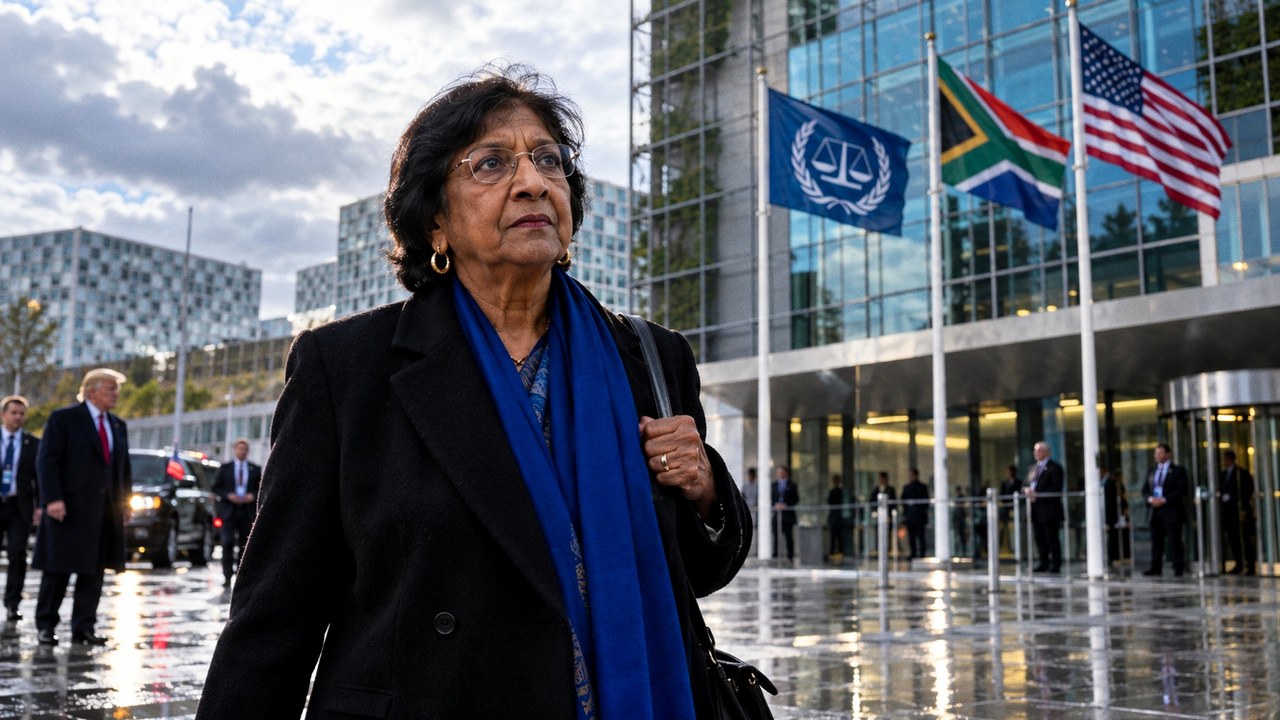
Verified interviews confirm Pillay opposed US sanctions and proposed talks on prize money with a South African university, while no US policy reversal, donation or Federal Reserve change occurred
Pillay Uses Nobel Prize to Fight US Sanctions
Fresh from winning the Peace Prize, a veteran judge rejects American exemptions from the world criminal court.
Other links
Navanethem "Navi" PillayDonald Trump and the US administrationInternational Criminal CourtIn a nutshell
South African jurist Navi Pillay turned her 2026 Nobel Peace Prize into an immediate defense of the International Criminal Court after Washington placed the tribunal on its sanctions blacklist. The penalties threaten the court's global operations, but Pillay insists international law loses all meaning if major powers can demand legal immunity for their own citizens.
Highlights
- Washington sanctioned the International Criminal Court on October 9, hours after former judge Navi Pillay won the Nobel Peace Prize.
- The US sanctions program permits limited wind-down transactions for the court until April 7, 2027, under General License 13.
- Pillay is exploring plans to discuss her 12 million Swedish kronor prize money with the University of KwaZulu-Natal in South Africa.
- The International Criminal Court relies on the support of 125 treaty member nations while facing US restrictions on banking and technology.
From the Editor’s Diary
International courts depend entirely on the principle that the law applies equally to everyone, but their survival ultimately relies on whether member nations will shield them when superpowers refuse to comply.
Who's involved
Navanethem "Navi" Pillay
South African human rights jurist, former ICC judge and 2026 Nobel Peace Prize laureate
goal → Protect equal international law from political interference and explore educational uses for her prize award
Donald Trump and the US administration
The US president and executive branch enforcing financial sanctions against the ICC
goal → Shield US citizens and allies from prosecution by an international court Washington does not recognize
International Criminal Court
Permanent war crimes court in The Hague backed by 125 member countries
goal → Keep prosecuting grave international crimes and preserve its institutional independence despite US financial restrictions
University of KwaZulu-Natal
South African public university housing the Navi Pillay Research Group
goal → Expand human rights scholarship and legal education through prospective discussions with its prominent alumna
Norwegian Nobel Committee
Independent panel in Oslo that awards the Nobel Peace Prize
goal → Honor lifetime contributions to international justice without bowing to diplomatic pressure
John C. Williams
President of the Federal Reserve Bank of New York
goal → Congratulate 2026 Nobel economics laureates while keeping academic theory separate from interest rate policy
In short
Winning the Nobel Peace Prize gave South African jurist Navi Pillay a global platform to confront US sanctions on the International Criminal Court (ICC), the permanent tribunal that prosecutes war crimes and genocide. The confrontation matters because Washington's penalties threaten to isolate the court from international banks and technology, testing whether international justice can survive when a global superpower objects.
The most likely outcome next is a prolonged diplomatic standoff between Washington and the court's 125 member governments over whether the tribunal can function under American sanctions. That outcome is near-certain because the US measures remain in force while the court continues its work under temporary US wind-down licenses through April 2027.
Washington placed the ICC on its sanctions list on October 9, just hours after Pillay won the award, arguing that the court infringes on American sovereignty. Pillay fired back in media interviews, insisting that powerful nations cannot buy or demand immunity for their citizens while lesser powers face trial.
Previously in this story
Nobel Laureates Face Choices Between Duty and Global Acclaim
15 October 2026Sudden Nobel fame instantly tests whether personal work yields to public pressure.
Nobel Winners Turn Global Spotlight Into Urgent Demands
15 October 2026Freshly honored laureates press world leaders on wartime justice and economic stability.
Pillay Confronts Washington as Nobel Spotlights Global Justice
14 October 2026Navi Pillay uses her new Peace Prize to challenge American penalties against the world criminal court.
Nobel Prizes Turn Surprise Into Public Duty
12 October 2026Winning a Nobel Prize brings sudden global attention and immediate pressure to take a public stand.
Eight Nobel Laureates Step Into Instant Scrutiny
11 October 2026A sudden Swedish telephone call brings global attention and immediate duties.
How it unfolded
A Nobel honor collides with American sanctions
The Norwegian Nobel Committee awarded Navi Pillay the 2026 Nobel Peace Prize on October 9 for a lifetime spent defending international law. Within hours, the US Treasury placed the ICC itself under financial sanctions, barring it from standard American banking and technology services. The timing set off an immediate clash, although investigators have not verified whether the prize announcement directly prompted the White House to act.
Pillay rejects legal exemptions for powerful nations
Pillay used two major interviews to push back against Washington. Speaking to AFP on October 14, she urged President Donald Trump to consult his lawyers and warned that granting exemptions to American citizens would destroy equal justice under international law. She also reflected on her age, noting that at 85 she may travel less, and said she plans to discuss her 12 million Swedish kronor award with the University of KwaZulu-Natal in South Africa. The university already hosts a research group in her name, but no donation has taken place.
On October 15, Pillay told the Australian Broadcasting Corporation that political attacks on the court would not silence her work, as Nobel laureates turn recognition into public demands and commitments on the global stage. That same day, legal scholar Marc Weller published an analysis showing how the court retains lawful jurisdiction over crimes committed on member territory even when the suspects come from non-member nations like the United States.
Where things stand
Pillay's public statements stand as the latest verified steps by the laureate. She has not transferred any prize money, and the University of KwaZulu-Natal has announced no formal financial agreement.
The US sanctions against the court remain fully in place. General License 13 permits routine administrative and wind-down transactions only until April 7, 2027. The broader legal fight turns on whether international courts can operate without political interference from major powers.