We analyzed this claim: is it true that
the 2026 Nobel laureates are using their recognition to advocate public policy and international justice, with new personal commitments and limited institutional consequences emerging after the announcements?

Navi Pillay and Michael Woodford issued public appeals on international justice and inflation policy after their awards, while a New York Federal Reserve statement acknowledged the economics winners and a federal court granted narrow protections against US sanctions targeting an international court.
Nobel Winners Turn Global Spotlight Into Urgent Demands
Freshly honored laureates press world leaders on wartime justice and economic stability.
The story continues

Nobel Laureates Face Choices Between Duty and Global Acclaim
15 October 2026Sudden Nobel fame instantly tests whether personal work yields to public pressure.
In a nutshell
The 2026 Nobel laureates have swiftly transformed their prestigious honors into political platforms, with peace winner Navi Pillay calling on nations to resist United States sanctions on global courts and economics winner Michael Woodford urging central banks to speak plainly to keep consumer prices steady. Although an American federal judge gave two advocacy groups limited protection from penalty rules, the broader American sanctions remain in place, leaving it uncertain whether the winners' moral prestige can shift actual government policy.
Highlights
- Peace laureate Navi Pillay urged nations to unite against United States penalties targeting the International Criminal Court.
- Economics laureate Michael Woodford warned that clear central bank plans are vital to prevent sudden spikes in consumer price fears.
- A federal judge in New York shielded two human rights groups from specific penalty provisions tied to assisting international war crimes investigators.
- Neither economics laureate has disclosed a formal plan or donation for their share of the 12-million-krona cash award.
- Litigants in the American sanctions lawsuit face an October 20 deadline to submit their next steps to the court.
From the Editor’s Diary
Global awards give scholars and jurists immediate moral authority, but prestige alone cannot dismantle state sanctions or change government policy without sustained political support.
Who's involved
Navanethem "Navi" Pillay
South African jurist, former United Nations human rights chief and 2026 Nobel Peace Prize laureate
goal → Protect international courts from sanctions and secure justice for wartime sexual violence
Michael Woodford
Columbia University economist and co-winner of the 2026 Nobel Prize in Economic Sciences
goal → Urge central banks and governments to communicate clear, reliable policies to steady household expectations
Trump administration
United States government under President Donald Trump
goal → Block international court actions it considers illegitimate and enforce economic penalties against foreign tribunals
Robert E. Hall
Stanford University economist and co-winner of the 2026 Nobel Prize in Economic Sciences
goal → Share credit with research partners and promote clearer public understanding of economics
John C. Williams and the New York Federal Reserve
Regional branch leader of the United States central banking system
goal → Highlight how academic economic research guides official interest-rate thinking
Democracy for the Arab World Now (DAWN)
American human rights group working with global tribunals
goal → Help international prosecutors investigate war crimes without facing domestic legal penalties
Taxpayer Alliance Against Genocide (TAAG)
American public advocacy group
goal → Present evidence of severe overseas atrocities to international investigators without fear of sanctions
Jesse M. Furman
United States federal judge in New York
goal → Shield non-profit advocates under free-speech laws while keeping the overall presidential order intact
In short
A Nobel Prize gives recipients an instant global megaphone, and this year's winners are using it right away to demand shifts in government policy.
The most likely next step is a diplomatic and legal showdown over international justice as courts review American penalties against global tribunals and other nations decide whether to heed calls to resist them.
Whether governments will actually change their policies remains uncertain, because words from prestigious prize winners rarely force major powers to reverse course on their own.
Previously in this story
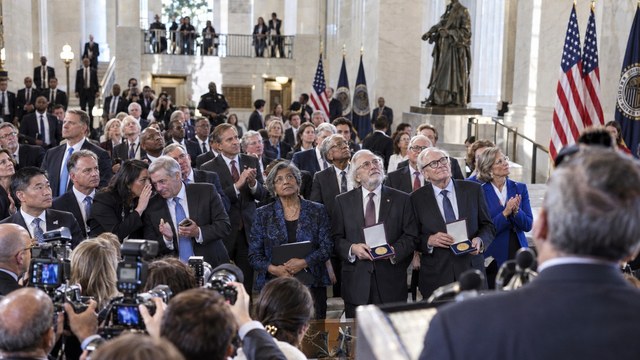
Pillay Confronts Washington as Nobel Spotlights Global Justice
14 October 2026Navi Pillay uses her new Peace Prize to challenge American penalties against the world criminal court.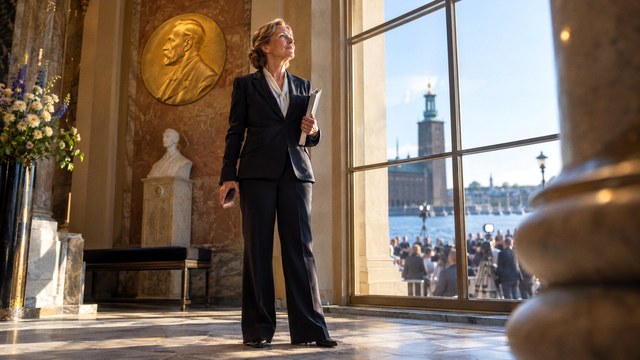
Nobel Prizes Turn Surprise Into Public Duty
12 October 2026Winning a Nobel Prize brings sudden global attention and immediate pressure to take a public stand.
Eight Nobel Laureates Step Into Instant Scrutiny
11 October 2026A sudden Swedish telephone call brings global attention and immediate duties.
How it unfolded
The Peace Prize triggers a dispute over international courts
The announcement of Pillay's Peace Prize on October 9 set off an immediate political clash. Hours after Oslo honored her career on world tribunals, the White House rolled out sweeping financial penalties against the International Criminal Court, where she previously served. Three days later, Stockholm named Hall and Woodford the economics laureates, putting two very different fields into the political spotlight at once.
Laureates speak out as a judge curbs penalties
By October 13, the new laureates began turning their prestige into public pressure. In The Hague, Pillay told Reuters that Washington must return to defending human rights and promised to spend her post-bench years holding perpetrators of wartime sexual violence accountable. In New York, Woodford explained on public radio how clear policy stops runaway price fears, drawing praise from New York Federal Reserve president John Williams.
The same day, federal judge Jesse Furman gave two American human-rights groups narrow protection against penalties tied to helping the court, though he left the broader government policy standing. Over the next twenty-four hours, Pillay expanded her demands, urging countries to band together against Washington's measures, intervene in Gaza, and defend international law, making clear European Lawmakers Demand ICC Shield as Nobel Laureate Challenges Washington that her prize marks the start of a public push, not the end.
Where things stand
The public calls from the 2026 laureates are now clear on the record. Pillay has laid out concrete plans to fight wartime sexual abuse, shield international courts, and push for accountability in Gaza. Woodford has used his platform to advocate transparent government policy on consumer prices, earning official praise from central bankers.
Yet the practical limits remain sharp. Neither economist has outlined how their share of the 12-million-krona prize money will be used, and Pillay has not yet founded an organization or started an official initiative. In court, Judge Furman protected two non-profit groups from certain penalties, but left the wider sanctions against the International Criminal Court intact and ordered both sides to submit their next steps by October 20. Whether any government changes course because of these appeals remains unproven.