We analyzed this claim: is it true that
a flydubai co-pilot attacked his captain and tried to take over the airliner, leading Israel to scramble fighter jets?
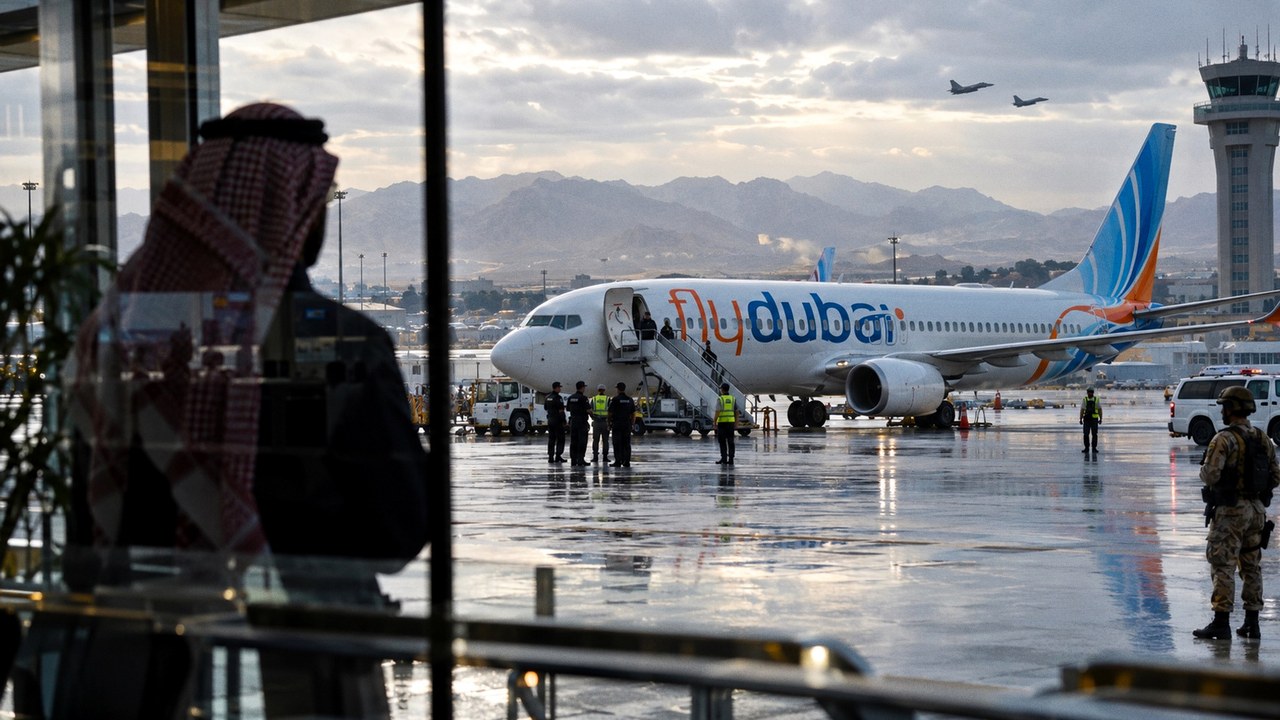
Flight data, airline statements, Saudi officials and UAE prosecutors confirm the mid-air axe attack and emergency diversion, while Israeli forces confirm jets scrambled; claims that Israeli airspace closed were false.
Flydubai co-pilot grounds flight in cockpit attack
A co-pilot attacked the captain with an axe, forcing a Dubai-to-Israel flight into Saudi Arabia and triggering military alerts.
In a nutshell
A scheduled flydubai passenger flight from Dubai to Tel Aviv was disrupted on September 30 when its co-pilot attacked the captain with a crash axe in an attempted takeover. The injured captain unlocked the cockpit door, enabling travelling off-duty airline crew and passengers to restrain the assailant and land the Boeing 737 MAX 8 safely in Saudi Arabia. Emirati prosecutors are treating the incident as an attempted act of terrorism, while investigators examine the suspect's background to determine whether he acted alone.
Highlights
- The co-pilot attacked the captain with the aircraft's emergency crash axe to seize control.
- Off-duty pilots travelling as passengers helped restrain the attacker and land safely at Tabuk, Saudi Arabia.
- The aircraft's emergency transponder signals led Israeli air defense to scramble fighter jets.
- UAE prosecutors officially classified the incident as an attempted terrorist attack.
- Investigators reported no evidence linking the suspect to outside direction from Iran.
From the Editor’s Diary
Modern aviation safety relies heavily on reinforced cockpit doors to keep threats out, but this system leaves the aircraft vulnerable when the threat begins inside the flight deck itself.
Who's involved
Hammam al-Hammami, reported identity
Omani flydubai co-pilot identified by sources as the suspect
goal → tried to seize control of the aircraft in what prosecutors call an attempted terror act
Captain Smit Machchhar
Indian airline captain who survived the assault
goal → protect the aircraft and unlock the cockpit door so help could enter
flydubai
Dubai-based carrier operating the scheduled flight
goal → cooperate with international investigators and support affected passengers and crew
Travelling flydubai pilots, cabin crew and passengers
people aboard the aircraft who responded to the emergency
goal → overpower the attacker, secure the flight deck and land the plane safely
UAE Public Prosecution and General Civil Aviation Authority
Emirati judicial and civil aviation authorities running the criminal inquiry
goal → uncover the suspect's motives, planning and potential outside links
Saudi authorities and Tabuk Airport
regional officials who handled the emergency diversion
goal → secure the aircraft on the ground, treat the injured and preserve evidence
Israeli security authorities and Air Force
defense agencies monitoring the incoming international flight
goal → assess potential airborne threats and intercept the plane if necessary
In short
A mid-air cockpit attack on an airliner bound for Israel showed how personal violence on the flight deck can rapidly escalate into a regional security alert. A passenger jet flying from Dubai to Tel Aviv on September 30 made an emergency landing in Saudi Arabia after its co-pilot attacked the captain with a crash axe to seize control.
The incident will likely lead airlines and aviation regulators to tighten background checks and mental-health screening for commercial pilots. That outcome remains uncertain until investigators determine whether the attacker acted entirely alone or under outside direction.
The flight began normally until erratic altitude swings and emergency transponder signals alerted regional air traffic controllers. Inside the flight deck, the co-pilot struck the captain, but other crew members and travelling airline staff broke in to restrain the attacker. The aircraft diverted to Tabuk airport in Saudi Arabia, where all passengers landed safely and the injured pilots received hospital care.
How it unfolded
Flight FZ1073 suddenly dives over Saudi Arabia
Flydubai flight FZ1073 departed Dubai on a regular morning run to Tel Aviv. Two hours into the trip, tracking data showed the Boeing 737 MAX 8 abruptly dropping from its cruising altitude of 34,000 feet, signaling immediate trouble in the air.
Emergency codes trigger a regional security scramble
The plane began climbing and descending erratically while broadcasting transponder codes for general emergency and unlawful interference. With an Israel-bound jet behaving unpredictably near border airspace, Israeli air defense forces scrambled fighter jets to guard against a possible hijacking.
Safe landing in Tabuk reveals a violent cockpit fight
The jet landed safely at Tabuk in northwestern Saudi Arabia, ending the immediate danger. Passengers transferred to a relief flight later that day, while aviation officials confirmed the captain and co-pilot suffered injuries in a flight-deck struggle.
Criminal investigators take custody of the pilots
Saudi authorities confirmed the co-pilot assaulted the captain, before transferring both men to the United Arab Emirates. As the injured captain described fighting to open the cockpit door so colleagues could help, Emirati prosecutors launched a criminal inquiry into possible terrorism.
Prosecutors confirm an axe attack and an attempted terror plot
UAE prosecutors officially determined that the co-pilot attempted a terrorist act, using the cockpit crash axe to attack the captain and try to take over the plane. Sources identified the suspect as an Omani citizen, while investigators continued probing his background and motives.
Where things stand
The UAE investigation treats the cockpit assault as a planned terrorist attempt, but authorities have not announced a motive or named any sponsoring group. Official records leave the total headcount aboard slightly divided between 172 and 182 passengers and crew. Flydubai flights to Israel remain halted while the inquiry continues.