Cancer Breakthroughs Clash With Deadly Ebola Surge
Sharp clinical advances in oncology collided with a mounting death toll from infectious disease.
Other links
World Health OrganizationDemocratic Republic of the Congo health authoritiesKenya Ministry of HealthUS Food and Drug AdministrationLater readings
Ebola toll surges as breakthroughs hit reality
31 October 2026Epidemics outpaced medicine as clinical trials and lab breakthroughs exposed the steep cost of human proof.
In a nutshell
Neutral (+6) — sharply calmer than the previous reading (−18 → +6, +24). Pressure: Outbreaks and epidemics (−75) and Research integrity (−27); support: Cancer (+39) and Approvals and access (+33). The biggest swing: Global health, +65 since the previous reading.
Highlights
- Cancer: +48 since the previous reading (−9 → +39)
- NIH budget · latest proposal or enacted level: 48.7 USD bn (+7.3 vs a week ago)
The score of every gauge
−100 … +100- The needle starts at 0 at the top: right in blue for a plus, left in red for a minus, the ticks counting the way from 0; a dashed scale is quiet.
- Score — −100 maximum stress … +100 calm
Where the activity was
0–100| Outbreaks and epidemics | 100 |
|---|---|
| Cancer | 85 |
| Clinical trial results | 76 |
| Approvals and access | 72 |
| Global health | 65 |
| Mental health | 62 |
| Brain science | 59 |
| Research integrity | 48 |
| Funding and freedom | 48 |
| Prevention and lifestyle | 45 |
- How much happened to each gauge in this window, 0–100.
- Activity — 0–100
- Activity is not direction: a busy gauge can be calm, a quiet one tense.
Every gauge, measured
| Gauge | Score | vs a week ago |
|---|---|---|
| Clinical trial results | +28 | +15 |
| Approvals and access | +33 | +15 |
| Cancer | +39 | +48 |
| Gene and cell therapy | +18 | flat |
| Basic biology | +18 | flat |
| Brain science | +24 | flat |
| Mental health | +7 | +42 |
| Longevity research | quiet | — |
| Prevention and lifestyle | +17 | flat |
| Outbreaks and epidemics | −75 | flat |
| Global health | +24 | +65 |
| Research integrity | −27 | — |
| Funding and freedom | −15 | flat |
| Public trust and misinformation | quiet | — |
- Each gauge’s score at the end of the window, and how it compares with earlier readings.
- Score — −100 maximum stress … +100 calm
- quiet — nothing to report in the window — not 0
- The changes are computed by nrb.bg from stored readings — a small wobble is shown as flat.
From the Editor’s Diary
The busiest gauge: Outbreaks and epidemics — activity 100 of 100.
In short
Clinical medicine made striking gains between 17 and 24 October 2026, but severe safety risks and an escalating epidemic curbed early optimism. A late-stage trial of 551 breast cancer patients showed the targeted drug trastuzumab rezetecan slowed tumour growth by nearly ten months compared with standard chemotherapy. Yet dangerous side effects jumped sharply, and long-term survival remains unproven. Regulators also cleared narrow new options for patients with rectal cancer and chronic hepatitis B.
The week's darkest setback struck in Central Africa. World Health Organization figures documented 4,687 deaths among 9,704 confirmed Bundibugyo Ebola cases in the Democratic Republic of the Congo, followed by a second death in Kenya. While researchers injected the first volunteer in an experimental vaccine trial, the test remains a clinical inquiry rather than an available safeguard.
Mixed findings emerged across smaller trials. Daily therapist-led exposure sessions substantially eased severe obsessive-compulsive disorder, whereas an experimental home brain-stimulation device failed to beat a dummy control for depression. A landmark global agreement lowered prices for childhood malaria shots, and cellular maps clarified immune defences even as formal retractions forced journals to discard faulty papers.
Earlier readings
Congo battles 9,066 Ebola cases as trial gains falter
17 October 2026Breakthroughs in routine diabetes care clash with widening epidemics and late-stage drug setbacks.Lab Wins Clashed with Epidemic Reality
11 October 2026A week of hard-won cancer approvals collided with failed drug trials and deadly viral spread.
Stories from this reading
FDA approves GSK drug offering rare hepatitis B cure
22 October 2026Regulators cleared Hibsago as a 24-week injection that frees some patients from lifelong pills, but severe liver and platelet risks require weekly checks.
How it unfolded
Potent Tumour Blockers Carry Heavy Toxic Tolls
The strongest clinical evidence arrived from cancer researchers tracking HER2-low advanced breast cancer, a common subtype with limited targeted options. The randomized HORIZON-Breast06 trial pitted the antibody-drug conjugate trastuzumab rezetecan—a guided-missile therapy delivering chemotherapy directly into cancer cells—against standard physician-chosen drugs. The experimental drug halted tumour progression for a median 16.4 months compared to just 6.8 months on conventional care, slashing the risk of disease progression by nearly three-quarters.
The dramatic delay in tumour growth, however, carried an immediate cost for patients. Severe, life-threatening side effects jumped from 67.9% in the chemotherapy arm to 84.1% among those receiving the new therapy, while survival data remained too early to assess. Other late-stage findings delivered conflicting answers, from positive eye inflammation data to a clear draw between rituximab and azathioprine for a rare vascular disorder. Doctors gained a far more potent weapon against advanced breast tumours, but using it will require managing dangerous toxicities.
Regulators Clear Targeted Drugs for Narrow Patient Niches
The Food and Drug Administration moved aggressively to expand precision medicine, granting accelerated approval to the immunotherapy dostarlimab for select rectal cancer cases. The clearance targets tumours with genetic repair defects, relying on single-arm trial data from 154 patients whose cancers cleared without chemotherapy or surgery. Because the study lacked a comparison group, regulators must await long-term data to verify that early tumour clearance translates into durable survival.
The agency widened its scope the next day, approving GSK's antisense medication Hibsago for chronic hepatitis B. The injectable drug shuts down viral protein production in the liver, enabling some adult patients to suppress infection even after stopping pills, though monitoring for liver injury and platelet drops remains mandatory. Later in the week, regulators cleared a once-weekly insulin for diabetic children aged ten and older, relying heavily on adult trials and a tiny pediatric cohort. These fast-tracked approvals cleared the way for non-surgical treatments in narrow patient groups, while leaving broader access and real-world durability unproven.

US FDA clears rectal cancer immunotherapy
20 October 2026A newly authorized drug offers certain patients a chance to skip standard chemotherapy, radiation and organ-altering surgery.8 sources
Oncology Crosses From Early Cell Signals to Bedside Care
The week revealed the stark gap between exploratory oncology and approved therapies. While dostarlimab opened an immediate path to bypass surgery in selected rectal tumours, it rested on a single non-randomized trial that still requires confirmation. By contrast, the Chinese HORIZON-Breast06 breast cancer study delivered rigorous randomized proof of tumour suppression, yet warned clinicians of frequent severe adverse reactions.
At the earliest edge of development, researchers tested invikafusp alfa, an engineered molecule designed to activate immune T-cells against solid tumours. The phase-one trial saw four of 27 patients achieve partial tumour shrinkage at optimal doses, yielding a 14.8% response rate. That early biological signal confirms the drug reaches its target, but it remains far from proving survival benefits. What became clear across the pipeline was that initial tumour shrinkage can now be triggered in difficult cancers, but transforming those responses into standard therapy remains an unfulfilled hurdle.
Detailed Cell Atlases Expose Basic Human Mechanics
Before new drugs can be conceived, scientists must decipher the basic wiring of human cells. Investigators studying innate immunity—the body's first line of physical defence—discovered specialized RNA strands sitting on the exterior surface of monocytes, white blood cells that devour pathogens. Laboratory experiments revealed these surface molecules help dictate inflammatory alarms, opening an uncharted path for immune research.
The following day, developmental biologists published a high-resolution spatial molecular atlas of a Carnegie-stage-12 human embryo. By mapping gene and protein expression across individual tissues during organ formation, the team preserved vital structural context that standard cell dishes destroy. These findings vastly improve how scientists model early human biology, but because they remain fundamental lab observations, they offer no direct treatments for patients today.
Controlled Mental Health Trials Puncture Commercial Hype
Rigorous human testing separated clinical reality from marketing promises in psychiatric care. A German study of 119 obsessive-compulsive disorder patients found that four intensive days of face-to-face exposure therapy achieved a 42.1% remission rate at three months, crushing the 13.6% recorded from self-guided digital therapy. Although higher therapist contact influenced the outcome, the direct confrontation method showed clear superiority over remote apps.
Conversely, high-tech home remedies suffered an outright failure. A randomized clinical trial of 111 depression patients showed that home-administered electrical brain stimulation paired with video games provided no statistically meaningful benefit over an inactive sham treatment. Another study confirmed that complex machine-learning algorithms fared no better than basic clinical interviews at forecasting depression relapses. The outcomes made clear that convenience-oriented digital devices cannot replace direct therapy without clear clinical proof.
Political Reorganization Leaves Biomedical Research Budgets Unresolved
Administrative reorganization inside Washington failed to alleviate deep financial anxieties across the scientific establishment. The White House ordered the creation of a dedicated women's health division and interagency task force within the National Institutes of Health. But the executive order arrived without newly appropriated funding, creating administrative structures without the cash required to issue research grants.
Alarmed by continuing budget delays and lawsuits over terminated federal grants, an alliance of 394 medical and patient groups petitioned Congress to finalize the fiscal year 2027 science budget. That pushed the scientific enterprise into an uncomfortable limbo: federal planners gained new bureaucratic mandates, but labs were left without settled appropriations to sustain long-term clinical research.
Trump orders women's health research overhaul
20 October 2026Executive order creates a dedicated division at the federal medical agency without dedicated funding from Congress6 sources
Ebola Outbreak Explodes as First Human Vaccine Trials Begin
Any celebration of modern medicine collapsed against the reality of an escalating hemorrhagic fever outbreak across Central Africa. On 23 October, the World Health Organization reported that Congo's Bundibugyo Ebola outbreak reached 9,704 confirmed infections and 4,687 deaths across 66 health zones, carrying a 48.3% fatality rate. While the agency logged 976 new cases and 482 deaths since 8 October, the contagion breached national borders, striking an imported case in Nigeria and claiming two lives among nine confirmed cases in Kenya.
The deadly spread marked the moment global health authorities ran out of standard containment buffers, forcing an immediate pivot to clinical field trials. With no approved vaccine in existence for the Bundibugyo strain, doctors in Congo dosed the first volunteer in the experimental phase-two/three Tumaini trial. While launching human trials marks a crucial emergency mobilization, the shots offer no immediate protection for the millions living in the outbreak zone. The worsening epidemic made cross-border transmission a daily reality, while leaving frontline responders dependent on unproven experimental candidates.
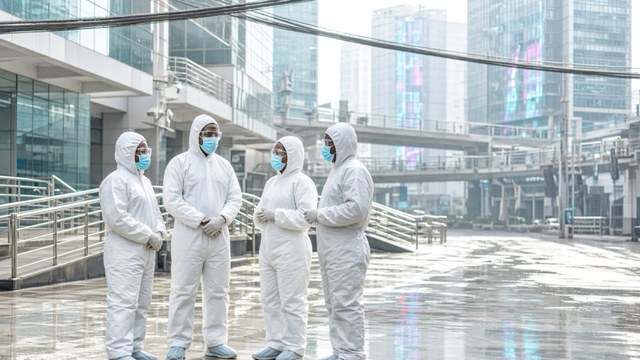
WHO counts 4,687 Congo Ebola deaths
24 October 2026A deadlier Ebola strain spreads across central Africa without an approved cure as researchers begin testing experimental vaccines.14 sources
Journal Retractions Weed Out Compromised Cancer and Imaging Data
Scientific credibility faced an overdue reckoning as peer-reviewed publications moved to purge falsified and unreplicable claims. In a single day, academic publishers issued three formal retractions across major disciplines. Scientific Reports struck down a study examining combined colorectal cancer drugs alongside an AI model designed to identify brain tumours on MRI scans.
Simultaneously, the journal Biological Research pulled an animal study evaluating stem cells for ear-cartilage regeneration after investigators found compromised figures and missing raw data. These retractions did not invalidate work across those fields, but they underscored the constant threat of unverified data entering clinical pipelines. Peer-reviewed literature was stripped of flawed evidence, making it impossible for researchers to rely on those specific findings for future drug development.
Dementia Research Shifts Toward Prevention and Rapid Drug Testing
The battle against dementia pivoted from isolated trials toward broad systematic testing. In Britain, researchers launched the AD-SMART platform, an adaptive trial enrolling roughly 1,200 participants to test multiple existing medicines simultaneously under one evolving protocol. By starting with the diabetes pill metformin and ADHD drug atomoxetine, the team aims to identify working therapies faster without running repeated standalone trials.
Meanwhile, an epidemiological investigation demonstrated that lifelong cognitive defence begins in youth. Leveraging Britain's 1972 law raising the compulsory school-leaving age to 16, researchers tracked more than 100,000 UK Biobank participants and recorded a 0.88-percentage-point decrease in late-life dementia diagnoses linked to that extra year of study. While the findings depend on specific cohort assumptions, they establish stronger evidence that extended schooling buffers the aging brain. Scientists now possess a faster system for testing repurposed drugs, while confirming that public education policies offer tangible protection against neurodegeneration.
Lifestyle Studies Reveal Narrow Margins for Long-Term Health
Two separate human outcome studies reinforced the need to scrutinize preventive health claims before turning them into medical advice. A trial involving 166 families tested whether teaching psychological coping tools alongside diet coaching improved adolescent weight loss. The extra training produced no immediate difference on the scale, but it helped teenagers avoid regaining weight over long-term follow-up, demonstrating a modest benefit.
At the same time, an observational study of 1,861 kidney patients warned against extreme dietary protein restrictions. Those consuming under 0.6 grams of protein per kilogram of body weight suffered higher rates of kidney failure and mortality than peers consuming double that amount. However, because severely ill patients often reduce food intake voluntarily, the study did not establish that eating extra protein preserves kidney tissue. The findings provide clinicians with practical behavioural tools, but they rule out blanket dietary restrictions for advanced kidney disease.
Global Deal Cuts Malaria Vaccine Price for Developing Nations
While Ebola strained emergency response funds, international procurement agencies secured a rare structural victory in disease prevention. UNICEF and the global vaccine partnership Gavi completed a procurement contract slashing the price of the RTS,S malaria vaccine by 40% down to €5.50 a dose starting in 2027. The agreement projects roughly US$50 million in savings over three years, enough to fully immunize up to one million additional children.
The price reduction depends on factory scaling and international approvals rather than immediate shots administered today. Yet it demonstrated how commercial bulk-buying agreements can lower financial barriers for fragile healthcare systems. By locking in substantial price cuts, health agencies ensured developing nations can vastly expand childhood malaria immunization once expanded factory capacity clears inspection.
Cell Quality Determines Long-Term Immunotherapy Success
Gene therapies that re-engineer a patient's own immune cells to attack blood cancers have long suffered from unpredictable durability. A broad study examining 580 lymphoma patients across multiple trials found that the cellular recipe of the manufactured product directly determines how long the therapy lasts. When infused products contained higher numbers of naive-like, less-differentiated T-cells, patients survived far longer without tumour regrowth, a finding verified in a separate group of 203 patients.
Yet researchers discovered that biological manufacturing resists simple formulas. An earlier analysis linked low-dose therapeutic success to mature effector-memory cells instead, demonstrating that no single cellular marker guarantees a cure. The validated finding makes it possible for manufacturing labs to screen and optimize cell batches for durability, but it stopped short of offering an immediate clinical overhaul.
Bedside Wins Meet Outbreak Reality
Clinical breakthroughs rarely arrive cleanly, and the seven days ending 24 October demonstrated how fragile medical gains remain. Solid phase-three cancer data and targeted drug clearances delivered genuine hope to hospital wards. Yet that momentum ran directly into an uncontrolled Ebola epidemic that exposed the limits of current field medicine.
At the bench, scientists learned equal lessons from what worked and what failed. Unsuccessful psychiatric trials exposed the hazards of overhyped technology, while watchdog retractions highlighted structural flaws in published literature. Across the entire 17 to 24 October window, scientific progress advanced, but only under severe pressure from disease mortality, drug toxicity and tight budgets.
Where things stand
As of 06:00 UTC on 24 October, global medicine sits in a strictly qualified position of advance. Oncology delivered an indisputable win by proving an antibody-drug conjugate can stall advanced breast cancer for months, while regulators opened non-surgical paths for rare bowel tumours. Yet each victory brought immediate qualifications: breast cancer therapies triggered severe toxicity without mature survival proof, cancer approvals rested on small single-arm studies, and commercial brain-stimulation devices failed basic clinical tests. Basic laboratory models yielded valuable mechanical insight, but human anti-aging breakthroughs remained non-existent.
The unresolved test now facing the international community is whether emergency containment can halt Central Africa's Bundibugyo Ebola outbreak before it spreads across regional hubs, and whether experimental vaccines prove safe in field trials. In cancer clinics, doctors must learn whether delaying tumour growth translates into extended patient survival. In public health, procurement agencies must deliver on promised factory outputs for childhood malaria vaccines, even as scientists wait to see if the US Congress secures long-term biomedical research funding. The week proved science can still outmanoeuvre stubborn tumours, but it left the broader machinery of public health fighting on dangerous ground.
Who's involved
World Health Organization
The United Nations agency tracking global contagion
goal → Halt Bundibugyo Ebola transmission and map its spread
Democratic Republic of the Congo health authorities
Central African national public health leadership
goal → Stem viral outbreaks, treat victims and test vaccines
Kenya Ministry of Health
East African national health department
goal → Quarantine suspect cases and block community spread
US Food and Drug Administration
The main American drug safety watchdog
goal → Review new therapies and enforce rigorous safety rules
HORIZON-Breast06 investigators
Multi-hospital clinical trial team across China
goal → Prove the survival trade-offs of trastuzumab rezetecan
Gavi and UNICEF
International vaccine fund and UN children's agency
goal → Cut childhood malaria shot prices and expand supply
National Institutes of Health
Primary US medical research agency and grantmaker
goal → Fund fundamental research amid evolving priorities
UK Dementia Research Institute
British research team targeting neurodegenerative disease
goal → Speed practical human testing of repurposed dementia drugs
Coalition of 394 medical research organisations
Alliance of US medical societies and patient groups
goal → Secure vital fiscal year 2027 government research grants
Scientific Reports and Biological Research
Leading peer-reviewed academic science journals
goal → Purge compromised papers from the scientific record