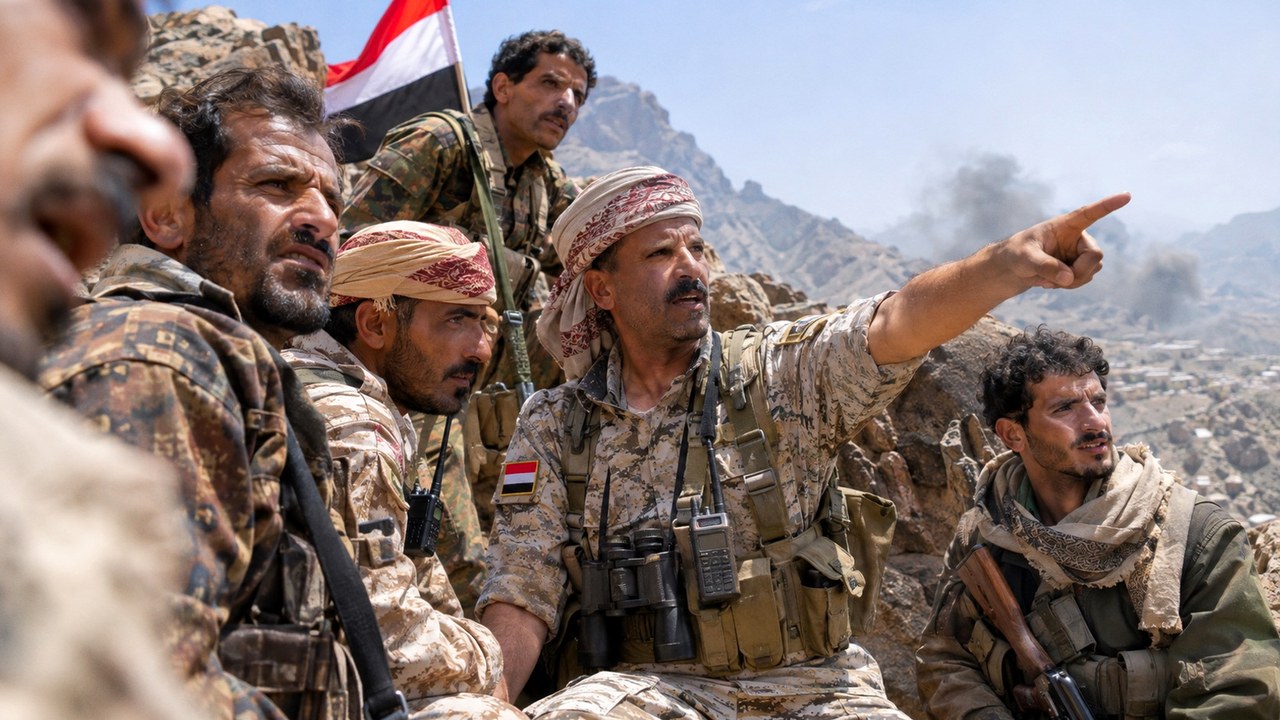
Yemen expands ground war across mountains
A major government offensive brings fighting closer to southern cities and worsens a deepening civilian aid crisis.
The story continues

Iran Attacks Keep Oil Near $100
6 November 2026Ship attacks in the Strait of Hormuz briefly lifted oil prices near $100 a barrel, but prices fell back as peace hopes and surplus supplies outweighed the risks.
In a nutshell
Yemen's recognized government has opened a multi-front military campaign to roll back Houthi territorial gains, triggering fierce fighting across northern mountains, coastal corridors, and southern highways. While the government claims tactical advances in the north, Houthi fighters have pushed within striking distance of the southern seat of power in Aden, leaving front lines unstable and cutting off hundreds of thousands of civilians from basic supplies.
Highlights
- Government forces launched a nationwide campaign on October 5 to reclaim territory lost to the Houthis.
- Houthi fighters advanced to within 80 kilometres of the southern government hub of Aden.
- The United Nations warned that blocked roads around Taiz have isolated roughly 800,000 residents from humanitarian assistance.
- More than 299,000 Yemenis were newly displaced by fighting between August 1 and October 31.
From the Editor’s Diary
When civil conflicts reopen across multiple regional corridors at once, ground gains in one province rarely resolve vulnerability elsewhere, leaving civilians along the contested supply routes to absorb the immediate cost.
Who's involved
Yemeni Presidential Leadership Council and government armed forces
The internationally recognized governing body based in Aden and led by President Rashad al-Alimi, commanding national soldiers and allied brigades
goal → Push Houthi fighters out of key territory, reopen blocked trade roads, and take back national institutions
Ansar Allah, also known as the Houthis
An armed and political group backed by Iran that controls the capital city of Sanaa and large parts of northern Yemen
goal → Hold onto captured territory, stop government advances, control strategic mountain roads, and pressure neighboring Saudi Arabia
Saudi Arabia and the Saudi-led military coalition
Yemen's northern neighbor and the primary foreign military backer of the recognized government
goal → Shield its borders and infrastructure from missile strikes while preventing hostile forces from controlling Red Sea waterways
Popular Resistance and Giants Brigades
Armed Yemeni volunteer and regional units fighting alongside government soldiers on western and southern fronts
goal → Defend government towns, reclaim lost outposts, and disrupt opposing supply lines
United Nations and humanitarian agencies
International groups tracking civilian casualties, hunger, and mass displacement across the country
goal → Keep relief corridors open, deliver basic aid, and protect civilians caught near front lines
International Committee of the Red Cross
An independent humanitarian organization delivering urgent medical gear to conflict areas
goal → Bring trauma kits and emergency supplies to hospitals treating wounded civilians
Civilians in Taiz and other contested regions
Regular families living along front lines, blocked highways, and under-supplied towns
goal → Find drinking water, basic food, and medical care while surviving crossfire and shelling
In short
A fresh wave of fighting in Yemen is drawing the country back into a wide multi-front conflict, threatening vital shipping routes along the Red Sea and cutting off food and medicine for hundreds of thousands of people.
The renewed ground war makes a sharp deterioration in civilian conditions near major southern cities likely to happen next.
That outcome is likely, because opposing armies are actively fighting along the main roads that transport food, fuel, and medical aid into encircled population centers.
Flagged by: Geopolitics Barometer · 5 November 2026
Previously in this story
OPEC+ leaves oil supply limits unchanged
2 November 2026Seven major oil nations keep their daily production targets steady for December despite transport bottlenecks and crude prices above 100 dollars.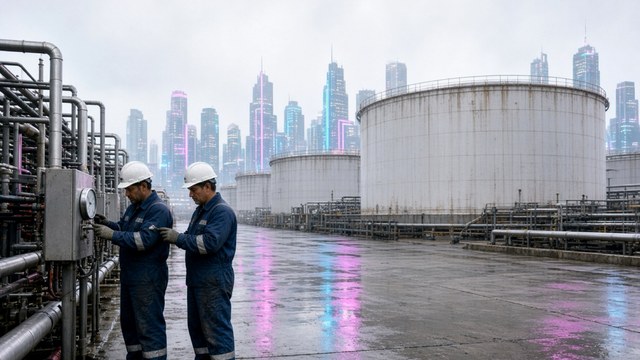
Washington leaves emergency oil cushion at 44-year low
27 October 2026A persistent drawdown leaves the country with less spare crude to counter sudden international supply shocks.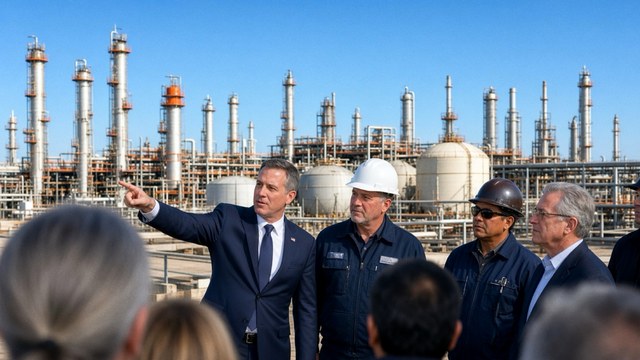
Washington lends crude oil to keep Louisiana refinery running
24 October 2026The United States approved an emergency loan of crude oil from its national stockpile after supply deliveries stalled at a major fuel plant in Louisiana.
Washington draws oil reserve to 1982 low
20 October 2026The United States emergency crude stockpile has dropped to its lowest point in four decades, narrowing the government buffer against global price shocks.Iran claims naval mines hit two crude oil supertankers
18 October 2026Tehran asserts two vessels carrying four million barrels caught fire in Hormuz, but naval monitors report zero confirmation.Iran sinks container ship as Gulf oil tops 106 dollars
15 October 2026A lethal missile strike on the commercial ship GFS Pride closed shipping lanes and drove up crude costs.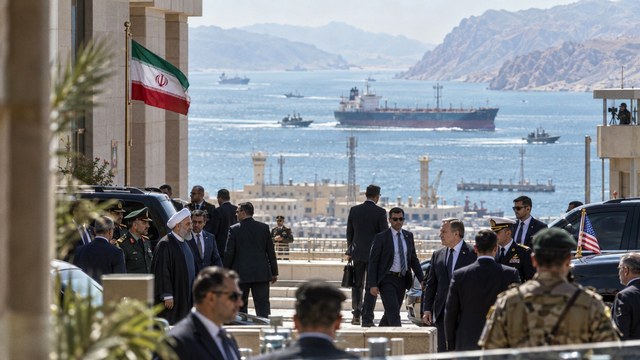
Iran pushes oil past 106 dollars with tanker strikes
14 October 2026Attacks on ships around the Strait of Hormuz threaten global fuel supplies and challenge American naval patrols.Houthis strike Saudi Aramco headquarters in Dhahran
14 October 2026Yemen's Iran-aligned movement hit an office tower at the world's top crude exporter, triggering retaliatory coalition airstrikes on Sanaa.
Shell and Chevron halt oil as crude tops $102
10 October 2026Oil prices jumped past $102 a barrel as Middle East shipping attacks and an American hurricane threatened global fuel supplies at the same time.
Yemen army counterattack pushes Houthis back from shipping lane
8 October 2026Government forces recovered towns along the Red Sea, but casualty numbers and mountain battles remain unconfirmed.OPEC+ holds oil targets steady above $100
6 October 2026Seven major oil producers kept their November production limits unchanged as Middle East transit disruptions leave physical supply short of official paper targets.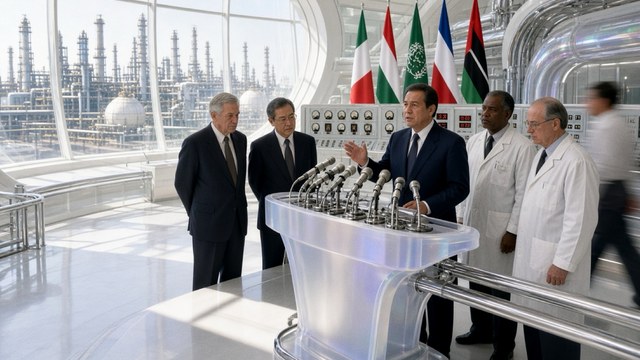
OPEC leaves oil limits unchanged despite rumors
30 September 2026Official policy holds output flat into October as Middle East shipping recovers.Trump peace rejection pushes Brent oil past $106
29 September 2026Rebuff of Iranian offer to open Strait of Hormuz revives Gulf shipping risks and roils stock marketsUS risks fuel stockpile floor to lower pump prices
29 September 2026Washington is offering 40 million barrels of crude on loan even as federal emergency reserves hover at four-decade lows.Saudi Arabia restores crude exports to 80%
29 September 2026Saudi Aramco reopens its East-West pipeline to the Red Sea port of Yanbu after emergency repairs, easing regional shipping bottlenecks.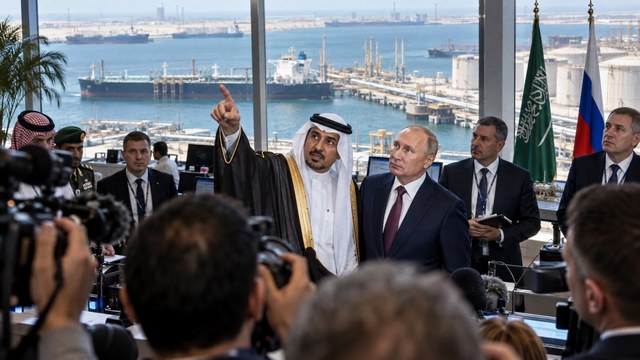
Saudi Arabia lifts oil flows past Hormuz
25 September 2026Emergency shipping routes pull crude prices back near 100 dollars despite ongoing attacks.Saudi Arabia downs armed drone near Mecca
16 September 2026Air defenses destroyed the weapon before it entered holy airspace as Houthi officials denied targeting the sanctuary.Saudi Arabia faces energy fallout as Houthis wound 73
10 September 2026A cross-border drone and missile assault ignited fires at southern oil sites, collapsing a four-year truce into direct military escalation.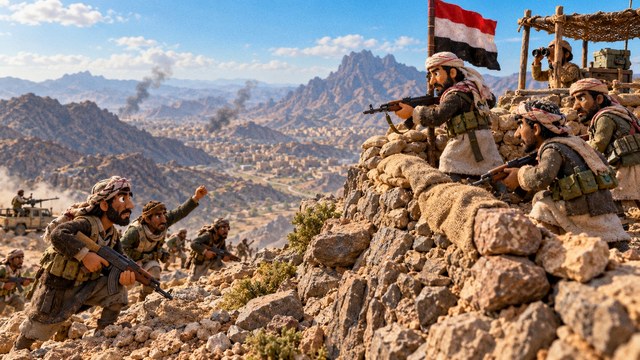
Houthis displace 917 families in western Yemen offensive
7 September 2026Government counterattacks pushed the fighters off one key mountain, but combat now stretches across a wider western front.Houthis push toward Red Sea as Yemen battles kill 60
5 September 2026Fierce fighting in southwestern Yemen leaves dozens dead as rebels press toward vital shipping lanes.
Hormuz Tanker Strikes Deepen Global Oil Flow Risks
31 August 2026Attacks on two supertankers carrying Saudi crude squeeze traffic through the world's most vital energy channel.Houthis widen Saudi energy attacks beyond Jazan refinery damage
21 August 2026Yemen's Iran-aligned movement claims new drone strikes on Najran airport and Aramco sites, expanding a campaign that has already crippled a 400,000-barrel-per-day refinery and disrupted Red Sea shipping.
Houthis delay Jazan refinery restart to August 30
11 August 2026Yemen's Iran-aligned Houthi movement says it struck Saudi Aramco's Jazan refinery with a drone on August 9, prolonging an outage at the 400,000-bpd plant on Saudi Arabia's southwestern Red Sea coast.
Iran War Lifts Brent 24% as U.S. Reserve Falls to 307.7 Million Barrels
1 August 2026Since the February 28, 2026 U.S.-Israeli attack on Iran, Brent has risen from about $73 to $90.74 and the U.S. emergency oil reserve has fallen to its lowest level since 1983.
How it unfolded
Yemen launches nationwide military offensive
President Rashad al-Alimi announced that government forces were starting an offensive to take back territory held by Houthi forces. The move responded to Houthi gains near the southern entrance of the Red Sea in September. The announcement made a broader escalation across central and western battlefronts more likely, as both sides moved from defensive stances into active combat.
Operations begin along the western coast
The government formally named its campaign Operation Dawn of Yemen, focusing initial attacks near the Red Sea coast with air support from Saudi Arabia. Both sides quickly issued large claims of targets destroyed and enemy fighters neutralized, though none could be independently checked. The heavy air campaign made a wider inland war more likely, as fighting expanded east toward vital transit routes.
Clashes spread inland as Taiz is surrounded
Combat moved into central oil-rich Marib while Houthi forces tightened their grip around Taiz, cutting its main access highway to Aden. Missiles hit an army base in Shabwa, while the United Nations warned that blocked roads had cut off food and medicine for roughly 800,000 residents. The encirclement made a severe humanitarian emergency more likely, as civilian supply corridors were completely severed.
Famine alerts mount as northern fighting flares
The governor of Taiz warned that his isolated city faced famine conditions, with acute shortages of flour, clean water, and hospital oxygen. Meanwhile, the government opened a major offensive front in northern Al-Jawf province, claiming hundreds of strikes and mountain gains that the Houthis denied. The widening battles made a quick diplomatic pause less likely, pushing nearly 300,000 newly displaced people into deeper hardship.
Houthi fighters advance toward southern seat of power
While government commanders claimed to have secured mountain ranges in northern Al-Jawf, Houthi fighters broke through positions in the south. Military sources confirmed to Reuters that the Houthis captured a district just 80 kilometres from Aden, threatening the government's interim capital. This southern push made an immediate threat to government headquarters more likely, despite its reported gains in the north.
Mountain battles continue as relief trucks enter Taiz
Government troops reported taking several high-altitude outposts east of Al-Hazm, while a missile attack struck a training camp in al-Dhalea and the Houthis claimed cross-border attacks on Saudi Arabia. Amid heavy shelling, four Red Cross trucks carrying medical supplies managed to reach Taiz. That delivery provided short-term relief, but ongoing combat left long-term aid access to the city highly uncertain.
Fresh airstrikes hit western provinces as disease spreads
Local media reported new airstrikes against missile sites in Ibb and fighting in Lahij, alongside reports of over 5,000 cases of illness in Taiz caused by collapsed sanitation services. The strikes and ground clashes showed that active fighting was continuing across western fronts. This made any near-term stabilization of municipal services or civilian infrastructure unlikely.
Where things stand
Operation Dawn of Yemen remains active across several fronts as of November 5, 2026. Government forces continue to report territorial gains on mountain ridges in Al-Jawf, but these claims rely almost entirely on military briefings rather than independent visual verification.
At the same time, Houthi forces maintain positions within 80 kilometres of the government's base in Aden, leaving southern roads insecure. It remains too early to tell whether the government can hold its reported mountain positions or whether Houthi forces can advance further south, because front lines remain fluid and subject to daily counterattacks.
Crucial questions also remain unanswered regarding whether the besieged city of Taiz can maintain steady access to food and medical relief. While limited aid shipments have arrived, widespread displacement and unverified claims of military losses from both sides show an active war with no immediate resolution in sight.