We analyzed this claim: is it true that
Bulgaria laid the attributed remains of medieval ruler Tsar Samuel into a newly prepared marble tomb in Sofia after Greece handed them over on October 3, 2026?
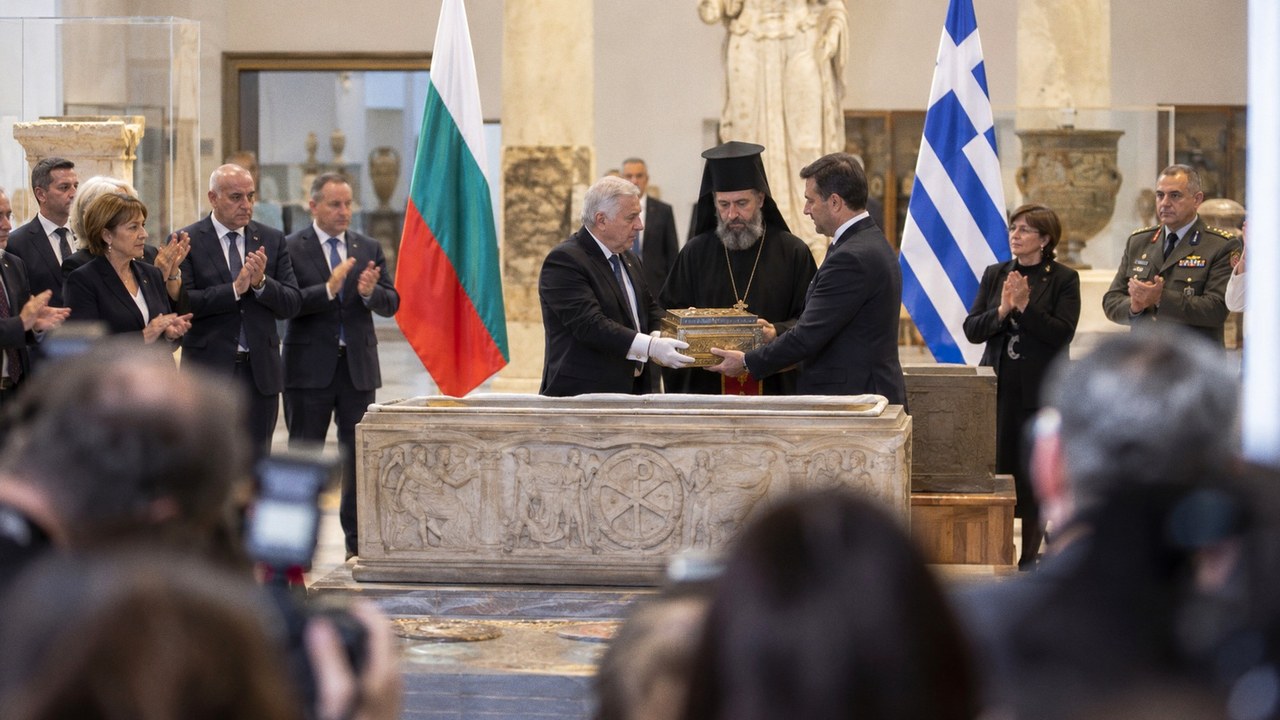
Officials signed handover protocols in Thessaloniki on October 3, flew the attributed remains to Sofia under military escort, and placed them in a marble sarcophagus at St Sophia Church that was built on October 2, though final carved trim remained unfinished.
Greece returns medieval ruler Samuel to Bulgaria
Sofia lays attributed bones of Tsar Samuel in St Sophia after state handover
In a nutshell
Greece formally returned the attributed bones of medieval ruler Tsar Samuel to Bulgaria on October 3, ending years of diplomatic talks with a military flight, a state ceremony in Sofia, and burial in St Sophia Church.
Highlights
- Greece signed over the attributed bones of Tsar Samuel at a museum ceremony in Thessaloniki on October 3.
- Bulgaria agreed to return 48 Greek church relics as part of the bilateral exchange.
- A military transport flew the remains to Sofia for a 21-gun state salute and public cortege.
- Craftsmen assembled the marble burial sarcophagus inside St Sophia Church on October 2.
From the Editor’s Diary
Diplomatic compromise over shared medieval history can turn long-standing cultural friction into stable, cooperative statecraft.
Who's involved
Bulgarian government
Bulgaria’s national cabinet, which agreed the cultural exchange and arranged the military transport and state burial
goal → secure the return of the historical remains and stage the public ceremony in Sofia
Greek government
Greece’s national leadership, which held custody of the bones and exchanged them under a bilateral pact for 48 ecclesiastical relics
goal → transfer the historical bones to Bulgaria while recovering Greek church treasures
Museum of Byzantine Culture in Thessaloniki
the Greek state museum that stored the attributed bones and hosted the signing ceremony
goal → hand over legal custody of the historical material under the interstate treaty
Bulgarian Orthodox Church and Sofia Metropolitanate
the Christian leadership managing St Sophia Church, which oversaw the tomb site and burial rites
goal → conduct the funeral service and provide a resting place for the ruler
Evtim Miloshev and Lina Mendoni
the Bulgarian and Greek culture ministers who signed the official delivery papers
goal → legally execute the bilateral cultural property transfer
Tsar Samuel
the medieval Bulgarian monarch who ruled from 997 to 1014 and whose attributed bones were returned
goal → provide the historical focus of the repatriation agreement
In short
Bulgaria and Greece settled a historic custody question on October 3 by returning the attributed remains of Tsar Samuel to Sofia, marking a rare moment of cultural reconciliation between the two neighbours.
The formal handover clears the path for the medieval ruler to rest permanently inside St Sophia Church.
This permanent placement is near-certain because the bilateral handover protocols are signed, the bones have reached Sofia, and church authorities have already laid them inside the newly assembled marble tomb.
Previously in this story
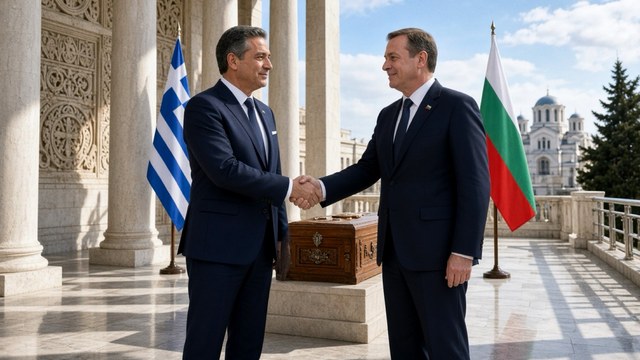
Greece sets October 3 transfer of medieval ruler
2 October 2026Athens and Sofia agree to exchange medieval remains for ancient relics, but the physical handover awaits formal signatures.
How it unfolded
Sofia fixes the final resting place
Church leaders chose the southern wing of St Sophia Church for the tomb on October 1, clearing space for the marble chest. Craftsmen revealed they had begun cutting the stone on September 25 and planned to assemble the pieces inside the church by the following evening.
The ceremony acquires a clock
Greek and Bulgarian officials aligned their clocks for the weekend transfer. Athens set the formal signing for 10:30 on October 3 in Thessaloniki, while Sofia planned a public welcome at 12:30 followed by a funeral procession to the church.
The empty sarcophagus is made ready
Bulgaria detailed a ceremonial arrival featuring a military transport plane, fighter jet escorts, and 21 cannon salutes. Workers delivered the marble slabs to St Sophia Church on Friday morning and fitted them together by late afternoon, leaving extra decorative panels to be completed later.
Preparation becomes an actual handover
Ministers signed the transfer papers in Thessaloniki on Saturday morning before prime ministers from both countries. The remains flew to Sofia aboard a military aircraft, moved through the city centre under state escort, and were entombed inside St Sophia following a solemn memorial service.
Where things stand
The cross-border transfer is finished and verified. Greek officials delivered the bones to Bulgaria on October 3, and clergy placed them inside the marble tomb at St Sophia Church before evening.
Historians still debate whether archaeologists first unearthed the grave in 1964, 1965, or 1969, and some scholars note that scientific identification remains archaeological rather than absolute individual certainty.