We analyzed this claim: is it true that
ballot measures approved in the November 2026 US midterms immediately become enforceable law without further action?

voter approval alone does not enact law; legal effect depends on official certification, constitutional start dates, state agency rollout and pending lawsuits
Winning a US Ballot Measure Is Only Step One
Voter approval across 36 states starts legal clocks, administrative work and court fights rather than immediate change.
In a nutshell
Voters in dozens of states approved major ballot measures on November 3, 2026, but those victories do not take effect right away. Across the country, state constitutions require official vote counts, formal proclamations and specific start dates before a measure becomes law. In Virginia and Florida, major tax and constitutional changes will not begin until January 1, 2027. In Nevada and California, agencies and lawmakers must pass operational rules, sell authorized bonds or defend approved amendments in court before citizen decisions change daily life.
Highlights
- Voters in more than three dozen states considered 145 statewide ballot measures on November 3, 2026.
- Virginia set an effective date of January 1, 2027, for its newly approved constitutional amendments on abortion, marriage and voting rights.
- A Virginia court hearing is scheduled for November 13, 2026, to consider a lawsuit seeking to block certification of the state's reproductive amendment.
- California election officials have until December 11, 2026, to formally certify statewide ballot results.
- California voters approved $36.25 billion in housing financing and bond borrowing across Propositions 1 and 37 that agencies must now administer.
Authorized California Housing Programs
billion USDThe findingCalifornia voters authorized more than twice as much financing for homebuyer programs as for affordable and veterans housing.
- The total borrowing and financing authority approved by California voters for housing programs on November 3, 2026.
- Proposition 37 — State program providing homebuyer financing assistance
- Proposition 1 — State borrowing program funding affordable and veterans housing
- Approved borrowing does not release money right away; state agencies must now issue bonds and set up lending programs.
From the Editor’s Diary
A majority vote on election day is only the start of the legal process. In the American system, changing the rules requires surviving the courts, official certification and the slow machinery of state government.
Who's involved
State voters and ballot-initiative organizers
Citizens and advocacy groups using direct statewide votes to pass or protect laws
goal → Turn popular majorities into binding law and block unwanted legislative policies
State election authorities
Public officials such as secretaries of state and local boards who count and certify votes
goal → Confirm official election results and enforce legal procedural deadlines
State legislatures and executive administrations
Elected lawmakers, governors and state agencies that manage public policy and budgets
goal → Build administrative programs, pass enabling laws and oversee voter-mandated changes
Virginians for Reproductive Freedom
Campaign coalition defending abortion access and reproductive care in Virginia
goal → Write reproductive protections into the state constitution and fight off lawsuits
Family Foundation and allied legal challengers
Conservative advocacy groups in Virginia challenging the abortion measure
goal → Block certification of the reproductive amendment through legal challenges in court
Missouri referendum organizers
Citizen groups challenging a legislative plan to redraw voting districts
goal → Protect existing congressional boundaries by putting the legislature's map to a public vote
Missouri Republican legislative leadership
State lawmakers who passed a redrawn congressional map and tried to limit abortion rights
goal → Advance redistricting plans and policy changes that voters ultimately rejected
California wealth-tax and tax-limitation campaigns
Competing political groups promoting or restricting state tax powers
goal → Pass preferred taxation rules while preventing rival tax measures from taking effect
In short
A winning vote on an American ballot measure does not change the law the next morning. Across more than three dozen states, voters approved new constitutional rights, rejected redrawn voting districts and authorized billions in public spending on November 3, 2026. Yet none of these changes took effect on election night because state constitutions require formal vote counting, legal start dates and government execution before any ballot victory changes daily life.
The most likely next step is that approved measures will sit in legal and administrative pipelines through at least early 2027. State election officials must first certify official counts, after which agencies must write detailed regulations, legislatures must pass enabling laws or judges must resolve outstanding lawsuits.
This delay is near-certain because state legal systems require these steps by statute. Virginia has set a start date of January 1, 2027, for its new amendments, while also facing a court hearing on November 13 that could halt certification. In Nevada, election officials must wait for the 2027 legislature to build rules for voter identification before the 2028 election. In California, final vote counts are not due until December 11, leaving large housing bond programs on hold until state agencies can legally sell bonds.
Previously in this story
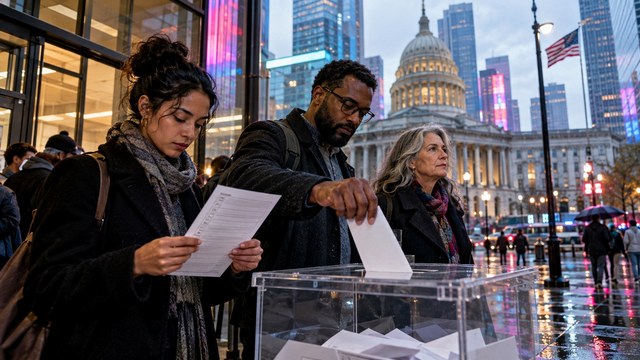
How State Ballot Questions Can Bypass Lawmakers
4 November 2026Millions of voters will shape abortion, tax and election laws on November 3 without waiting for politicians.
How it unfolded
Supreme Court Returns Abortion Policy to the States
When the United States Supreme Court overturned federal constitutional abortion rights in Dobbs v. Jackson Women's Health Organization, it handed regulatory power over pregnancy back to state governments. That decision kicked off nationwide campaigns to write protections directly into state constitutions, setting the stage for the wide range of policy questions that landed before voters in November 2026.
The Ballot Becomes a Constitutional Defense
Advocates responded to the Supreme Court ruling by taking policy directly to the public through ballot measures, which ordinary state lawmakers cannot easily overturn. In 2024, Missouri voters added reproductive protections to their constitution, while Nevada voters approved the first of two consecutive statewide votes required to alter their own state constitution.
Legislatures Attempt to Change the Rules
State lawmakers soon pushed back. In Missouri, Republican legislators drew a new congressional map to gain more seats and drafted plans to undo the newly approved abortion amendment. Citizens fought back by gathering signatures to force a public vote on the map, while Virginia lawmakers cleared their own constitutional questions for the November 2026 ballot.
Courts and Legislatures Define the Road to Implementation
State courts stepped in during 2026 to govern how and when citizen votes take effect. Virginia's top court threw out an earlier April redistricting vote on legal grounds, and Missouri's Supreme Court ruled that lawmakers could not enforce their new congressional map while a citizen referendum was pending.
Voters Decide, but Not Every Question Is Settled
As Americans went to the polls on November 3, 2026, they approved 145 measures on abortion, voting, housing and taxes. But passing a measure did not guarantee quick rollout. Virginia's reproductive rights measure faced a lawsuit challenging certification before voting even ended, and California voters weighed overlapping tax proposals. A media projection explains why election night winners are not yet official, because results must still undergo canvassing and legal certification.
The Morning After Reveals the Legal Deadlines
The morning after the election showed clear voter choices alongside long implementation schedules. In Virginia, approved protections for abortion, marriage and voting rights carry a delayed January 2027 start date. Nevada completed its required second vote on abortion, but its approved voter identification rule still needs work from state administrators. California approved billions in housing debt that agencies must now issue, while Maryland voters approved a framework for redistricting rather than a completed map.
Where things stand
The legal reality following the November 3, 2026, election divides into several steps across the states.
In California, approved measures become effective five days after the Secretary of State files the official vote statement, which is due by December 11, 2026. While Proposition 3 makes existing upper-income tax rates permanent, Propositions 1 and 37 authorize borrowing that state housing agencies must now structure and issue. Proposition 42 leads in early counts to restrict future taxation, while Proposition 40 appears headed for defeat.
In Virginia, voters approved constitutional amendments protecting reproductive freedom, marriage equality and automatic voting restoration for people leaving prison. All three specify January 1, 2027, as their start date. Certification of the abortion measure faces a legal challenge in court on November 13.
In Nevada, second consecutive approvals for abortion protections and voter identification complete the required popular votes. State election officials must now ask the 2027 legislature to pass operating laws before voter identification takes effect for the 2028 elections.
In Missouri, voters rejected legislative attempts to repeal the 2024 abortion amendment and defeated a redrawn congressional map, leaving older boundaries in place. In Maryland, voters approved new redistricting standards that require an official proclamation from the governor before any new district lines can be drawn.
US midterm elections 2026
Texas and Georgia voters halt artificial intelligence data centers
4 November 2026Democratic gubernatorial upsets in Texas and Georgia threaten rapid artificial intelligence data center construction.Gold tops 4,000 dollars as election gridlock spurs rally
4 November 2026Bullion recovered lost ground on November 4, 2026, after early US midterm election tallies pointed to a divided Congress.OpenAI blocks midterm voter suppression queries
3 November 2026Artificial intelligence labs ran round-the-clock command centers to police model abuse during the 2026 voteTrump warns of post-election Iran strikes
31 October 2026Washington resists claims of a fast pre-election pact as Gulf partners prepare for potential military action.Democrats threaten Republican Senate grip in red states
6 October 2026Polling across five conservative strongholds shows unexpected Democratic leads, putting the Republican majority in jeopardy.Trump starts 32-day midterm campaign blitz
4 October 2026President takes battle for Congress to Texas and Oklahoma factory floorsTrump demands party unity to defend majorities
1 October 2026The president is ordering Republicans to back candidates they dislike to prevent Democratic gains in November.Bettors put Democrats at 91 percent for House
1 October 2026A surge in wagers leaves Republicans facing steep odds to keep control of the chamber.
Trump backs Paxton in tight Texas Senate race
30 September 2026The endorsement aims to secure conservative turnout against Democrat James Talarico as midterm polling narrows.Pete Hegseth sends military cyber units into midterm elections
30 September 2026United States defense chief deploys military intelligence abroad to protect November voting systems while civilian channels shrink at homeNicki Minaj Urges Young Americans to Vote Republican
29 September 2026Rap star tells youth to vote red in 2026 congressional electionsTrump faces sweeping House Democratic oversight threat
26 September 2026Democratic lawmakers have drafted an extensive investigative agenda targeting the administration if they flip the chamber in November.Virginia opens early voting for US midterm elections
18 September 2026Polling sites launched a 45-day voting window that could help decide control of the U.S. Congress.Musk super PAC deploys $800,475 in battleground races
7 September 2026America PAC launches its 2026 midterm drive with direct-mail buys in contested Senate and House districtsElon Musk readies midterm ground force
27 August 2026Billionaire revives political group for Republican voter turnout as unverified spending targets reach nine figures.Trump backs Paxton to oust Cornyn
27 May 2026Endorsement seals primary upset, setting up costly November fight