We analyzed this claim: is it true that
Anne Carson won the 2026 Nobel Prize in Literature because her body of writing created new literary forms through the reinvention of classical texts?
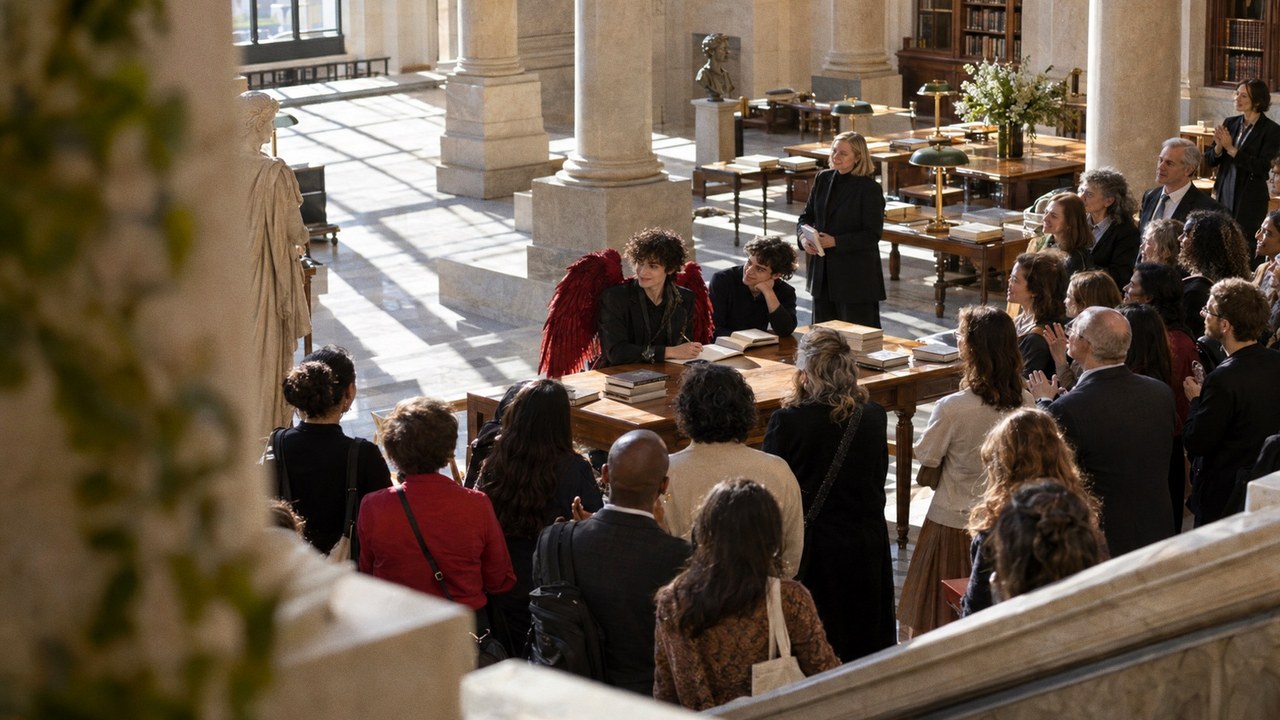
The Swedish Academy awarded Carson the prize on October 8, explicitly praising her invention of new literary forms across her career.
Why Anne Carson Rewrote the Rules of Literature
A lifetime of treating ancient myth as living grief wins literature's top prize.
The story continues
Critics Debate the Style Behind Carson's Nobel
15 October 2026A critic links Anne Carson's prize to prose-like verse, but translators say her hybrid work travels with difficulty.
Why Carson's Nobel Honours Method Over Novelty
15 October 2026Fresh critical reviews show the prize rewards a unified way of thinking rather than isolated experiments.
Carson's Korean Nobel Surge Holds Across Print and Apps
15 October 2026Strong sales and digital charts show reader demand for the poet outlasted the opening announcement.
Nobel Boom Hits the Limits of Print
13 October 2026A sudden rush of global readers meets a shortage of translated copies.
Carson’s Nobel Triggers Korean E-Book Rush and Print Backlog
12 October 2026A sudden Nobel Prize surge exposes how unusual book craft cannot keep up with digital demand.
In a nutshell
Canadian writer Anne Carson won the 2026 Nobel Prize in Literature on October 8 for a career spent breaking down the borders between poetry, essay, and translation. By reshaping ancient Greek myths into modern stories and designing books that unfold like accordions or contain loose pages, Carson showed that changing a book's physical shape can make personal grief and love easier to understand. Her win has sparked a global debate over who has permission to retell ancient cultural traditions.
Highlights
- Anne Carson won the 2026 Nobel Prize in Literature on October 8 for inventing new literary forms.
- The Nobel award carries a cash prize of 12 million Swedish kronor, which Carson stated she intends to give away.
- Carson became the first woman to win Britain's T. S. Eliot Prize for Poetry in 2002 for The Beauty of the Husband.
- Publisher Penguin announced two new Carson books scheduled for release in February and November 2027.
Anne Carson's Translations in Select Markets
| Country | Translated Books Available |
|---|---|
| Brazil | 8 |
| Greece | 4 |
- Carson's published translations in Brazil and Greece as reported following her Nobel win.
- Shows how widely her experimental work has crossed into other languages ahead of the Nobel's expected boost.
From the Editor’s Diary
Old stories survive not because readers keep them behind glass, but because new writers find ways to break them open and make them speak to current grief.
Who's involved
Anne Carson
Canadian poet, essayist, translator, and classical scholar who won the 2026 Nobel Prize in Literature
goal → Keep writing without borders between poetry, scholarship, and visual art, while giving away her prize money
Swedish Academy
The Swedish cultural group in Stockholm that selects the Nobel literature winner each year
goal → Explain why Carson's career-long invention of new forms represents an essential contribution to world writing
Anders Olsson
Chair of the Nobel Committee who wrote the official report on Carson's work
goal → Trace the single artistic method connecting Carson's essays, translations, and poetic books
Robert Potts
British poetry reviewer who publicly opposed Carson's major UK book award in 2002
goal → Argue that Carson's mixed forms fall short of traditional poetic standards
Emily Wilson
Classical scholar and translator of ancient Greek epics
goal → Show that translating and studying ancient texts is a fully creative art rather than secondary work
Édouard Louis
French novelist who translated Carson's work into French
goal → Share how Carson's clashes between ancient figures and modern thought change how people read
Penguin Random House
Carson's primary global book publisher
goal → Bring her past books to new readers and publish two new titles scheduled for 2027
Mark Carney
Prime Minister of Canada
goal → Celebrate Carson's Nobel win as an achievement for Canadian culture
In short
Literature no longer requires a writer to choose between a poem, a scholarly essay, or a physical art object. By honoring Canadian author Anne Carson, the world's most influential literary prize established that blending scholarship with raw human grief creates a vital form of modern writing.
Publishers worldwide will now rush to translate and distribute experimental hybrid texts that were once considered too odd for mainstream readers.
This shift is likely to expand readers' access to unconventional writing, though how many translations actually reach bookstore shelves remains uncertain.
How it unfolded
The argument began long before the Nobel
Carson's path to the Nobel began with work that puzzled traditional critics. In 1998, her novel in verse, Autobiography of Red, took a winged monster from ancient Greek myth and made him an emotionally fragile boy in love. Three years later, The Beauty of the Husband examined a failed marriage through 29 poetic tangos. When that book won Britain's T. S. Eliot Prize in 2002, critic Robert Potts argued it worked better as prose than as poetry, while other poets defended her freedom to invent. Carson answered that debate by translating Sappho's ancient fragments with brackets and empty spaces, letting readers see the words that history destroyed.
The books kept changing shape
Over the following two decades, Carson changed not just how her writing sounded, but how a book could look and feel. In 2010, she published Nox, a memorial for her dead brother created as an accordion-fold sheet of photos, letters, and Roman poetry that unfolds from a box. Later books arrived as 22 loose booklets that readers can read in any order, or combined live stage lectures with boxing. By the eve of the 2026 announcement, bookmakers listed Carson and Chinese novelist Can Xue as joint favorites.
Stockholm names Anne Carson literature laureate
The Swedish Academy met in Stockholm on October 8 to name Anne Carson the winner of the 2026 Nobel Prize in Literature. The announcement cited her career-long reinvention of classical texts and her creation of new literary forms. Carson, who was sweeping her kitchen floor in Iceland when the call came, called the award a little insane and said she plans to give away the 12 million Swedish kronor prize.
The Academy chooses a whole method, not a single masterpiece
The Nobel committee chose to reward Carson's entire method rather than a single famous title. Nobel chair Anders Olsson explained that her career formed a single, connected project, using old myths and unconventional shapes to capture love, loss, and loneliness. Canadian leaders celebrated the award, and her publisher announced two new Carson books scheduled for release in 2027.
Writers explain what Stockholm's verdict cannot fully capture
Writers around the world pointed out that Carson's formal experiments serve a human purpose. Novelist Margaret Atwood praised her humor and sadness, while classicist Emily Wilson called the award a victory for translation as creative writing. Authors Ocean Vuong and Édouard Louis credited her with giving younger writers permission to ignore old literary categories. Novelist Yiyun Li described how Carson's translations of Greek tragedy provided comfort after the deaths of her sons.
The argument travels beyond European literary circles
By the weekend, the conversation widened beyond Western literary circles. Commentators in Italy cautioned against claiming that Carson invented the lyric essay, describing her instead as its finest modern practitioner. In Greece, readers examined four local editions of her work. In India, an essay in The Financial Express argued that Carson's bold handling of Greek myths shows how modern authors can freely reinterpret ancient Indian epics without losing respect for tradition.
We checked again
No new developments at this moment.
Checked the October 8 Nobel Prize Outreach interview, Margaret Atwood and other writers' Guardian tributes, Reuters, AP and subsequent coverage. Both newly filed chapters are supported by sources dated October 8, but no material event after October 11, 2026, is verifiable; that date has not yet passed.
Where things stand
Anne Carson's 2026 Nobel Prize confirms international recognition for a career that turned classical scholarship into experimental literature. By telling old stories through unusual physical designs, verse novels, and visible gaps on the page, she changed how authors can express grief, love, and loneliness.
Carson will formally receive the award in Stockholm on December 10, 2026. Her planned book donations, her two upcoming 2027 releases, and how effectively publishers translate her visual formats into other languages remain to be seen.