We analyzed this claim: is it true that
precautionary shutdowns during the PHP2Shell crisis caused measurable interruptions to commercial transactions and essential public services even where no cyberattack was confirmed?

records confirm extensive service interruptions including blocked orders, payroll delays and suspended emergency alerts, though no reliable total financial loss or count of prevented attacks has been established
When Safety Shut Down the Web
Precautionary shutdowns during the PHP security crisis disrupted everyday services before any cyberattack was confirmed.
The story continues
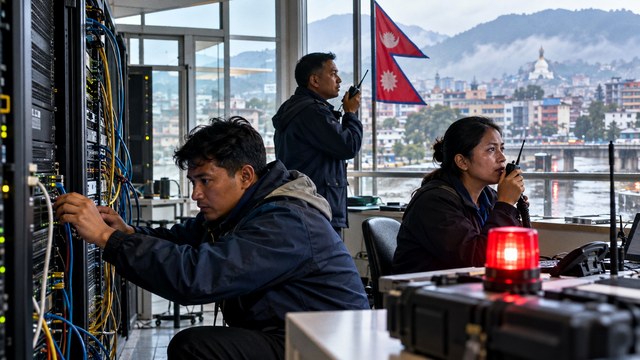
Bug Shutdowns Hit Public Disaster Alerts
29 October 2026Taking services offline to block hackers has begun interrupting critical emergency warnings.
In a nutshell
When dangerous coding flaws surfaced in PHP software on October 21, 2026, companies and government agencies around the world intentionally disconnected their own systems to keep attackers out before official fixes were ready. The move prevented potential intrusions, but the self-imposed shutdowns froze business orders, stalled payroll tools, disabled municipal portals and halted mobile emergency alerts. While the protective steps succeeded in blocking unauthorized access, they created widespread public disruptions whose total financial and human cost remains unmeasured.
Highlights
- Downtime alerts recorded by monitoring service UptimeRobot spiked to roughly 37,000 per minute on October 21.
- Japan's telephone relay service for people with hearing or speech difficulties was suspended for about 23 hours.
- Japanese supermarket chain Every announced a 5% discount across 48 stores to compensate customers for broken payment apps.
- Tracked services faced a median outage duration of 10 hours and 56 minutes during the precautionary response.
Monitored Outage Recovery Status as of October 24
| Status | Monitored Services |
|---|---|
| Recovered | 101 |
| Not Yet Confirmed Recovered | 73 |
- Recovery classifications reported by an outage tracker covering 174 monitored services as of October 24.
- Shows that more than two-fifths of tracked services remained unconfirmed even after official software repairs became available.
From the Editor’s Diary
Disconnecting systems before a cyberattack occurs removes the danger of digital intrusion, but it shifts the damage onto everyday operations. The true test of digital defense is whether shutting the door costs more than the risk of leaving it unlocked.
Who's involved
PHP Security Team
The group that maintains PHP, the code powering web pages
goal → Deliver working security repairs and advice without exposing systems to intruders
Logius
The Dutch government office running national digital identity services
goal → Keep public login systems working while shielding state networks from flaws
SoftBank
A Japanese mobile phone network provider
goal → Protect internal systems while keeping disaster warnings flowing to phones
B-Cart
A Japanese online service for business-to-business purchasing
goal → Keep business orders moving without leaving customer accounts exposed
BambooHR
An American maker of online payroll and workplace software
goal → Shield worker records without stopping daily payroll and staff management
NTT Docomo
A Japanese mobile telecommunications provider
goal → Safeguard internal servers while preserving primary earthquake warnings
Every
A Japanese chain running 48 grocery stores
goal → Keep supermarket checkout apps running and compensate shoppers for disrupted perks
National cybersecurity authorities
State agencies that advise the public on digital safety
goal → Help organizations balance security shutdowns against the need to stay online
In short
Organizations around the world took down their own websites and digital networks on October 21, 2026, cutting off ordinary public and business services to prevent attacks from two critical flaws in PHP, the common code that runs web pages.
This choice makes clear that companies will face pressure to publish full records of lost sales, blocked payroll and interrupted public safety tools to determine whether these self-imposed outages cost more than the risks they avoided.
Whether that accounting happens is too early to tell because operators have not released internal financial, transaction and recovery records.
Previously in this story

European States Pull Own Sites Offline to Prevent Hacks
25 October 2026Governments took public services down after an urgent software warning.
How it unfolded
A Security Alert Forces a Difficult Choice
The emergency began on October 20 when the PHP maintainers warned that two critical flaws beneath millions of websites required an urgent software release the next afternoon. Security manager Jakub Zelenka sent the alert to the official community mailing list at 19:33:47 UTC. Technical notes had escaped early, leaving operators to decide whether to stay online with open weaknesses or cut connections before an official repair arrived. German hosting provider dataforest posted the first known warning at 01:56 UTC on October 21.
Systems Go Dark Before Repairs Arrive
Hours before security repairs were ready, organizations began disconnecting systems on their own. British digital authorities noted that taking networks offline was a reasonable move if quick protection was impossible. The Dutch government pulled public sites down, and commercial services took similar steps before fixes appeared at 14:00 UTC. This wave of closures shows how the earliest losses came from self-defense rather than confirmed intruders, making an outcome of heavy disruption unavoidable.
Inaccessible Pages Did Not Always Stop Services
A missing web page did not always mean a stopped service. When the public site for DigiD, the Dutch online identity portal, went dark, its actual login tool kept working behind the scenes. In France, hosting firm Scaleway suspended its account dashboard but left customer servers running. The distinction altered the meaning of the event: closing an informational page caused minor inconvenience, while stopping an underlying tool broke actual operations, showing that damage cannot be measured simply by counting missing websites.
Commerce Pauses and Real Costs Appear
Other shutdowns halted everyday commerce directly. FormMailer stopped accepting submissions in Japan for about six hours. Ordering system B-Cart turned off its store interfaces for eleven hours, leaving downstream retail merchants like Public Shoji unable to receive orders. In the United States, BambooHR disconnected its workplace platform, delaying human resources and payroll tasks. Even as fixes rolled out, companies kept systems closed for internal testing, proving that protective measures carried tangible business consequences.
Public Services Face the Toll of Caution
The consequences soon reached basic municipal and personal services. Osaka suspended online citizen portals for childcare, park maintenance and dementia support. Japan's telephone relay service, which helps people with hearing or speech difficulties place phone calls through interpreters, halted standard smartphone and sign-language connections for roughly 23 hours. Regional utility Kyushu Electric Power kept its outage map offline. These suspensions showed that protective shutdowns prevented residents from handling essential daily affairs, heightening the urgency for clear accounting.
Emergency Warnings Pause While Stores Offer Discounts
The deepest disruption hit disaster alerts as operators dealt with another complex software risk. SoftBank paused mobile warning texts for earthquakes and tsunamis across its networks, while NTT Docomo halted government evacuation alerts. Meanwhile, Japanese supermarket chain Every faced days without its phone payment app and promised a 5% discount across 48 stores to compensate shoppers. This concrete compensation showed commercial costs taking direct form, even as the broader financial total remained uncalculated.
Where things stand
As of October 25, 2026, investigations confirm that protective shutdowns caused widespread disruptions that often lasted longer than the time needed to release software fixes. An outage log recorded 174 affected web services by October 24, noting 101 restored and 73 still offline, with a typical shutdown lasting 10 hours and 56 minutes. These figures describe specific monitored services rather than a complete worldwide count.
No reliable worldwide total exists for lost business revenue, delayed payroll transactions, failed alert deliveries or prevented attacks. Determining whether the safety measures were worth the disruption will require organizations to release detailed records of failed transactions, public service delays and true recovery expenses. Key milestones to watch include SoftBank's planned return on October 26, NTT Docomo's alert restoration, and Every's supermarket compensation program.
PHP2Shell: the PHP security crisis

PHP emergency website patch faces unproven bypass fears
21 October 2026Online warnings claimed that a new fix for the programming language powering millions of websites had failed, but technical evidence shows no broken security update.
PHP fixes flaws rated 9.2 as exploit leaks drive early attacks
21 October 2026Millions of web servers face takeover risks after flaws leaked before fixes arrived.
Sources
- PHP Project, critical vulnerability advisory
- UK National Cyber Security Centre
- CERT-EU, updated PHP vulnerability advisory 2026-018
- PHP Project, additional session-upload-progress security guidance
- Government of the Netherlands, national cybersecurity warning
- Government of the Netherlands, precautionary shutdown announcement
- Dutch Tax Administration, explanation of affected and unaffected public-service channels
- BambooHR official incident status and restoration timeline
- Scaleway official Dedibox emergency-maintenance status
- B-Cart, official emergency-maintenance report and detailed operational timeline
- Public Shoji, merchant confirmation of interrupted online ordering
- FormMailer, incident report detailing failed business functions and recovery
- TestMonitor, post-incident review of service shutdown and security validation
- Osaka City, emergency-maintenance announcement covering municipal website functions
- Osaka City, official press release and service-interruption inventory
- Osaka City, 23-service municipal interruption inventory
- Japan Foundation Telephone Relay Service, emergency shutdown and restoration announcement
- Kyushu Electric Power Transmission and Distribution, partial service-restoration notice
- Logius, official confirmation of DigiD service continuity and website restoration
- NTT Broadband Platform, public website shutdown and reopening times
- UptimeRobot, independent monitoring statistics and regional comparisons
- StatusGator, status-page dataset, chronology and methodology
- SoftBank, official notice suspending emergency-alert distribution
- NTT Docomo, official notice identifying suspended and unaffected emergency-message categories
- K-tai Watch, independent reporting of SoftBank's emergency-alert suspension
- K-tai Watch, independent reporting of NTT Docomo's emergency-alert suspension
- Shimonoseki City, continuing NTT Docomo disaster-message interruption notice
- Hakodate City, public guidance on continuing NTT Docomo alert interruption and alternative information channels