We analyzed this claim: is it true that
Webull shares fell approximately 19% after a bipartisan United States congressional investigation identified the brokerage's structural connections to China as a national security risk?
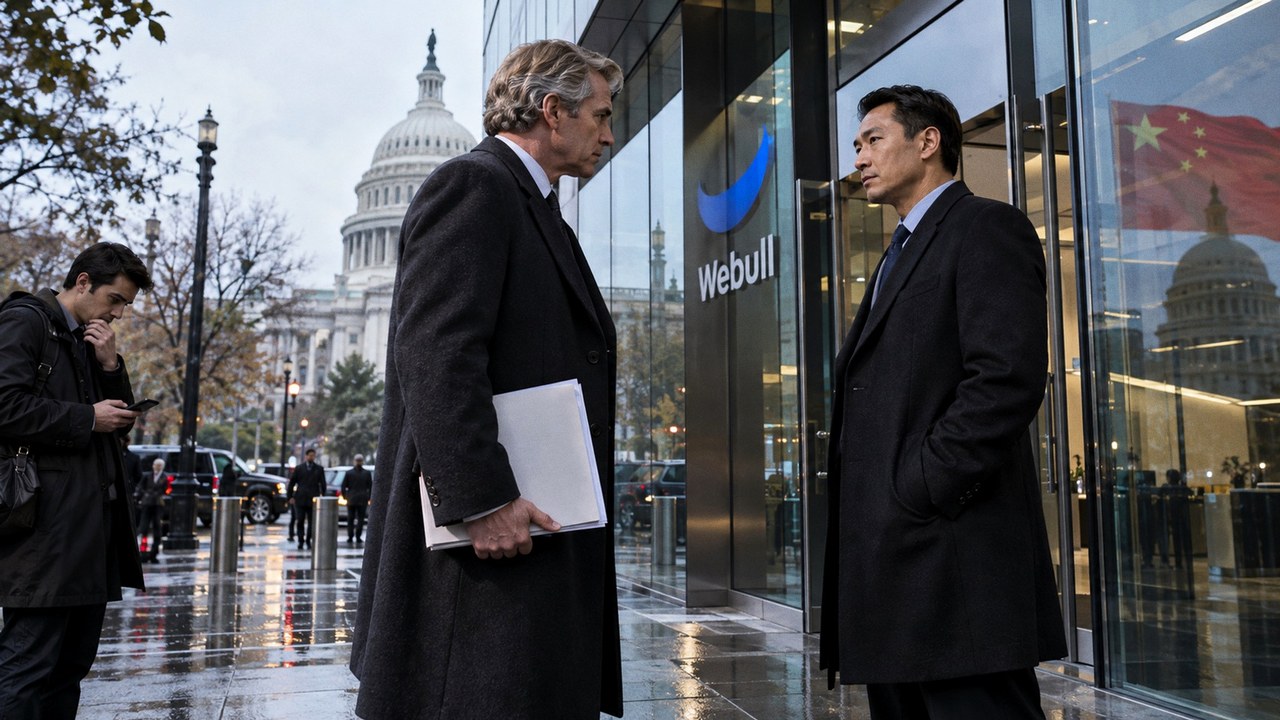
Public trading records confirm Webull shares closed down 19.09% on October 7, 2026, following the release of the congressional report. Webull denies the allegations, and investigators presented no proof that Chinese authorities accessed customer data or that regulators ordered new penalties.
Webull shares tumble 19% on China ties
A United States congressional report linked the trading app to security risks in China, wiping out nearly a fifth of its market value in a single day.
In a nutshell
Webull shares plunged 19.09% after a bipartisan United States House committee published an investigation alleging the popular trading app exposes American financial records to Chinese influence through overseas staff and technology ties. Webull forcefully rejected the findings, noting that its customer records are stored securely in the United States and that investigators uncovered no proof of a data breach. The immediate selloff sparked shareholder lawsuits, leaving investors to wait and see whether federal regulators take formal action or treat the report as a political warning.
Highlights
- Webull shares dropped 19.09% on October 7, 2026, closing at $5.89 after falling as much as 32% in premarket trading.
- A congressional report found that Webull's Chinese subsidiary employed 863 people at the end of 2025, accounting for approximately 62% of its global workforce.
- Investigators recommended five regulatory reforms but produced no evidence that Chinese authorities had accessed American user data.
- Webull stated that its United States customer records remain stored domestically under American access controls.
From the Editor’s Diary
A company can follow every disclosure rule and still see its market value collapse overnight when cross-border tech operations run into geopolitical conflict.
Who's involved
Webull Corporation and Webull Financial LLC
A Cayman Islands parent company and its regulated American trading app, which lets everyday people buy and sell stocks
goal → Reassure customers, keep its brokerage license intact, and defend its stock price against security claims
House Select Committee on the Strategic Competition Between the United States and the Chinese Communist Party
A bipartisan group of United States lawmakers that studies economic and national security threats from China
goal → Urge federal regulators to enforce stricter rules on financial apps linked to foreign countries
Anquan Wang
The China-born founder, chairman, and chief executive who holds voting control over Webull
goal → Retain corporate control and protect the international business model he started in 2016
Todd Rokita and the 14-state attorneys general coalition
A group of fourteen state top legal officers led by Indiana's attorney general
goal → Check whether Webull broke state consumer-protection or digital-privacy rules
Hunan Weibu Information Technology
Webull's software development subsidiary based in Changsha, China
goal → Keep providing core engineering support despite scrutiny of its staff and state subsidies
CNBC and Eamon Javers
A national financial television network and its reporter who broke the story
goal → Alert the public to the congressional findings and their potential impact on everyday investors
Securities litigation firms including Block & Leviton and Holzer & Holzer
American legal practices representing shareholders in financial disputes
goal → Gather investor clients who lost money to build potential class-action lawsuits
United States Securities and Exchange Commission and Financial Industry Regulatory Authority
The primary federal and industry regulators that supervise American stockbrokers and safeguard customer money
goal → Enforce investor-protection laws and decide whether Webull warrants fresh formal investigations
In short
Webull has lost nearly a fifth of its market value because United States lawmakers warned that its corporate ties to China pose a national security risk. The selloff means an online brokerage trusted by millions of everyday American investors now faces sharp public doubts about how safe its platform and customer records really are.
Federal regulators such as the Securities and Exchange Commission are now more likely to open formal inquiries into Webull's corporate disclosures, technology links, and cash-handling setup.
Whether those regulatory penalties or legal bans actually materialize remains uncertain, because the congressional committee made policy recommendations rather than finding proof of an actual data breach or criminal interference.
How it unfolded
Fourteen States Question Webull's Data Safeguards
State prosecutors led by Indiana Attorney General Todd Rokita opened an inquiry into whether Webull adequately protected American investor data from Chinese government access. The move marked the first formal government challenge to the company's Chinese roots, planting the regulatory doubts that federal investigators later expanded.
Congress Launches a Federal Inquiry
State inquiries quickly broadened into a full federal investigation by a bipartisan congressional committee examining foreign security risks. Webull paid a separate $125,000 regulatory fine to the Securities and Exchange Commission over past paperwork lapses, and lawmakers soon demanded detailed internal records about the brokerage's Chinese workforce and corporate ownership.
Webull Defends Its Setup and Lists Public Shares
Webull told lawmakers that its American brokerage operations and customer service were managed entirely from within the United States. In April 2025, the company merged with a blank-check investment partner to list its shares on the Nasdaq stock market, ensuring that any future regulatory fallout would directly impact public shareholders.
Changes in Cash Handling Heighten Scrutiny
In late 2025, Webull shifted from relying on an outside partner for customer cash to holding investor balances directly on its own books. That change raised the stakes for congressional investigators, especially after company filings disclosed that an engineering subsidiary in Changsha, China, still employed 863 people, representing approximately 62% of its global team.
Congressional Report Triggers a Market Selloff
The market reacted swiftly when CNBC revealed the House committee's 23-page report, which accused Webull of exposing American user data and customer assets to Chinese influence. Webull pushed back, stating that the report contained basic errors and that American records never leave domestic servers, but its shares still tumbled 19.09% by the closing bell.
Lawsuits Mount as Regulators Stay Silent
A second law firm launched an investigation into potential securities violations the following day, keeping downward pressure on Webull's stock. Wall Street analysts held back on predicting deeper penalties, waiting to see whether federal regulators turn Congress's policy recommendations into actual legal enforcement.
Where things stand
Webull faces severe market and reputational fallout after a United States House committee released an extensive report examining its ties to China. The brokerage insists its American customer information remains strictly protected on domestic servers, and the report presented no evidence that Chinese intelligence agencies have accessed investor records.
No government agency has revoked Webull's license, seized customer funds, or levied fresh regulatory penalties. The next test is whether the Securities and Exchange Commission or law enforcement agencies launch formal investigations, or whether the dispute remains confined to congressional pressure and shareholder lawsuits.