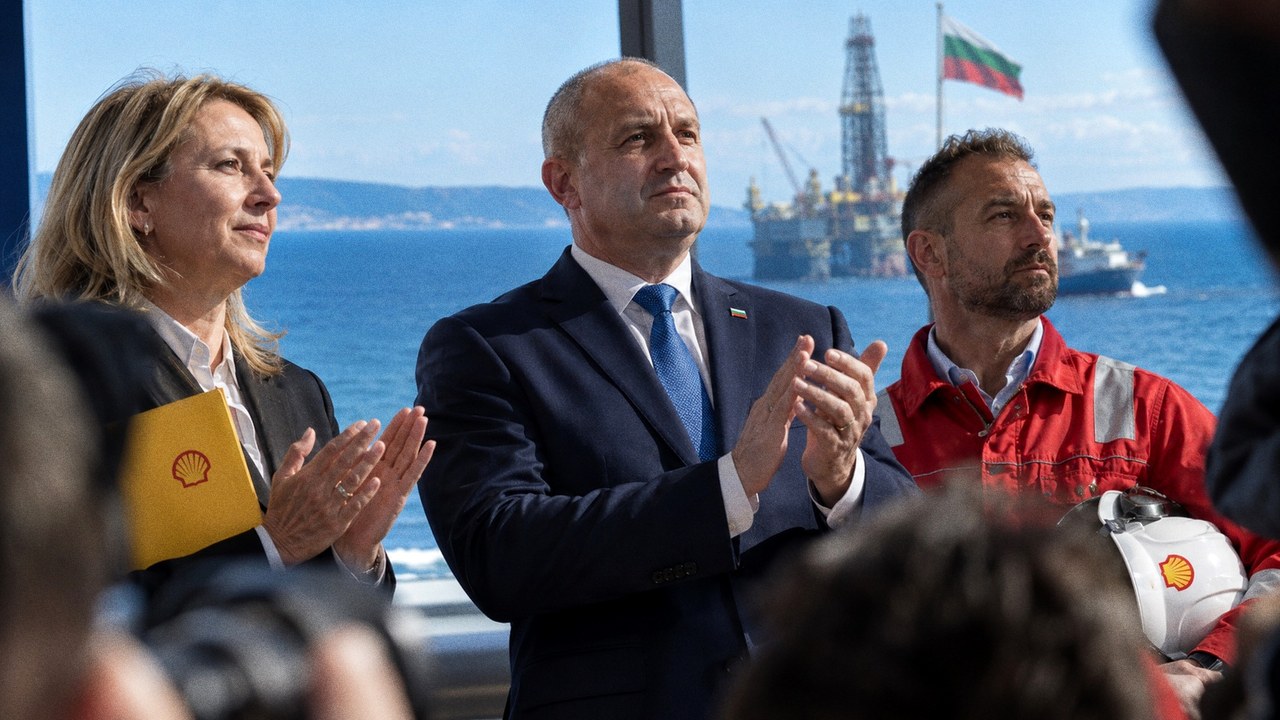
Bulgaria has a real deepwater exploration permit for Block 1-26 Khan Tervel, but it was awarded to Shell in December 2024 and contracted in April 2025; no new September 7, 2026 license near Varna was found, and the supplied BNT URL redirects to an unrelated 2024 tennis story.
The Truth Behind Bulgaria’s Black Sea Gas Rumours
Online claims of a fresh offshore discovery trace back to an existing 2024 deepwater permit held by Shell and its regional partners.
In a nutshell
Reports alleging that Bulgaria issued a new deepwater gas license in September 2026 mistake social-media rumors for a verified 2024 concession held by Shell. The 4,032-square-kilometre Khan Tervel block, situated south of the separate Khan Asparuh project, was formally awarded in late 2024 and contracted in April 2025. Shell subsequently brought in Turkish Petroleum Overseas Company with 33% and OMV Petrom with 25% to distribute capital exposure. The project involves no active drilling or verified discoveries, remaining strictly focused on a planned 90-day 3D seismic survey scheduled for late 2026.
Highlights
- Block 1-26 Khan Tervel covers 4,032 square kilometres in Bulgaria's Black Sea exclusive economic zone.
- Shell committed to 16.6 million euros in five-year exploration spending and paid a 473,000-euro signing bonus.
- The approved license ownership divides into Shell at 42%, TPOC at 33%, and OMV Petrom at 25%.
- A 3D seismic survey across 3,800 square kilometres in waters 1,900 to 2,300 metres deep is scheduled for late 2026.
- Social media citations of a new permit relied on an invalid BNT link redirecting to a 2024 tennis article.
Khan Tervel Exploration Consortium Equity
%- Approved equity distribution among the three corporate partners holding rights in Block 1-26 Khan Tervel.
- TPOC — Turkish Petroleum Overseas Company Limited, a subsidiary of Turkish state energy firm TPAO
- OMV Petrom — Romanian-based regional energy and oil exploration producer
- Distributes financial exposure and technical operating risks ahead of planned deepwater seismic acquisition.
From the Editor’s Diary
Routine regulatory milestones often mutate into false discovery narratives in volatile energy markets. In offshore exploration, commercial reality depends strictly on validated subsurface geology rather than administrative paperwork or online speculation.
Who's involved
Bulgarian Council of Ministers and Ministry of Energy
Cabinet authorities overseeing the offshore tender and legal license assignments
goal → Evaluate deepwater hydrocarbon prospects while pursuing domestic energy supply and national security
Shell Exploration and Production (96) B.V.
Selected commercial tender winner and operating exploration partner on the block
goal → Map subsurface geology to evaluate whether deepwater oil or natural gas justifies future drilling
Turkish Petroleum Overseas Company Limited
Subsidiary of Turkish state firm TPAO taking a 33% exploration stake
goal → Expand regional Black Sea upstream footprint and share the costs of future discoveries
OMV Petrom
Romanian regional oil and gas producer taking a 25% working interest
goal → Broaden its offshore portfolio while contributing regional deepwater operating experience
Bulgarian Ministry of Environment and Water
National environmental regulator assessing offshore survey programs
goal → Ensure all marine acoustic exploration satisfies strict biodiversity and habitat protection safeguards
Greenpeace Bulgaria
Environmental activist non-governmental group opposing marine fossil fuel extraction
goal → Halt offshore hydrocarbon exploration campaigns and redirect national policy toward renewable energy
In short
TL;DR: Reports circulating online that Bulgaria recently granted a new offshore gas permit near Varna are false. The activity actually stems from a 2024 deepwater exploration license for Block 1-26 Khan Tervel awarded to Shell, which is now preparing routine seismic surveys alongside Turkish and Romanian partners.
Q: Did Bulgaria just issue a brand new deepwater gas exploration license off its Black Sea coast?
- No, the underlying permit covers the Khan Tervel block and was formally awarded to Shell in late 2024.
How it unfolded
Bulgaria launches the Khan Tervel tender
The legal foundation for the offshore venture began not with recent online claims, but with Council of Ministers Decision No. 578 on August 25, 2023. That act authorized an open competitive tender for a five-year exploration license across the 4,032-square-kilometre Block 1-26 Khan Tervel in the Black Sea. While the decision appeared in Bulgaria’s national gazette days later, the competitive clock waited on formal European publication. That administrative move set the baseline legal terms long before any commercial player entered the acreage.
Formal gazette filings start the bidding clock
Cabinet authorization established the ground rules, but the state needed formal international advertising to attract deepwater operators. Following domestic gazette publication in September 2023, the government published the tender notice in the Official Journal of the European Union in June 2024. The filing established strict technical thresholds: bidders had to prove deepwater drilling capabilities, solid balance sheets, and experienced geophysical teams. The tender clock was now officially ticking, making an award legally possible once offers were screened.
Shell secures the rights and locks in exploration terms
Four companies acquired tender documentation, but only Shell and Romanian producer OMV Petrom submitted formal offers. On December 11, 2024, the cabinet picked Shell, establishing firm financial commitments: 16.6 million euros in planned work, a 473,000-euro bonus, and an annual area fee of 241,920 levs. That ministerial decision formed the definitive turning point, locking in Shell as operator and committing it to deepwater seismic imaging under a formal contract finalized four months later.
Environmental review clears deepwater acoustic surveys
With the contract signed, Shell submitted its concrete operational blueprint to Bulgarian environmental regulators in autumn 2025. The plan laid bare what the license actually entailed: non-invasive 3D acoustic soundings across 3,800 square kilometres rather than immediate production wells. The Environment Ministry ruled that the survey met conservation rules without requiring full Chapter Six assessments or Natura 2000 compatibility procedures, provided marine-mammal monitors and acoustic safeguards were maintained. The clearance paved the way for offshore survey vessels to mobilize in late 2026.
Regional energy producers take stakes to share exploration costs
Ahead of deepwater survey work, Shell chose to share the venture's financial risks by farming out equity to regional partners. Türkiye's state-backed TPOC agreed to join in February 2026, followed quickly by OMV Petrom in March. Bulgarian regulators reviewed and formally approved the equity transfers over the summer, granting OMV Petrom 25% and TPOC 33% while leaving Shell as operator with 42%. The farm-in transformed a single-company effort into a shared regional consortium backed by joint liability.
Political friction and marine protests fuel false permit rumours
Domestic political tension pushed Khan Tervel back into the public eye in early September 2026, beginning with parliament rejecting a state buyout proposal. A high-profile offshore demonstration by Greenpeace off Burgas followed within twenty-four hours. Amid this media attention, social posts surfaced claiming a brand new permit had been granted near Varna, citing a broken state broadcast link. The flurry of political and environmental debate distorted older public decisions into phantom reports of fresh drilling rights.
Where things stand
Block 1-26 Khan Tervel remains an early-stage exploration license with zero proven gas reserves or operational production facilities. Shell serves as operator under a government-sanctioned ownership breakdown of 42% for Shell, 33% for Turkish Petroleum Overseas Company, and 25% for OMV Petrom. While ministerial approvals authorized this split, public execution records for the final supplemental agreement with TPOC remain pending. The underlying five-year exploration rights originate from December 2024 cabinet decisions and the April 2025 contract, not any recent September 2026 decree.
The consortium's next concrete operational commitment is a 3D seismic acquisition campaign across 3,800 square kilometres scheduled for the fourth quarter of 2026. The acoustic survey will run for up to 90 days to gather data for subsurface imaging. OMV Petrom has stated that exploratory drilling will only be evaluated after seismic processing concludes, making Turkish political mentions of a potential 2027 well merely aspirational. Geographic claims placing Khan Tervel 200 kilometres east of Varna conflate the project with OMV Petrom’s Vinekh-1 well in the adjacent Khan Asparuh block.