We analyzed this claim: is it true that
more than 100 groups across 15 European countries are planning coordinated protests on November 6–7, 2026, demanding a moratorium on large AI data centres?
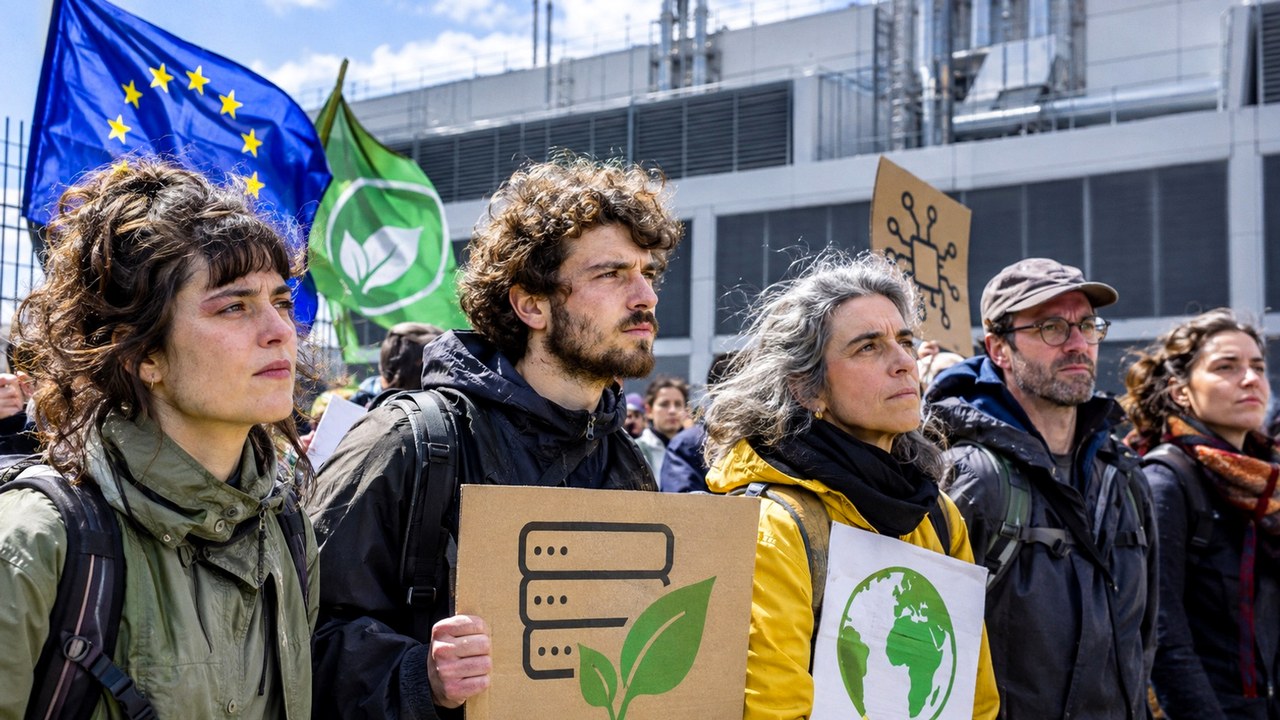
Original announcements, organizer statements, public schedules and reporting confirm the coordinated campaign is real. The figures of more than 100 groups and 15 countries come from organizers and have not been independently checked. Friends of the Earth Ireland now cites 16 countries.
Stop Dirty Data Centres plans 15-country protests
Environmental groups, digital-rights campaigners and local residents across Europe have joined for two days of protests on November 6 and 7, 2026, calling for a pause on large data centres.
The story continues
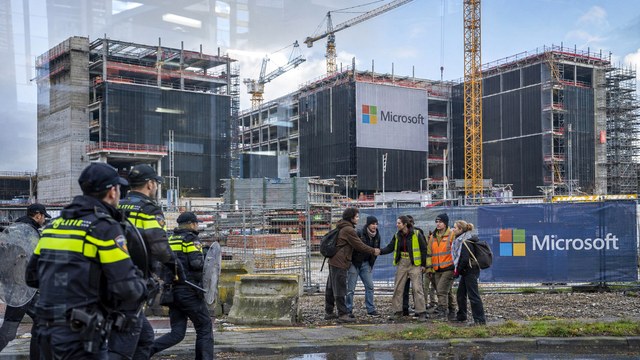
Police clear Microsoft data centre site after Amsterdam occupation
6 November 2026Protesters broke into an unfinished complex on November 6, 2026, challenging the heavy power and water demands of artificial intelligence.
In a nutshell
Environmental groups, digital-rights campaigners and local residents across at least 15 European countries have organized coordinated protests for November 6 and 7, 2026, under the name Stop Dirty Data Centres. They want governments to pause new large data centres—the buildings that house the computers behind websites, cloud services and artificial intelligence—until the effects on electricity, water, land, climate and communities are properly examined and public safeguards are put in place. The campaign grew from earlier British and Scottish actions into a Europe-wide call after the European Commission and the UK government advanced plans to expand computing capacity. Specific events are advertised in cities including London, Dublin, Amsterdam, Warsaw and at a Microsoft site in Denmark, but the protests have not yet taken place and turnout remains unknown.
Highlights
- More than 100 groups in 15 countries are planning the November 6–7 actions, according to organizers.
- The campaign’s October 2 launch named 42 groups in ten countries.
- The UK government published a Data Centre Covenant on October 28 that sets expectations but does not freeze construction.
- Specific advertised events include a Dublin march demanding a national moratorium and a demonstration outside Poland’s parliament.
- Friends of the Earth Ireland’s page currently cites 80 events across 16 countries.
Reported supporting groups over time
groups- Counts of groups backing the Stop Dirty Data Centres campaign as reported on successive dates.
- groups — Number of supporting organizations as stated by organizers or reporters on each date
- The rising figures show the campaign spreading ahead of the protests; watch whether verified attendance matches the organizer numbers.
From the Editor’s Diary
A temporary pause on large data centres would give communities and governments time to weigh real costs against claimed benefits before more projects proceed. Whether the November actions produce that pause depends on turnout and official responses that have not yet occurred.
Who's involved
Stop Dirty Data Centres coalition
Europe-wide network of environmental, digital-rights and local groups coordinating the November actions, with Owen Espley as campaign coordinator
goal → Secure temporary pauses on large data centres at European, national and local levels until environmental, social and democratic effects are checked
Global Action Plan
British environmental charity that helped organize earlier UK protests and leads in the European campaign
goal → Obtain a UK pause, binding environmental safeguards, transparent planning and real community involvement
Friends of the Earth network
Environmental campaign organizations in Ireland, Scotland, Britain and across Europe
goal → Stop unchecked data-centre growth and protect climate goals, energy supplies, communities and natural resources
Local resistance groups
Organizations including STOP Serwerowni Piaseczno in Poland, Kildare Data Centre Awareness in Ireland, and Save Brick Lane and Havering campaigners in London
goal → Prevent harmful local projects, secure rigorous assessment and obtain stronger planning protections
Danish climate campaigners
Klimabevægelsen and Den Grønne Ungdomsbevægelse, environmental organizations mobilizing at a Microsoft data centre near Køge
goal → Stop further unchecked Danish data-centre expansion and prioritize resources for communities and climate goals
European Commission
The European Union’s executive institution, promoting more European computing infrastructure through its AI industrial strategy and proposed legislation
goal → Increase computing capacity, investment and technological independence while adding sustainability measures
United Kingdom government
Britain’s national government, which sees domestic AI computing capacity as strategically and economically important
goal → Accelerate investment and planning for data centres while showing community and environmental benefits
Microsoft and other large data-centre developers
Technology companies and infrastructure investors building or proposing the facilities attracting opposition
goal → Obtain permissions, grid connections, suitable sites and viable operating conditions for growing computing demand
In short
People across Europe who worry about large computer buildings that power artificial intelligence are organizing protests this week to demand a temporary halt on new ones until governments check the costs to energy, water, land and communities. The most important next step is that the protests go ahead on November 6 and 7 with visible turnout, putting pressure on officials to either pause projects or defend their expansion plans. It is uncertain whether this will change any government policy, because the events have not yet happened and no one knows how many people will turn out or how officials will answer; what settles it is the actual attendance and any official responses that follow. Data centres are large buildings full of computers that run websites, cloud services and increasingly artificial intelligence. Opponents say the rush to build more of them competes for electricity, water and land, adds climate emissions, raises costs and leaves communities with less say over planning. The European Commission, the European Union’s executive body, wants more computing capacity for independence and competitiveness. The United Kingdom government says domestic capacity supports jobs, security and growth. Both say safeguards should come with expansion. The campaign is not one single protest. Groups in Poland seek stronger rules for residents and resources. Irish campaigners want a national construction pause. Danish groups plan to gather outside a Microsoft site. British residents oppose building on farmland or land they say should be used for housing. What unites them is a call to pause large projects until necessity, location, effects and public benefits are properly examined.
How it unfolded
Europe's AI infrastructure ambitions sharpen a local conflict
On April 9, 2025, the European Commission presented its AI Continent Action Plan, which includes an aim to triple EU data-centre capacity within five to seven years. Individual proposals were already drawing objections over land, electricity, water and planning rights. In Britain, the government’s July 2025 reversal of a local refusal for the Woodlands data centre in Buckinghamshire became a concrete example and later faced a legal challenge. The earliest verified coordinated actions under the Stop Dirty Data Centres name took place in Britain on February 27–28, 2026. The first verifiable Europe-wide announcement was the coalition press release embargoed until 00:01 on October 2.
British resistance develops into a regulatory challenge
The first coordinated Stop Dirty Data Centres actions were in Britain. Campaigners demonstrated outside the national energy department and at proposed sites near London. Their objections linked emissions and electricity demand to local planning and competing land uses. The dispute also entered the courts: Global Action Plan and the technology-rights organization Foxglove challenged the government’s approval of a proposed data centre in Buckinghamshire and eventually secured acceptance of binding environmental commitments. Meanwhile the European Commission advanced legislation meant to speed sustainable computing investment. These steps created the central conflict that later united campaigners: governments tried to build faster while residents argued the rules for deciding what should be built remained inadequate.
Scotland's dispute becomes a European call to action
Scotland showed how the controversy moved from isolated planning objections into national politics. Campaigners demonstrated outside the Scottish Parliament, demanding more serious public scrutiny of large projects. Later that month Scottish lawmakers adopted an amended motion calling for updated guidance and a pause in relevant decisions while that work was completed; the vote was not itself a legally enacted nationwide ban. The European initiative then emerged. Its October 2 announcement identified 42 supporting groups in ten countries and fixed November 6–7 as the dates for coordinated action. Owen Espley, the campaign coordinator, connected these local struggles to a shared demand for pauses at EU, national and municipal levels until environmental, social and democratic consequences could be properly examined.
Organizers turn a common demand into a growing network
The European announcement became an organizing campaign. Friends of the Earth circulated dates and resources to local groups. Scotland’s campaigners announced a larger march for November 14, deliberately extending the mobilization beyond the central November 6–7 weekend. Global Action Plan then reported that membership had more than doubled from the initial announcement, exceeding 82 organizations. The underlying demand remained a temporary pause on large-scale facilities, but local interpretations varied. Some groups wanted national restrictions on new construction; others emphasized mandatory environmental impact assessments, tighter planning rules, public involvement, electricity costs or the protection of housing and farmland. By late October the initiative had a published action guide and a central website where participants could register events.
Britain answers with standards, not a construction freeze
As the protest weekend approached, the British government published a Data Centre Covenant that made its contrasting policy explicit. Ministers argued that Britain needs significant domestic AI computing capacity for security, economic resilience and technological independence, estimating a requirement of six gigawatts by 2030. The document proposed expectations concerning energy-system costs, community benefits, environmental standards and jobs. Global Action Plan responded that these protections were too dependent on voluntary industry commitments and lacked sufficiently enforceable limits. The disagreement exposed the campaign’s main political obstacle: organizers were demanding a pause before more projects proceed, while the government was constructing a framework intended to permit further development under conditions it considered acceptable.
Local schedules substantiate the European campaign
The final pre-protest phase brought identifiable venues, organizers and demands. On November 4 the Green Web Foundation confirmed its participation and described nearly 100 supporting groups, with its staff planning to attend events in Bristol, Berlin and Vienna. Polish newspaper WP Finanse separately investigated the dispute around a proposed data centre in Piaseczno, near Warsaw, and reported the impending national demonstration. By November 5 the Guardian’s Dan Milmo had obtained confirmation from campaign coordinator Owen Espley and reported more than 100 groups in 15 countries. The Register and Euronews added separate coverage, while London’s Havering campaigners publicly explained their opposition to a proposed 600-megawatt campus. The original event calendars provide stronger evidence of what is actually scheduled than the aggregated membership figures: on November 6 a Global Action Plan photo call is advertised outside Britain’s energy department in London at 08:00 GMT, an Amsterdam action is listed for 12:00 CET, and STOP Serwerowni Piaseczno with Stowarzyszenie Aktywnych Sąsiadów plan a 16:00 CET demonstration outside Poland’s parliament demanding clear and effective sector regulation. On November 7 Friends of the Earth Ireland advertises a Dublin march from the Garden of Remembrance to the Dáil at 12:00 GMT demanding a national moratorium; Save Brick Lane and Nijjor Manush promote a midday London community action opposing the planned Truman Brewery development; Klimabevægelsen and Den Grønne Ungdomsbevægelse advertise a 14:00–16:00 CET demonstration at Microsoft’s Lille Skensved facility in Denmark calling for an end to further unchecked development; and Finnish, Spanish, French and other groups list local actions with demands ranging from moratoria to public scrutiny. These are advertised future events, not verified attendance or completed protests.
Where things stand
As of November 5, 2026, the core event is established: a Europe-wide network has publicly organized actions for November 6–7, named participating organizations and published specific meeting points, times and policy demands. Its central demand is a moratorium on new large-scale data centres pending adequate environmental, social and democratic assessment. The moratorium covers large computing facilities generally, not exclusively buildings used for AI. Some local campaigns ask for narrower measures: Poland’s Warsaw organizers explicitly seek effective regulation rather than making a blanket ban their primary published demand. There is no basis yet to report how many people attended, whether every advertised event proceeded or whether the actions caused any government to change policy. The numerical scope needs qualification. The organizers’ original October 2 release named 42 groups in ten countries; Global Action Plan reported more than 82 on October 22; the Green Web Foundation described nearly 100 on November 4; and November 5 reporting cited more than 100 in 15 countries. Friends of the Earth Ireland’s current event page instead says there are 80 events across 16 countries, an unexplained difference that may reflect a changing registry or different counting criteria. The central registry contains independently submitted listings, including entries that refer to the same local action, and some venues remain provisional. Neither a complete audited country list nor a final count of unique organizations and events was established. Watch for verified turnout and event photographs on November 6–7, organizer updates to the registry, government or developer responses, and Scotland’s separately scheduled November 14 march.