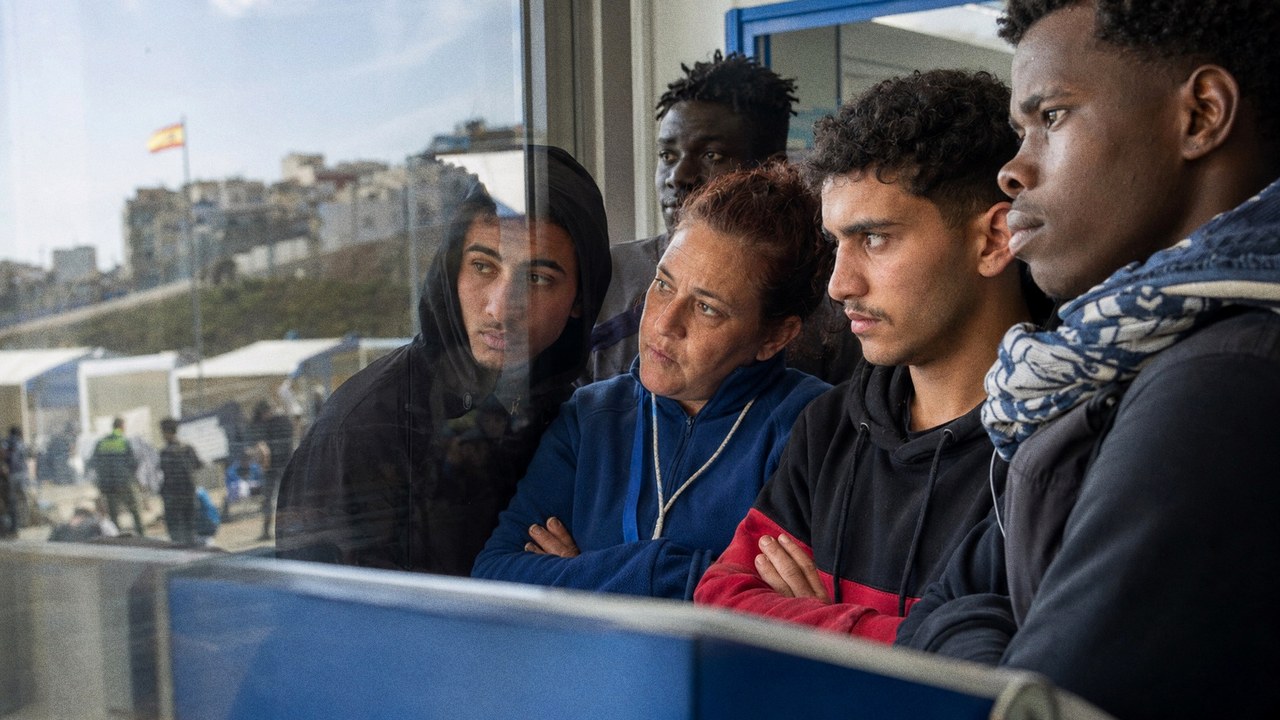
Spain Adds Ceuta Shelters as Migrant Fights Persist
Spain is expanding emergency shelter in Ceuta after a late-July migration surge overwhelmed reception sites and left thousands sleeping outdoors.
The story continues
Spanish police clear Ceuta beach camps
18 September 2026Officers moved hundreds into a 1,700-bed port compound as shelter shortages fuel unrest.EU grants Spain emergency border cash
12 September 2026Brussels commits 114.7 million euros to Ceuta to boost returns and restore overwhelmed migrant shelters.Sanchez faces pressure over declassified Ceuta border files
12 September 2026Spain declassified 40 files showing intelligence alerted Morocco a day before a July border breach.Sanchez faces EU pushback after migrant border surge
4 September 2026A lethal crossing by over 70,000 migrants into Ceuta leaves Madrid diplomatically isolated over unsubstantiated foreign interference claims.Pedro Sánchez denies Moroccan blame for 141 Ceuta border deaths
3 September 2026Spain's prime minister rejects claims that Rabat orchestrated a deadly surge into its North African enclave.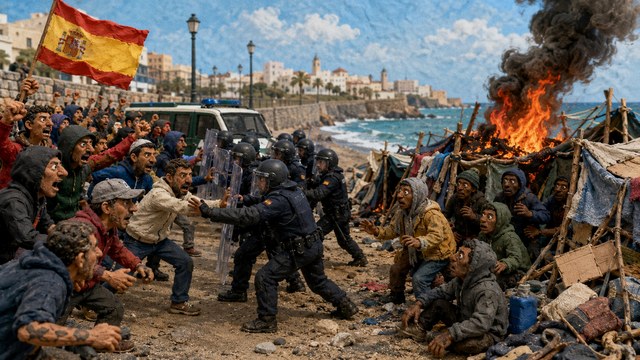
Spain races to shelter migrants after Ceuta beach fires
31 August 2026Protesters broke police lines and set fire to makeshift beach camps in Ceuta, pushing the government to speed up emergency shelter plans.Spain seeks emergency EU funds for Ceuta
29 August 2026Madrid requested emergency cash from Brussels after thousands of migrants overwhelmed its North African enclave.
In a nutshell
A late-July migration surge overwhelmed Ceuta's shelter system, leaving thousands outside and contributing to repeated fights over scarce food, toilets and sleeping space. Two documented clashes on August 12 and August 19 caused sharp-weapon injuries, while broader claims of frequent violence remain without an official injury or arrest total. Spain has responded with emergency aid, new temporary sites, guarded transfers and separation of some Maghrebi and sub-Saharan migrants. The measures have reduced some outdoor concentrations but not ended them, and hundreds of women and minors remained in precarious accommodation on August 22.
Highlights
- EFE reported more than 1,000 people outside the CETI while more than 700 were inside the 512-place facility on August 2.
- Spain announced four temporary humanitarian sites, an immediate initial 1,500 places and €6.5 million in emergency assistance on August 17.
- About 1,700 migrants left El Trampolín under Policía Nacional escort on August 20, with roughly 1,800 places in the first operating phase.
- The Red Cross has distributed approximately 4,000 food kits a day since August 3.
- El País reported more than 400 migrant women and minors still in precarious accommodation on August 22.
From the Editor’s Diary
Emergency shelter can also become a tool for public order when overcrowding itself feeds conflict. Its success still depends on whether people have enough safe places to stay.
Who's involved
Migrants remaining in Ceuta
People from Morocco, Algeria, sub-Saharan Africa and elsewhere who remained in the Spanish enclave after the late-July influx, many without formal accommodation
goal → Find food and shelter and resolve their legal status through asylum, transfer, regularization or return
Spain's national government
The Madrid government responsible for migration policy, border policing, asylum procedures and emergency reception
goal → Restore public order, expand shelter, identify and process migrants and carry out lawful removals while meeting humanitarian obligations
Policía Nacional and Guardia Civil
Spain's national police and gendarmerie forces working on Ceuta's streets, border and temporary camps
goal → Prevent violence, investigate crimes, control shelter access and carry out identification and transfers
Ceuta Autonomous City government
The local government of the Spanish enclave, led by President-Mayor Juan Jesús Vivas
goal → Ease pressure on neighborhoods and public services and secure enough national support to restore normal conditions
Spanish Red Cross and local aid groups
Humanitarian organizations providing food, hygiene supplies, health care and emergency accommodation
goal → Keep unsheltered migrants safe and meet basic needs while government reception capacity grows
Morocco
The neighboring North African country from which the July migration surge reached Ceuta and Spain's partner in border and return arrangements
goal → Control cross-border movement and manage returns while protecting its diplomatic and domestic interests
In short
Ceuta's migration emergency has become a public-order problem as overcrowding, scarce food and poor shelter accompany repeated street fights. Spain is now using guarded transfers and separate temporary sites for some Maghrebi and sub-Saharan migrants as well as expanding humanitarian aid.
More people are likely to move from beaches and improvised camps into temporary accommodation as new sites open. That is likely because the government has already begun mass transfers and added reception places, but whether this will reduce the violence is still uncertain.
The crisis accelerated on July 30, when thousands reached Ceuta, Spain's autonomous territory on the North African coast bordering Morocco. More than 1,000 people were later reported outside the formal migrant center while more than 700 were inside a facility designed for 512. Thousands slept on beaches, roadsides, hillsides, sports grounds and around industrial buildings.
Previously in this story

Spain plans mainland care for 500 Ceuta girls
21 August 2026Spain is preparing to move roughly 500 vulnerable migrant girls from Ceuta to protected accommodation on the Spanish mainland, but destinations and dates are not yet settled.
European Commission backs Ceuta returns with child safeguards
19 August 2026The European Commission says Spain should return everyone without a legal right to stay in Ceuta, including unaccompanied minors, but only through individual legal procedures.
Morocco Stops 294 Migrants Before New Ceuta Rush
18 August 2026Morocco prevented a second mass crossing into Ceuta, but Spain still faces thousands of migrants and a wider EU dispute over who should carry the burden.
Ceuta seeks transfers for 1,100 migrant minors
10 August 2026Most of the roughly 72,000 people Spain says entered Ceuta returned to Morocco, leaving a dispute over minors, returns and asylum housing.
How it unfolded
Overnight arrivals become a mass border surge
Arrivals had already been rising, but July 30 turned the pressure into a reception crisis. Ceuta Actualidad reported at 09:02 CEST that swimmers had been arriving throughout the night and that reception and security resources were overwhelmed. EFE later documented intense entries and another movement of thousands from about 15:30. Reuters reported the escalation internationally. Spain's Interior Ministry blamed smuggling networks exploiting a recent judicial ruling, but that remains the government's explanation rather than a proven sole cause.
Overcrowding spills into the streets
The border surge quickly became a shelter crisis. The Centro de Estancia Temporal de Inmigrantes, or CETI, Ceuta's temporary migrant reception center, was far beyond normal capacity, leaving large groups outside to compete for food, water and sleeping space. Reports of fights followed, involving both migrants and, in some cases, local residents.
Aid grows while enforcement tightens
More organized food distribution eased one need but did not provide enough beds, toilets or secure shelter. Migrants spread to El Trampolín beach and other improvised camps. On August 12, a fight there produced a clearly documented sharp-weapon injury. Grande-Marlaska also told police to seek immediate judicial authorization to expel irregular migrants detained for crimes where Spanish law allows it.
Temporary shelters become part of policing
By mid-August, the government said ordinary reception arrangements were not enough. Inclusion Minister Elma Saiz announced four temporary humanitarian sites and an initial 1,500 additional places. After another sharp-weapon fight on August 19, authorities began using the new sites not only for shelter but also to reduce the risk of further clashes, sending broad migrant groups to separate facilities.
New camps ease but do not end pressure
The new accommodation reduced some large outdoor gatherings but did not end them. Police had to control access, and many migrants returned to El Trampolín after transfers. Human Rights Watch, after an August 15-18 research visit, said thousands still lacked adequate shelter and sanitation and that announced capacity was insufficient. By August 22, hundreds of women and minors remained in improvised outdoor accommodation.
Where things stand
As of August 22, the latest verified migrant-on-migrant sharp-weapon fight was the August 19 Tarajal incident. One man was hospitalized with a wound to the buttock, the other participants fled and police were still investigating. No cause or arrest from that fight has been established. Another documented sharp-weapon injury occurred at El Trampolín on August 12. Wider police-union and medical accounts suggest more violence and injuries, but there is still no official comprehensive total for either injuries or arrests.
Shelter policy has changed substantially. Policía Nacional now escorts large transfers, controls entry to temporary sites and separates Maghrebi and sub-Saharan migrants between facilities to reduce confrontation risk. The response also includes the €6.5 million emergency package, roughly 4,000 Red Cross food kits a day since August 3, hygiene supplies and thousands of social and health interventions. But more sites are still being prepared, migrants have repeatedly returned to El Trampolín after clearances, government and local estimates of how many remain in Ceuta differ sharply, and hundreds of vulnerable women and minors were still in makeshift accommodation on August 22. It is too early to know whether the new shelters will reduce fights or whether all migrants will receive individual asylum and legal screening.