We analyzed this claim: is it true that
a record wave of female candidates transformed into record nominees across the country, while state ballots offered voters clean and standard choices?
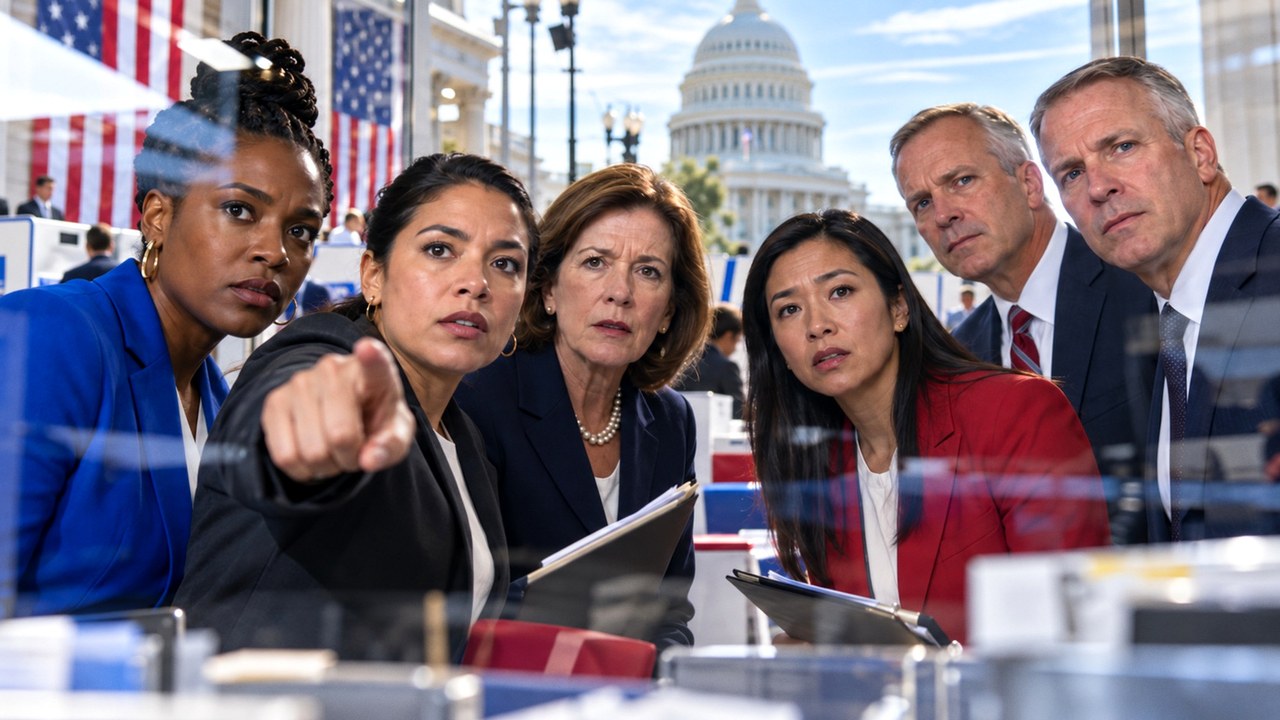
Filing numbers set records but party primaries eliminated most contenders, leaving overall representation uncertain alongside fierce legal fights over appointments and ballot names
Record Runs, Broken Names: Inside 2026's Ballots
More women ran for office than ever, yet party gatekeepers, family appointments and twin names tested who actually reaches power.
In a nutshell
A record wave of 590 women launched campaigns for the U.S. House in 2026, yet the grueling mechanics of party primaries winnowed that historic field down to 271 nominees—fewer than reached the general ballot four years earlier. While women set a fresh high-water mark in races for governor, other contests exposed how fragile voter choice can be: in South Carolina, an appointment delivered a Senate seat without an election, while in Alaska, the appearance of two men named Dan Sullivan sparked federal lawsuits and unproven allegations of ballot manipulation days before voting concluded.
Highlights
- A record 590 women ran for the U.S. House in 2026, but only 271 secured party nominations for November.
- Gubernatorial contests advanced a record 26 women nominees, divided between 19 Democrats and seven Republicans.
- Darline Graham became South Carolina's first female senator through an interim appointment following the death of her brother Lindsey Graham.
- The U.S. Justice Department sued Alaska over a ballot listing two candidates named Dan Sullivan, seeking to restrict certification if the race hinges on duplicate names.
Women Contenders and Nominees in 2026 Elections
| Office | Candidates Filed | General Election Nominees |
|---|---|---|
| U.S. House | 590 | 271 |
| U.S. Senate | 65 | 19 |
| Governor | 84 | 26 |
- The table contrasts the total number of women who entered major primary races with those who advanced to the general election ballot across federal and state executive contests.
- It shows that expanding the candidate pool does not automatically expand the final slate of nominees, as competitive primaries weed out most entrants before general-election voters ever cast a ballot.
From the Editor’s Diary
Opening the door to an election does not guarantee who walks through it. Real political representation is shaped far less by how many outsiders step forward than by the parties, legal rules and backroom maneuvers that decide who stays on the ballot.
Who's involved
Center for American Women and Politics
A nonpartisan research institute at Rutgers University tracking female participation in American elections
goal → Count who runs, identify who wins party nominations and measure whether larger fields produce more elected women
Mary Peltola and Alaskans for Mary
The Democratic nominee for U.S. Senate in Alaska, a former congresswoman, and her reelection team
goal → Win Alaska's Senate seat while refuting claims of backing a spoiler candidate to split the conservative vote
U.S. Department of Justice
The federal agency that enforces national voting and civil rights laws across the United States
goal → Stop certification of the Alaska Senate election if confusion between identically named candidates alters the final result
Dan S. Sullivan
The incumbent Republican U.S. senator from Alaska seeking another six-year term
goal → Defend his Senate seat and stop voter confusion caused by a challenger who shares his name
Daniel J. Sullivan Jr.
A retired schoolteacher from Petersburg, Alaska, who filed to run for the same Senate seat
goal → Exercise his legal right to appear on the state ballot despite accusations of misleading voters
Alaska Division of Elections
The state government bureau that runs elections, led by Director Carol Beecher
goal → Administer clear ballots, follow court directives, tabulate ranked choices and certify valid winners
Darline Graham
A South Carolina public official appointed to the Senate after her brother Lindsey Graham died
goal → Retain her temporary Senate seat by winning a full term in the November general election
Seth Bodnar
A military veteran and former university president seeking a Montana Senate seat without major-party backing
goal → Win election as an independent and challenge the gatekeeping power of established political parties
In short
More women filed to run for Congress in 2026 than ever before, but entering an election does not place a person in power. Most contenders were eliminated in primary votes, leaving the final share of women on the ballot below past peaks. At the same time, gubernatorial races advanced a record number of female nominees, while state appointments and independent bids showed that formal party primaries are not the only door to high office.
These clashing paths make it likely that November will reshape statehouses while leaving congressional representation roughly where it began. Whether women expand their numbers in Washington remains uncertain, because many nominees face heavily favored opponents and several female incumbents are stepping down. Meanwhile, a federal lawsuit over an Alaska race featuring two men named Dan Sullivan leaves the final outcome in that state unsettled until courts rule and votes are tallied.
How it unfolded
A Montana Deadline Shows How Parties Guard the Door
Power in American elections often shifts before ordinary voters cast a ballot. In Montana, former University of Montana president Seth Bodnar launched an independent Senate campaign on March 4. Minutes before the filing window closed, Republican incumbent Steve Daines withdrew and endorsed Kurt Alme, who had registered moments earlier. The maneuver handed party support to a favored successor while forcing outsiders to collect signatures on their own.
Alaska Judges Protect a Candidate Who Shares the Incumbent's Name
By early summer, election officials in other states confronted unusual challenges to who belongs on the ballot. In Maine, Rick Bennett gathered enough signatures to secure an independent spot in the governor's race. In Alaska, a retired teacher named Daniel J. Sullivan Jr. filed to run against sitting Republican Senator Dan S. Sullivan. State election director Carol Beecher tried to remove the challenger, arguing his filing was misleading and made in bad faith. The state Supreme Court disagreed and restored him, ruling that suspicion of political motives is not legal grounds to strike a qualified citizen from the ballot.
A Family Succession and a Surge in Women Candidates
While federal investigators looked into whether Alaska's second Sullivan campaign involved fraud, South Carolina took a different route. After Republican Senator Lindsey Graham died in July, Governor Henry McMaster appointed the senator's sister, Darline Graham, making her the state's first female senator without an initial election. At the same time, researchers at Rutgers University noted a historic shift across the country: 590 women registered to run for the U.S. House, breaking previous records. Most were Democrats. Graham advanced to a runoff in her special primary, illustrating how family appointment and party primaries offer sharply different paths to office.
Party Primaries Trim the Record Wave of Candidates
As primary voting ended, the crowded field narrowed. Running in a primary often pits women against other women, meaning a record candidate pool does not automatically yield record nominees. In the U.S. House, 271 women secured nominations out of the 590 who entered, falling short of the 2020 record. In South Carolina, Darline Graham won her runoff to secure the Republican nomination. In Alaska, both Dan SULLIVANS advanced alongside Democrat Mary Peltola under the state's open system, setting up a fall ballot where voter confusion remained a central issue.
A Record for Governors as the Justice Department Sues Alaska
Autumn brought contrasting milestones. Rutgers reported a record 26 women nominated for governor across the country, ensuring new female leadership in several states regardless of party. Yet in the U.S. House, 121 of the 271 women nominees were challengers running in districts where the opposing party was heavily favored, making widespread gains difficult. In Alaska, the federal government stepped into the two-Sullivan contest. On October 22, the Justice Department sued to stop the state from certifying the election if the incumbent loses and votes diverted to his namesake would have changed the final count.
Leaked Memos and Spoiler Claims Land in Court
Days before the vote, the Alaska fight widened. On October 28, The New York Times reported that Democratic campaign operatives had actively recruited third-party candidates, including Daniel J. Sullivan Jr., to draw votes away from the Republican senator. The Peltola campaign and national party leaders denied any involvement. The report prompted political outrage, but no judge has found anyone guilty of election crimes. Federal Judge Sharon Gleason permitted the political parties and civic groups to join the lawsuit, setting urgent deadlines to decide whether the federal government has any legal power to delay the final vote count.
Where things stand
The final candidate totals for 2026 are settled, but their impact on American government remains entirely open. Rutgers confirmed 590 women filed for the House and 271 became nominees, while 26 women won nominations for governor. Whether these nominations turn into real gains on Election Day depends on tough local races where dozens of female candidates face established incumbents.
In Alaska, the dispute over duplicate names is unresolved. Both men named Dan Sullivan remain on the ballot, and the Justice Department has not secured an order stopping election certification. Federal motions are due through October 30. Until ballots are counted and judges rule on the federal challenge, the ultimate winner and the legality of the disputed recruitment efforts will remain unknown.
US midterm elections 2026
Texas and Georgia voters halt artificial intelligence data centers
4 November 2026Democratic gubernatorial upsets in Texas and Georgia threaten rapid artificial intelligence data center construction.Gold tops 4,000 dollars as election gridlock spurs rally
4 November 2026Bullion recovered lost ground on November 4, 2026, after early US midterm election tallies pointed to a divided Congress.OpenAI blocks midterm voter suppression queries
3 November 2026Artificial intelligence labs ran round-the-clock command centers to police model abuse during the 2026 voteTrump warns of post-election Iran strikes
31 October 2026Washington resists claims of a fast pre-election pact as Gulf partners prepare for potential military action.Democrats threaten Republican Senate grip in red states
6 October 2026Polling across five conservative strongholds shows unexpected Democratic leads, putting the Republican majority in jeopardy.Trump starts 32-day midterm campaign blitz
4 October 2026President takes battle for Congress to Texas and Oklahoma factory floorsTrump demands party unity to defend majorities
1 October 2026The president is ordering Republicans to back candidates they dislike to prevent Democratic gains in November.Bettors put Democrats at 91 percent for House
1 October 2026A surge in wagers leaves Republicans facing steep odds to keep control of the chamber.
Trump backs Paxton in tight Texas Senate race
30 September 2026The endorsement aims to secure conservative turnout against Democrat James Talarico as midterm polling narrows.Pete Hegseth sends military cyber units into midterm elections
30 September 2026United States defense chief deploys military intelligence abroad to protect November voting systems while civilian channels shrink at homeNicki Minaj Urges Young Americans to Vote Republican
29 September 2026Rap star tells youth to vote red in 2026 congressional electionsTrump faces sweeping House Democratic oversight threat
26 September 2026Democratic lawmakers have drafted an extensive investigative agenda targeting the administration if they flip the chamber in November.Virginia opens early voting for US midterm elections
18 September 2026Polling sites launched a 45-day voting window that could help decide control of the U.S. Congress.Musk super PAC deploys $800,475 in battleground races
7 September 2026America PAC launches its 2026 midterm drive with direct-mail buys in contested Senate and House districtsElon Musk readies midterm ground force
27 August 2026Billionaire revives political group for Republican voter turnout as unverified spending targets reach nine figures.Trump backs Paxton to oust Cornyn
27 May 2026Endorsement seals primary upset, setting up costly November fight
Sources
- Alaska Division of Elections
- Reuters, Ryan Patrick Jones, republished by Investing.com
- ABC News, Oren Oppenheim, Luke Barr and Emily Chang
- The New York Times, Theodore Browning, original ballot-recruitment investigation
- GV Wire, republication of The New York Times investigation
- Alaska Public Media, Liz Ruskin and Eric Stone
- Associated Press, Becky Bohrer and Nicholas Riccardi, republished by Los Angeles Times
- ABC News, Hannah Demissie and Emily Chang