We analyzed this claim: is it true that
that the 2026 Economics Nobel rewards influential but increasingly inadequate macroeconomic models as new inflation data exposes unresolved policy challenges?
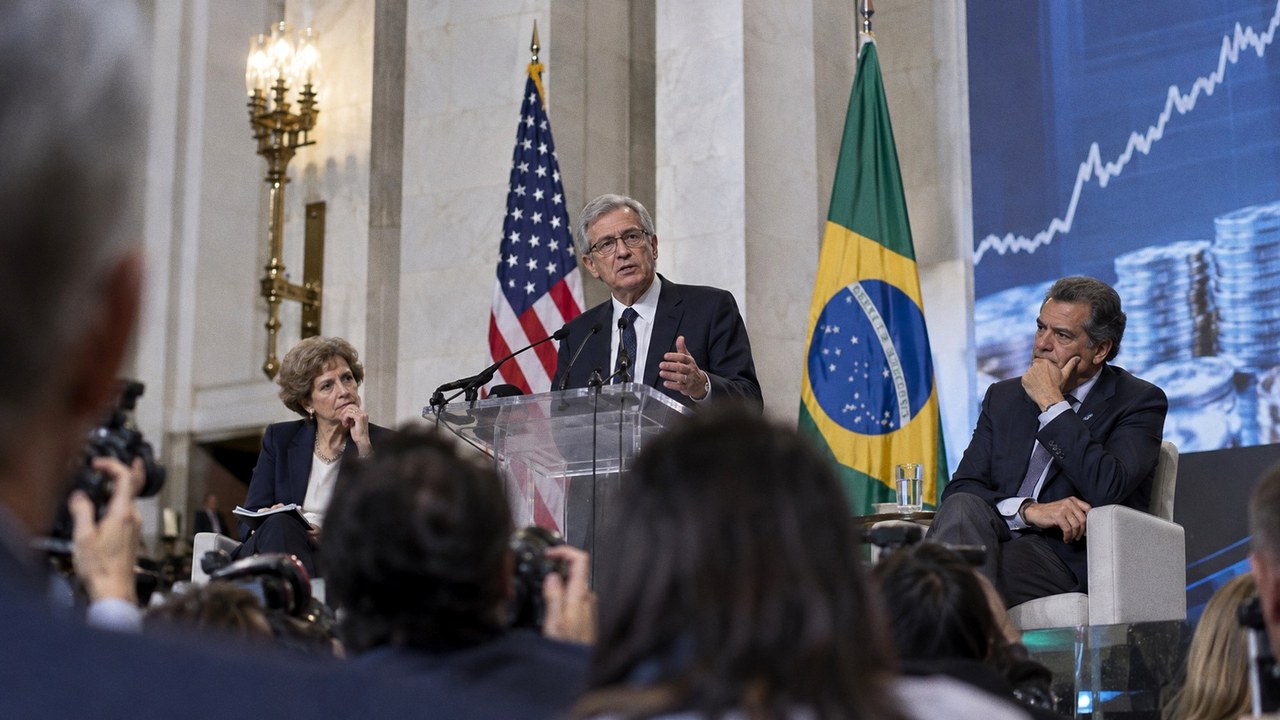
Brazilian, British, and Austrian-school critics publicly questioned mainstream interest-rate models after the prize, but their arguments reflect competing theories rather than proven model failure
Nobel Models Draw Flak as US Prices Jump
Fresh inflation figures and critics in Brazil challenge the theories that guide central bankers.
In a nutshell
The 2026 Economics Nobel went to American economists Robert E. Hall and Michael Woodford for building the models that central banks use to set borrowing costs. Two days later, Brazilian analysts, international commentators, and a fresh pickup in US consumer prices to 3.7% combined to challenge the real-world value of those mathematical tools. While critics argue the frameworks oversimplify human behavior and overlook government debt, central banks still rely on them, leaving the question of whether rival theories work better unsettled.
Highlights
- Robert E. Hall and Michael Woodford won the 2026 Economics Nobel on October 12 for research linking personal choices to nationwide stability.
- US consumer prices rose 3.7% in the year through September, up from 3.4% in August.
- Gasoline drove more than half of the 0.6% monthly rise in September US headline consumer costs.
- Brazilian economists criticized mainstream models for relying on rational expectations and minimizing the economic impact of government debt.
- Federal Reserve official Austan Goolsbee warned that persistent service costs make recent inflation trends discouraging.
September US Consumer Price Pressures
| Measure | Rate |
|---|---|
| August Annual Inflation | 3.4% |
| September Annual Inflation | 3.7% |
| September Monthly Increase | 0.6% |
| September Underlying Annual Inflation | 2.6% |
- Official US government inflation figures comparing monthly gains, annual consumer price acceleration, and underlying costs excluding food and energy.
- Rising prices test whether standard central-bank formulas can tame real-world inflation without choking economic growth.
From the Editor’s Diary
Economic models offer clean blueprints, but central banks must manage messy realities. When prices jump unexpectedly, theories matter far less to households than the actual borrowing costs that follow.
Who's involved
José Paulo Kupfer
Brazilian economic journalist and UOL columnist
goal → Question the practical value of the Nobel-winning models and highlight rival fiscal theories
André Lara Resende
Brazilian economist and veteran of the Plano Real currency stabilization
goal → Urge policymakers to rethink interest-rate rules and examine government spending
Toby Nangle
Financial Times Alphaville writer
goal → Test whether the estimated neutral interest rate provides reliable guidance to investors and central banks
Jonathan Newman
Economist with the Austrian-school Mises Institute
goal → Highlight real-world trade, money, and individual choice while challenging mainstream formulas
Austan Goolsbee
President of the Federal Reserve Bank of Chicago
goal → Return inflation to the central bank's 2% goal amid sticky service costs
Robert E. Hall
Stanford University economist and joint 2026 Nobel laureate
goal → Develop foundational research that links consumer spending to expected lifetime income
Michael Woodford
Columbia University economist and joint 2026 Nobel laureate
goal → Establish expectations-driven models that guide modern central bank interest-rate policy
In short
The models that guide modern central banks are facing sharp public pushback just days after winning economics' top prize, as rising prices show how hard it remains to manage the real world. This matters because the interest rates that set home loans, credit card costs, and business borrowing around the globe rest largely on these mathematical frameworks.
The clash makes it likely that central bankers will lean more heavily on messy incoming price data than on neat theoretical forecasts when setting interest rates.
That shift is uncertain, because top policymakers still rely on these established tools and have not formally replaced them with any rival framework.
Previously in this story

Central Banks Doubt Invisible Rate Benchmark
14 October 2026Fresh inflation figures and new critiques challenge a key guide for borrowing costs.
Nobel Models Face Hard World Reality
13 October 2026Prestigious economic frameworks draw sharp questions as central banks confront practical inflation shocks.
Nobel Models Stumble on Real-World Shocks
13 October 2026Award-winning economic frameworks guide central banks but struggle when households run out of cash.
How it unfolded
Economics Nobel Honors the Architecture of Policy
The Royal Swedish Academy of Sciences awarded the 2026 Economics Nobel to American researchers Robert E. Hall and Michael Woodford for building the foundation of modern economic stabilization. Their research gave central banks the mathematical tools to connect individual choices about saving and spending with nationwide inflation and employment. The prize honored decades of intellectual influence, but it also reopened long-standing professional arguments over whether models designed in calmer decades can still steer economies through unexpected modern shocks.
Inflation Accelerates as Worldwide Critics Push Back
Questions about the prize erupted into the open two days later when the Financial Times scrutinized the neutral interest rate, a theoretical benchmark meant to show whether borrowing costs are speeding up or cooling down the economy. The analysis highlighted concerns that central bankers cannot reliably measure this hidden guidepost. Hours later, the US government reported that annual inflation climbed to 3.7% in September from 3.4% in August, driven by fuel costs and stubborn prices across the service sector.
That acceleration added urgency to an analysis published by Brazilian columnist José Paulo Kupfer. Drawing on comments from prominent Brazilian economist André Lara Resende, Kupfer argued that the Nobel celebrated formulas that gloss over government debt and the messy reality of human choices. Similar doubts arrived from Jonathan Newman at the free-market Mises Institute, who argued that standard models ignore entrepreneurship and diverse personal needs, even as he acknowledged the laureates' immense footprint. While Chicago Federal Reserve President Austan Goolsbee voiced concern about persistent prices, neither the Brazilian critique nor the American data caused officials to abandon their models.
Where things stand
The core framework honored by the Nobel Prize remains the everyday working tool of major central banks. What changed on October 14 was a coordinated wave of professional criticism spanning Brazil, London, and the United States, pointing out that theoretical benchmarks are difficult to calculate in practice.
Whether alternative theories centered on government debt and fiscal credibility can manage price spikes better remains an unproven question. The next test arrives at the Federal Reserve meeting on October 27-28, where policymakers must set borrowing rates against stubborn price pressures using the very models under debate.