We analyzed this claim: is it true that
student groups mobilized nationwide on November 1, 2026, to defend Luiz Inácio Lula da Silva's verified presidential win after Flávio Bolsonaro rejected the election outcome?
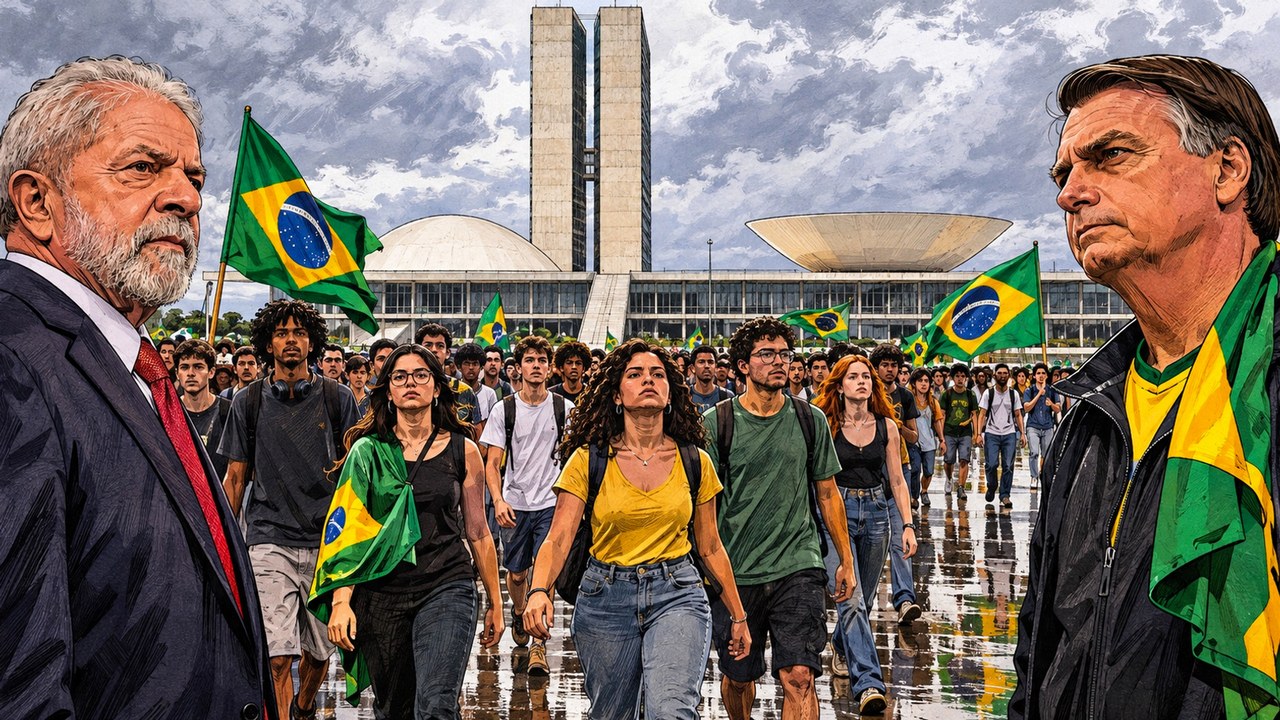
Verified reporting confirms student rallies across São Paulo, Rio de Janeiro, and other states on November 1. Brazil's highest electoral court formally declared Lula the winner with 51.79% of valid votes. While the separate formal certification ceremony remains scheduled for December, no verified evidence supports allegations of voter fraud.
Lula secures 51.79% as students defend Brazilian vote
Flávio Bolsonaro rejects the presidential tally from Florida while demonstrations back the official count.
In a nutshell
Brazil's presidential election concluded with an official victory for incumbent Luiz Inácio Lula da Silva, but the political contest shifted into the streets after conservative challenger Flávio Bolsonaro rejected the result and departed for the United States. While Bolsonaro questioned the count from Florida without verified evidence, student organizations held nationwide rallies on November 1 to defend the vote, counter political threats against Indigenous communities, and guard against foreign interference ahead of December's formal certification.
Highlights
- Brazil's electoral court certified Luiz Inácio Lula da Silva as the runoff winner with 51.79% against 48.21% for Flávio Bolsonaro.
- Lula's final margin exceeded 4.4 million votes, compared to fewer than 35,000 ballots cast during extended voting hours questioned by his opponent.
- Flávio Bolsonaro left Brazil for Florida on October 27, where he issued public letters rejecting the electoral outcome.
- Demonstrations organized by the national student union took place across 11 states and the Federal District on November 1.
- Brazil's electoral authority received formal congratulations from 107 foreign nations, while formal candidate certification remains scheduled by December 18.
Brazilian Presidential Runoff Result
%The findingLula secured an outright majority of valid runoff ballots to win the presidency.
- The final breakdown of valid votes counted by Brazil's Superior Electoral Court in the October 25 runoff.
- Lula — Luiz Inácio Lula da Silva, sitting president and Workers' Party candidate
- Bolsonaro — Flávio Bolsonaro, senator and conservative challenger
- The 3.58 percentage point spread provides the legal foundation for Lula's certified victory as his opponent challenges the outcome from abroad.
Brazilian Presidential Election Vote Progression
| Candidate | Round 1 Share | Round 2 Share |
|---|---|---|
| Flávio Bolsonaro | 47.03% | 48.21% |
| Luiz Inácio Lula da Silva | 45.16% | 51.79% |
- Official valid vote shares recorded across the October 4 first round and the October 25 runoff.
- The figures illustrate Lula's second-round turnaround that student demonstrations mobilized to achieve and now seek to protect.
From the Editor’s Diary
Elections achieve legal finality through certified ballots, but their stability rests on public trust; when a losing challenger disputes the outcome from abroad, civic mobilization on the streets often fills the void before formal inauguration.
Who's involved
União Nacional dos Estudantes (UNE)
Brazil's national university student association that coordinated the nationwide campus and street campaign
goal → Protect the verified election outcome, defend public education budgets, and maintain youth activism
Flávio Bolsonaro
Conservative Brazilian senator and defeated presidential challenger who traveled to Florida after the vote
goal → Contest the official election result, lead conservative opposition from abroad, and resist domestic legal scrutiny
Luiz Inácio Lula da Silva
Sitting president of Brazil reelected to a fourth term representing the leftist Workers' Party
goal → Safeguard his declared electoral victory, complete his formal certification, and begin governing
Bianca Borges
President of the national student union and chief organizer of the pro-democracy rallies
goal → Sustain student pressure on civil rights and secure federal commitments for university funding and transit
Tribunal Superior Eleitoral (TSE)
Brazil's top electoral court responsible for running elections, counting votes, and certifying winners
goal → Uphold the verified vote count, ensure legal finality, and complete the official diplomação ceremony
Donald Trump and the US administration
United States president and administration hosting Bolsonaro in Florida
goal → Accommodate an ideological ally while avoiding formal commitments to dispute Brazil's certified election
Articulação dos Povos Indígenas do Brasil (APIB)
National advocacy coalition representing Brazilian Indigenous communities
goal → Secure federal protection and criminal investigations following election-related threats and intimidation
In short
Brazil's confirmed election outcome now faces a public contest in the streets rather than inside voting booths. President Luiz Inácio Lula da Silva defeated conservative senator Flávio Bolsonaro in the October 25 runoff, but the loser's refusal to concede has turned a routine transition into an open political dispute.
This friction makes street-level pressure and diplomatic tension likely to persist until Lula takes office. That path remains highly probable because Brazilian electoral authorities, foreign governments, and Bolsonaro's own party have already recognized the certified victory.
Lula won 51.79% of valid ballots against 48.21% for Bolsonaro, creating a margin of more than 4.4 million votes. Bolsonaro left Brazil for the United States, claimed from Florida that he was the rightful winner, and cited voting-time extensions that involved fewer than 35,000 ballots. On November 1, student unions organized rallies across major cities to protect the result against challenges and reports of intimidation targeting Indigenous communities.
Flagged by: Geopolitics Barometer · 2 November 2026
Previously in this story
Flávio Bolsonaro loses passport in post-election crisis
28 October 2026Brazil cancels the defeated conservative senator's travel documents after his party concedes and flight claims surface
Lula secures Brazil presidency with 51.79%
26 October 2026Left-wing leader defeats Flávio Bolsonaro in runoff as opponents contest voting extensionsLula faces Flávio Bolsonaro in high-stakes Brazil runoff
25 October 2026Polls open nationwide to settle the polarized leadership of Latin America's largest economy.Flávio Bolsonaro forces Brazil runoff against Lula
6 October 2026Conservative challenger edges out the leftist president in round one, setting up an October 25 showdown.
Lula faces dead heat against Flávio Bolsonaro
29 September 2026Polls across Brazil show the presidential race remains a statistical tie ahead of the October vote.Flávio Bolsonaro traps Lula in presidential dead heat
14 September 2026The jailed former leader's son closes the gap to force a statistical tie ahead of the October vote.
How it unfolded
The first-round election ignites student organizing
Brazil's first round of voting on October 4 ended without an outright winner, setting up an October 25 runoff. Flávio Bolsonaro took 47.03% of valid votes to lead incumbent Lula, who received 45.16%. The result immediately spurred student mobilization. Bianca Borges, president of the national student union UNE, later explained that university assemblies formed that evening to back Lula. Independent news coverage confirmed the resulting street campaign three days later in Rio de Janeiro, establishing the grassroots network that would later mobilize after the runoff.
The Student Movement Helps Turn the Runoff Into a Street Campaign
Student organizing between voting rounds reshaped the political landscape and helped erase Bolsonaro's early lead. Marches in major cities framed the runoff as a contest over democratic stability, school budgets, and national independence. Student leaders coordinated rallies across campuses and neighborhoods, turning what began as defensive organizing into an active campaign for Lula. When the election court confirmed Lula's runoff victory on October 25, the student movement shifted from chasing votes to protecting the integrity of the ballot box.
Bolsonaro Rejects Defeat and Takes His Claim to America
The certified outcome did not bring a political concession. Bolsonaro declined to accept the tally, while US President Donald Trump claimed without evidence that the vote was flawed. On October 27, Bolsonaro traveled through Argentina and Ecuador to reach Florida, bypassing a Brazilian Supreme Court travel order connected to financial investigations. From abroad, Bolsonaro released statements claiming to be Brazil's true leader and alleging vote tampering. However, the extended voting hours he criticized accounted for fewer than 35,000 votes, while Lula won by over 4.4 million.
Political Threats and Foreign Involvement Reshape the Demonstrations
Bolsonaro's departure turned an internal election disagreement into a foreign policy dispute. More than 100 foreign governments and 11 international bodies formally congratulated Lula, while Brazilian officials scrutinized Bolsonaro's travel route through South America. Domestically, Indigenous leaders reported more than 30 instances of post-election harassment, urging the government to safeguard vulnerable territories. In response to these security concerns and Bolsonaro's foreign statements, student organizers transformed planned victory parties into demonstrations defending democratic sovereignty.
Students Return to the Streets Across Brazil
Demonstrators gathered in major urban centers on November 1 to defend the vote. In São Paulo, crowds carried banners rejecting Bolsonaro's claims and opposing outside interference, joined by political figures and Indigenous Guarani delegates reporting regional threats. In Rio de Janeiro, marchers assembled by the historic Candelária church, while independent reporting confirmed additional gatherings in cities including Goiânia. Crowd sizes were smaller than pre-runoff mobilizations, but the gatherings demonstrated sustained civic vigilance ahead of the December certification.
Where things stand
As of November 2, 2026, independent reporting confirms nationwide demonstrations took place without disrupting the proclaimed election outcome. Lula holds the certified victory with 51.79% against Bolsonaro's 48.21%, and no judicial ruling has questioned those figures. The formal certification ceremony remains set for completion by December 18.
Bolsonaro remains in the United States while continuing to challenge the election result. Key open questions include whether he will mount an official legal challenge, how diplomatic relations between Brasília and Washington will navigate his presence, and whether student groups will maintain street participation through inauguration day.