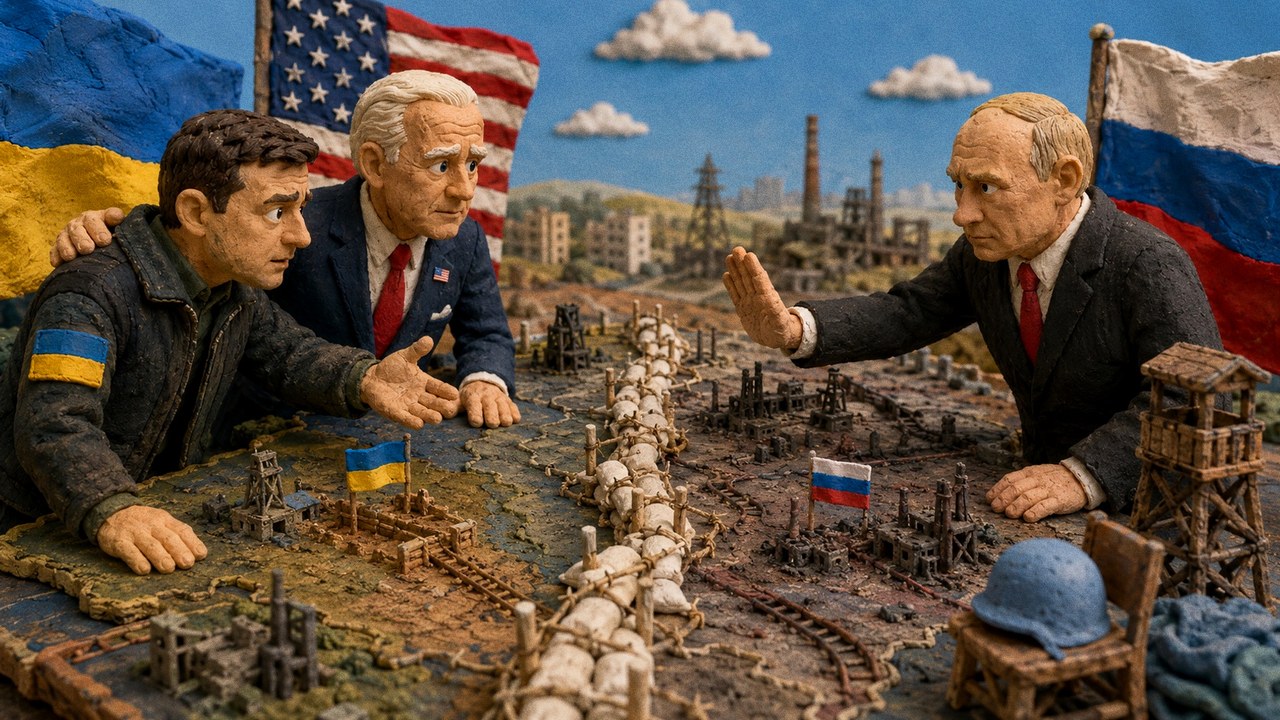
A reciprocal troop-withdrawal buffer in Donbas is genuinely under discussion, but the August proposal was described by Zelensky as a U.S.-originated idea developed with European and Ukrainian officials; no map, administrator, dedicated monitoring force or Russian consent has been agreed.
Kremlin Rejects US Buffer Plan for Donbas
A revived plan to end the war by creating a neutral zone in eastern Ukraine faces an immediate roadblock in Moscow.
In a nutshell
A peace framework mediated by the United States proposes ending the war in Ukraine by pulling both armies back to create a neutral economic buffer zone in the eastern Donbas region. While Ukraine and its Western partners have agreed on broad outlines for ceasefire monitoring, Russia has rejected any outside rule over land it claims as its own, leaving the core territorial dispute unresolved as diplomats eye technical talks in September.
Highlights
- An American-led peace plan proposes a neutral economic buffer zone in eastern Donbas created by equal Ukrainian and Russian military withdrawals.
- The Kremlin publicly rejected any third-party administration in Donbas, asserting that Moscow views the region as Russian territory.
- Ukraine and its allies outlined plans for an American-led ceasefire monitoring mechanism and a European-led post-war security force.
- Ukrainian officials expect technical talks with Russian and American representatives could take place in September.
From the Editor’s Diary
No ceasefire mechanism can take hold until both sides agree on who holds ultimate authority over the land between their armies.
Who's involved
Volodymyr Zelensky
Ukraine's president
goal → wants a ceasefire with equal Russian troop pullbacks and firm international security guarantees
United States and its negotiators Steve Witkoff and Jared Kushner
the American mediation team leading talks with Kyiv and Moscow
goal → wants a negotiated peace deal built around a neutral economic buffer zone
Russia and the Kremlin of Vladimir Putin
the Russian leadership occupying parts of Ukraine and claiming eastern regions as Russian soil
goal → wants Ukraine to hand over the rest of Donbas and refuses any outside rule or foreign troops
Coalition of the Willing and European allies
a group of European partner nations supporting Ukraine's defense
goal → wants a durable ceasefire protected by international monitors and security pledges
In short
Diplomats trying to end the war in Ukraine have run into the hardest question of all: who will govern the eastern industrial region of Donbas if the fighting stops. A renewed plan backed by the United States proposes that both armies pull back equal distances to create a neutral economic buffer zone run by an outside authority.
The immediate next step is an effort to bring Ukrainian and Russian teams to technical talks in September.
A breakthrough remains a long shot. Russia claims the entire Donbas as its own land and rejects any outside administration, while Ukraine refuses to surrender fortified territory that its soldiers still hold.
How it unfolded
Early US draft suggests a demilitarised zone
American and Russian officials began drafting a broad 28-point framework to end the fighting. Early reports revealed an initial idea that would have required Ukrainian troops to leave their remaining positions in Donetsk while Russian forces stayed out of the empty strip. That one-sided design created an immediate political hurdle.
Kyiv demands equal pullbacks
Ukraine pushed back against any plan requiring it to retreat alone. President Volodymyr Zelensky explained that while Washington suggested a special economic zone in eastern Donetsk, the question of who would run it was completely open. Kyiv insisted that if Ukrainian forces took steps backward, Russian forces would have to pull back by the exact same distance.
Ceasefire monitoring advances while land talks stall
Negotiators found common ground on how to watch a future truce, even as the border question remained stuck. In January, Ukraine, the United States, and European allies outlined plans for an American-led monitoring system and a post-war multinational force. February talks in Geneva explored a neutral trade area in Donetsk run by civilian administrators, but both sides left the final land decision to national leaders.
Revived buffer plan meets a Russian rejection
On August 23, Zelensky announced a condensed one-page plan developed with American mediators. It proposed a ceasefire, followed by equal troop pullbacks to create a neutral buffer run by an outside third party. European allies backed the push for talks, but the Kremlin quickly shut down the idea. Moscow insisted Donbas is Russian territory and declared that no outside authority or foreign troops would be permitted.
Diplomacy continues while battle lines harden
With Moscow demanding land that Ukrainian troops still defend, Kyiv reinforced its military leadership along the eastern front lines. Envoys are still attempting dialogue, with preliminary technical meetings between Ukrainian, Russian, and American teams possible in September. However, Ukrainian officials caution that without agreement on territory, rapid political progress is unlikely.
Where things stand
The core proposal under discussion is a reciprocal military buffer in Donbas paired with a special economic zone, rather than a finalized demilitarised boundary. No public map defines where the zone begins, how wide it would be, or who would patrol it.
While Western partners have prepared plans for ceasefire monitors and post-war security forces, Moscow's refusal to accept neutral governing authorities or foreign troops leaves the central land dispute unresolved.