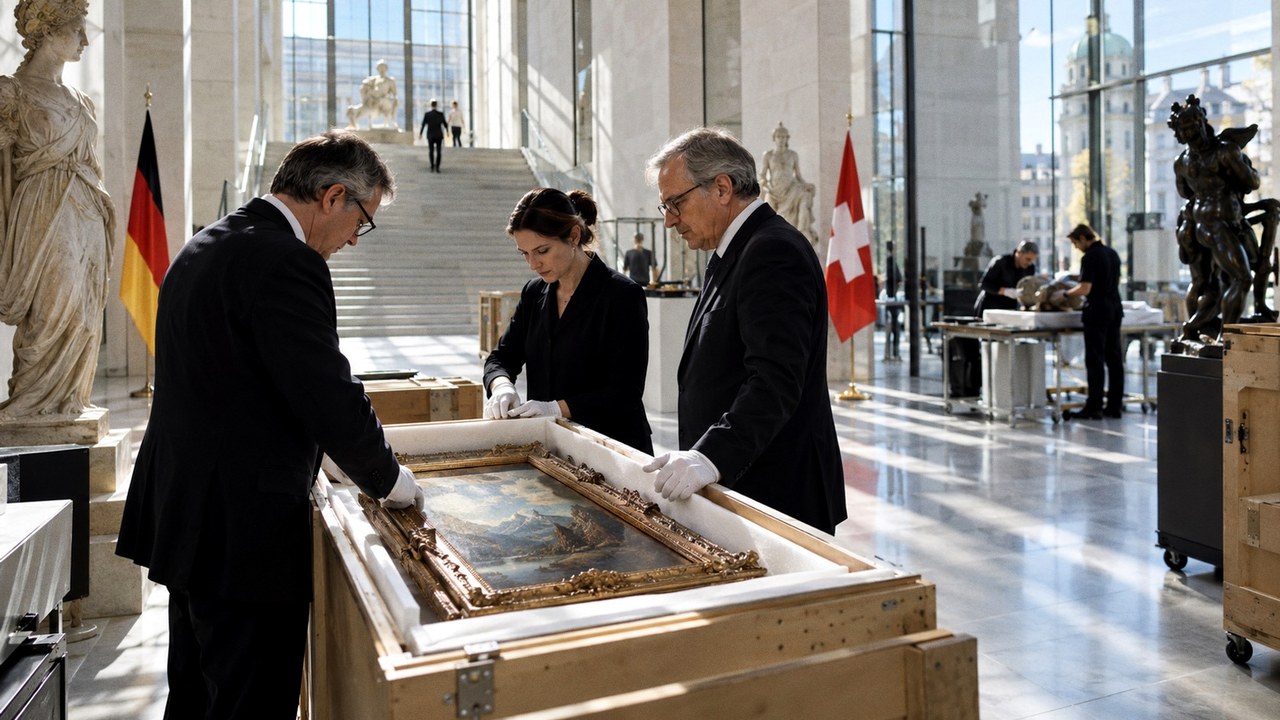
No new 22 September German or Europe-wide museum restitution agreement could be verified; the cited Süddeutsche link returns 404, while primary records show an older German government framework and several separate Swiss restitution deals.
Germany rejects rumor of fresh colonial museum returns
Reports of a new multi-museum pact mix real Swiss transfers with existing German rules.
In a nutshell
Reports that German museums agreed to a major new pact returning colonial-era African treasures misinterpret existing policy and confuse German rules with real Swiss returns. Germany has formal national guidelines allowing origin communities to claim looted cultural heritage, but decisions remain with local governing boards rather than museum associations, while the only major recent handovers took place in Switzerland.
Highlights
- No new restitution agreement was signed by German museums on 22 September.
- Germany established formal national rules for returning colonial-era cultural heritage in October 2025.
- Three Swiss museums transferred legal ownership of 28 looted Benin objects to Nigeria in March 2026.
- Bern Historical Museum transferred a 286-object collection to the town of Usakos in Namibia in June 2026.
From the Editor’s Diary
Historic art returns move through formal administrative treaties and governing boards, meaning true restitutions emerge from slow official channels rather than sudden, unannounced museum pacts.
Who's involved
German federal, Länder and municipal cultural authorities
National, state, and city governments that set museum policy
goal → create an orderly system for researching and returning disputed colonial heritage
Countries and communities of origin
Former colonies and descendants seeking ancestral objects
goal → recover looted cultural heritage and ancestral remains through formal state channels
German public museums and collections
Publicly funded galleries and institutions holding colonial items
goal → trace the origins of disputed items and involve origin communities in provenance research
Ethnographic Museum at the University of Zurich, Museum Rietberg Zurich and Musée d'Ethnographie de Genève
Three Swiss museums that returned looted Benin bronzes to Nigeria
goal → resolve historic looting claims while keeping close research and loan ties with Nigerian partners
National Commission for Museums and Monuments of Nigeria
Nigeria's federal heritage authority that received the returned bronzes
goal → recover cultural heritage taken during the colonial era through international agreements
Bern Historical Museum and Usakos Town Council
A Swiss museum and a Namibian town council partnering on historic objects
goal → transfer ownership of a historic railway collection back to the Namibian community that made it
In short
Viral claims that German museums signed a new agreement on 22 September to hand back colonial-era treasures are unfounded, meaning national collections will continue to handle historic property through established state channels rather than a fresh collective pact.
The outcome makes it likely that future handovers of colonial-era heritage in Germany will proceed slowly through individual decisions by local governing boards and the foreign office rather than any sudden group transfer.
This outcome is likely because German policy relies on regional governments and municipal bodies that own the institutions, not on joint museum declarations.
How it unfolded
Germany establishes first national colonial collections framework
German authorities laid the groundwork for returning colonial-era items on 13 March 2019, when federal, regional, and municipal culture officials agreed on shared principles. The policy created an official path for foreign governments to request the return of cultural treasures, though elected governments directed the process rather than museum leaders.
Germany tightens return rules and adds an oversight council
Government officials turned the broad 2019 guidelines into binding working rules on 14 October 2025. Under these rules, public museums must return cultural property and human remains acquired through force or unjust colonial contexts if origin communities ask for them. Missing paper records cannot be used to deny a claim, but local governing councils make the final legal decision before the foreign office negotiates the handover. In late March 2026, ministers added a national council to speed up stalled returns.
Swiss institutions complete landmark African returns
Actual recent restitution agreements took place across the border in Switzerland. Three Swiss museums transferred legal ownership of 28 looted Benin City objects to Nigeria in March 2026, physically delivering 18 of them in June alongside a state-level cultural treaty. Separately, the Bern Historical Museum transferred legal title of a 286-piece railway workers' collection to the Namibian town of Usakos, showcasing the agreement at a September cultural forum that coincided with the false online reports.
Unrelated art claims fuel false reports of German pact
The claim of a new German pact arose on 22 September from a broken web link mentioning Herero and Nama artifacts. While no such colonial deal took place, German and Dutch museums did announce returns on that day for European paintings stolen by the Nazis during World War Two, showing how unrelated restitution events were conflated online into a non-existent colonial agreement.
Where things stand
No new colonial restitution pact was signed by German museums in September 2026. German law and policy leave such decisions to the municipal and regional bodies that own the institutions, operating under national guidelines established in 2025.
Official documentation or a formal government declaration would be required to verify any new bilateral agreement with Namibia or other partners. Until such records appear, recent real handovers remain confined to completed Swiss initiatives and longstanding German administrative reviews.