We analyzed this claim: is it true that
German factory orders rose 4.4% in September 2026 while the European Central Bank warned of debt risks?
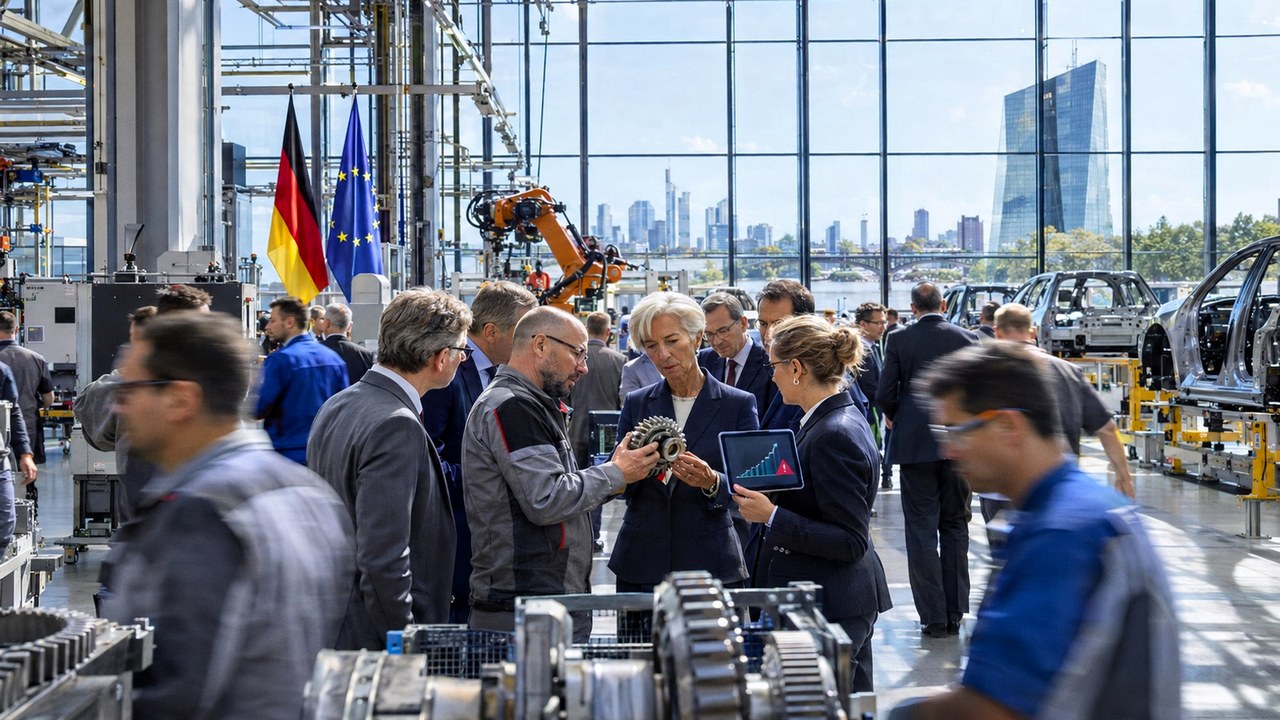
Official statistics confirmed a 4.4% monthly rise in German industrial orders, while an ECB official warned that high public debt and leveraged non-bank investors threaten financial stability
Germany lifts factory orders 4.4%
German industry showed fresh life in September, but heavy debt and volatile markets keep the wider European recovery fragile.
In a nutshell
German industry showed signs of stabilization in September 2026 as factory orders grew 4.4% and industrial output rose 0.7%, carried by a sharp post-summer rebound in car manufacturing. The monthly gains followed a weak August, leaving overall third-quarter factory production down 0.4%. At the same time, the European Central Bank warned that rising government debt and debt-financed trading by investment funds pose ongoing risks to market stability, keeping borrowing conditions tight even as factory activity steadies.
Highlights
- German manufacturing orders rose 4.4% in September after dropping a revised 10.1% in August.
- Automotive orders surged 10.5% in September, driving a 17.1% monthly rebound in car production.
- German industrial output increased 0.7% in September, exceeding analyst forecasts of flat production.
- Total German industrial production declined 0.4% across the third quarter compared with the second quarter.
- The European Central Bank left its key deposit rate at 2.50% while warning of risks from sovereign debt and non-bank lenders.
German September manufacturing order growth by sector
%The findingAutomotive and machinery orders expanded at roughly double the pace of total German manufacturing.
- Growth rates in new orders for major German manufacturing sectors between August and September 2026.
- Total manufacturing — The overall change in new orders across all German industrial producers
- Shows which industrial sectors drove the autumn rebound, indicating where assembly lines are regaining momentum.
From the Editor’s Diary
A sharp monthly rebound in factory orders can stabilize an economy, but lasting industrial strength requires broad demand across quarters rather than quick recoveries in a few volatile sectors.
Who's involved
German Federal Statistical Office (Destatis)
Germany's national agency that collects and publishes official economic statistics
goal → Provide accurate economic measures and update provisional numbers as fresh reporting arrives
German manufacturing companies
The nation's producers of cars, factory machinery, chemicals, and industrial equipment
goal → Secure steady customer orders, sustain output, protect factory payrolls, and handle elevated operating expenses
Isabel Schnabel and the European Central Bank
An Executive Board member and the Frankfurt-based institution managing monetary policy across the euro currency area
goal → Bring inflation down to target while preventing debt and market turmoil from compromising policy decisions
VDMA and Johannes Gernandt
The industry association for German engineering firms and its chief economist
goal → Promote machinery manufacturing, increase customer sales, and push for policies that support investment and hiring
German Federal Ministry for Economic Affairs and Energy
The federal ministry overseeing industrial policy and national economic performance
goal → Strengthen industrial growth, improve commercial conditions, and safeguard domestic factory competitiveness
Leveraged non-bank financial institutions
Investment funds and hedge funds that lend and trade outside standard banking rules, often using borrowed money
goal → Maintain day-to-day cash flow, protect access to funding, and prevent fire sales during turbulent markets
Euro-area governments
The European member states that sell sovereign bonds to fund national public spending
goal → Keep debt borrowing costs manageable, secure credit markets, and ensure long-term budget stability
In short
German industry found firmer footing in September 2026, offering welcome relief for Europe's largest economy after a difficult summer. The rebound makes an immediate industrial collapse unlikely, though whether it marks the start of a lasting recovery remains uncertain until autumn production figures confirm sustained demand.
New orders for manufactured goods rose 4.4% from August, led by a 10.5% jump in car orders and an 8.3% rise in machinery. The improvement helped steady an economy that expanded just 0.2% over the third quarter, even as factory output edged up 0.7% in September.
At the same time, the European Central Bank, the central bank for the euro currency, warned that heavy government debt and borrowing by lightly regulated investment funds could strain financial markets. For ordinary households and businesses, these twin forces mean that while factory work is steadying, borrowing costs will remain tight as authorities guard against financial shocks.
Flagged by: Global Markets Barometer · 6 November 2026
Previously in this story
Destatis reports record German order backlog of 9.0 months
18 September 2026Defense and machinery contracts lift factory reserves as auto sector slumps
How it unfolded
August order drop reveals swings in factory contracts
On October 6, Destatis reported that factory orders dropped 10.6% in August, reflecting the loss of several unusually large transport deals from July rather than a broad collapse across the manufacturing sector.
Backlog of unfinished work shelters industrial output
Production held steady through late summer as factories worked through roughly nine months of backlogged orders, buffering assembly lines against the immediate slump in newly placed contracts.
Business sentiment lifts while loan rates remain high
Business confidence and private surveys improved heading into autumn, but the ECB kept its benchmark rate unchanged at 2.50% to ensure high energy prices do not feed into wider consumer costs.
Factory orders rebound as central bankers flag market risks
Official figures on November 5 confirmed that factory orders rose 4.4% in September, while ECB policymaker Isabel Schnabel warned that heavily indebted governments and non-bank funds could complicate monetary policy.
Production rises even as past summer output is revised down
September factory output beat expectations with a 0.7% monthly increase, but a sharp downward revision to August production showed that overall manufacturing stayed essentially flat across the summer.
Where things stand
As of November 6, 2026, German manufacturing has shown clear signs of steadying after a difficult summer, but proof of a durable recovery is not yet established. Factory orders grew 4.4% in September and industrial production rose 0.7%, yet quarterly output fell 0.4% and the gain in orders was partly flattered by volatile automotive contracts.
Meanwhile, the European Central Bank's warning highlights long-term financial risks rather than an active crisis. Central bank officials warned that rising government debt and borrowing among investment funds could trigger market volatility if interest rates remain high. Forthcoming industrial reports for October, due in early December, will show whether factory floors can sustain this momentum under tight credit conditions.