We analyzed this claim: is it true that
gold and silver tumbled after stronger US inflation spurred expectations of higher interest rates before steadying the next day?
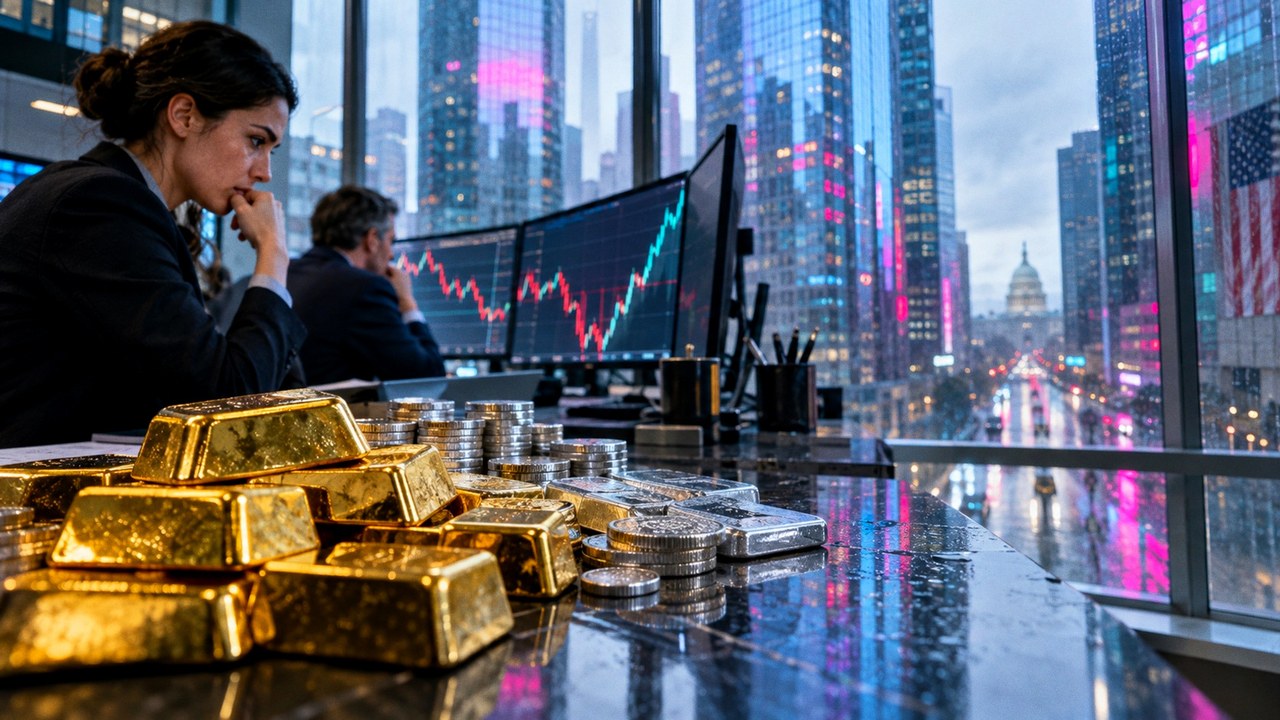
Official price data sparked a sharp one-day slide in gold and silver as traders braced for higher borrowing costs, but metal prices rebounded once central bank officials signaled they were in no hurry to raise rates.
Federal Reserve sends gold down to $4,084.80
A surprise rise in American inflation hit precious metals before signs of central bank patience calmed the market.
In a nutshell
Higher-than-expected American inflation data triggered a sharp selloff in gold and silver on October 14 as investors worried the Federal Reserve would raise interest rates. Because precious metals pay no yield, higher expected returns on cash and government bonds briefly drained money out of gold futures down to $4,084.80 an ounce and silver futures down to $55.55. Prices rebounded the following day after central bank officials signaled they were in no hurry to raise rates in October, weakening the US dollar and lowering bond yields enough for spot gold to recover to $4,156.58.
Highlights
- US annual consumer price inflation climbed to 3.7% in September, topping forecasts.
- October gold futures dropped 1.64% to settle at $4,084.80 an ounce following the inflation release.
- October silver futures sank 6.1% to $55.55 an ounce, hitting an 11-month low.
- Market bets on an immediate October rate hike fell back to 29% after central bankers signaled patience.
- Spot gold rebounded to $4,156.58 an ounce on October 15 as the US dollar weakened.
Estimated Chance of an October Fed Rate Hike
%The findingMarket expectations of an immediate rate hike spiked sharply on the inflation shock before giving back most of the increase.
- The line tracks how financial market odds for an October central bank rate increase surged on the inflation report and retreated after officials spoke.
- CPI — Consumer Price Index, the main government report tracking everyday price inflation
- Fed — Federal Reserve, the American central bank that sets benchmark interest rates
- It shows why precious metals dropped and then rebounded as fears of an immediate interest rate increase flared and faded.
From the Editor’s Diary
Gold and silver do not move simply because inflation rises; they move on whether central banks are expected to fight that inflation with higher interest rates.
Who's involved
US Bureau of Labor Statistics (BLS)
The American government agency that tracks everyday living costs through the monthly Consumer Price Index
goal → Give policymakers and the public accurate data on how fast consumer prices are climbing
Federal Reserve (Fed)
The American central bank that steers the economy by adjusting benchmark borrowing costs
goal → Lower inflation to normal levels without causing widespread job losses
Precious-metal investors and futures traders
Fund managers, banks and individuals who buy and sell physical metals and price contracts
goal → Shield their funds against inflation and profit from swings in metal values
US dollar and Treasury-market investors
Traders buying American cash and government bonds that pay fixed interest
goal → Earn steady returns while adjusting to shifts in central bank policy
CME Group and COMEX
The financial exchanges where benchmark metal and interest rate contracts trade
goal → Provide transparent marketplaces where buyers and sellers agree on prices
Mary Daly
Head of the Federal Reserve Bank of San Francisco
goal → Keep the option to raise borrowing costs later without rushing into an immediate decision
Michelle Bowman
A senior regulator and voting policymaker on the central bank board
goal → Allow earlier rate moves time to work through the economy before acting again
Christopher Waller
A central bank governor whose speeches guide expectations about policy
goal → Point out that economic strength and tech investment are shaping market yields alongside inflation
In short
A sudden jump in American consumer prices showed that the fight against inflation is still pulling everyday investments in two opposite directions. Investors buy gold and silver to protect their savings against rising prices, but higher prices also prompt central banks to lift interest rates, which draws money toward cash deposits and government debt instead. The most likely outcome is that precious metals will swing with every new inflation report as traders try to guess when borrowing costs will finally peak. Whether that keeps happening is uncertain, because central bankers have not agreed on whether another interest rate increase is actually necessary.
On Wednesday, October 14, 2026, the US government reported that annual inflation reached 3.7%, running faster than forecasters expected. Investors reacted by dumping precious metals, sending October gold futures down 1.64% to settle at $4,084.80 an ounce and silver down 6.1% to $55.55. Because metals pay no interest, holding them becomes less appealing when rising official rates promise higher returns on government bonds.
The market reversed course on Thursday, October 15, after policymakers indicated they might pause to evaluate the economy before raising borrowing costs again. As expectations of an immediate rate hike receded, the US dollar slipped and government bond yields retreated. Spot gold climbed back 1.3% to $4,156.58 an ounce and spot silver gained 1.9% to $56.69. The recovery proved that investor appetite for physical assets remains alive, even if the broader interest rate debate remains unsettled.
Flagged by: Global Markets Barometer · 15 October 2026
Previously in this story

Federal Reserve keeps gold rally under check
12 October 2026Higher borrowing costs and a strong dollar curb demand for the precious metal despite global conflicts
How it unfolded
Precious Metals Enter the Inflation Test
Investors spent Tuesday waiting for new American inflation numbers, uncertain whether the Federal Reserve would raise its benchmark interest rate in October or December. Gold traded quietly because a strong US dollar and high government bond returns were already limiting demand for non-yielding metals. Federal Reserve Governor Christopher Waller said bond yields were elevated partly because economic growth remained solid, an argument that eased pressure on the central bank to act immediately.
Traders Position for a Possible Rate Increase
Trading remained cautious as investors weighed whether the central bank would push interest rates beyond the 3.75% to 4.00% range set in September. While Governor Waller argued that higher bond yields were already cooling activity without another formal rate hike, traders hesitated to make bold moves before seeing the consumer price report. Both gold and silver slipped by the close, leaving them vulnerable to any unexpected inflation news.
Inflation Surprise Triggers a Precious-Metal Selloff
The Labor Department reported on Wednesday that annual inflation picked up to 3.7% in September, driven largely by a 9.1% jump in gasoline. The news convinced many traders that the central bank would have to raise borrowing costs again, prompting a rapid selloff in precious metals. Silver took the hardest hit, while gold futures settled down $68.10 at $4,084.80. The drop paused later in the day after central bank officials urged patience and a regional business survey pointed to sluggish hiring.
Federal Reserve Patience Changes the Market's Calculation
Markets steadied overnight as investors realized that higher inflation does not force an instant interest rate hike. In public remarks, Federal Reserve Vice Chair Michelle Bowman said the central bank has time to watch incoming data, while San Francisco Fed President Mary Daly noted that an eventual rate hike was likely but not urgent for October. Those remarks pulled bond yields and the dollar lower, allowing gold and silver to claw back ground.
Gold and Silver Recover as Dollar and Yields Retreat
Precious metals rallied on Thursday morning as the US dollar dropped and the 10-year Treasury bond yield fell to a three-week low. A weaker dollar makes metals cheaper for international buyers, while lower bond returns remove a key drawback of holding assets that pay no interest. By late morning in Europe, spot gold stood at $4,156.58 an ounce and spot silver traded at $56.69, restoring calm even as traders braced for forthcoming producer price and retail sales reports.
Where things stand
The market's sharp drop and next-day recovery are confirmed by public exchange settlements and spot reporting. Gold futures settled at $4,084.80 on October 14 before spot gold climbed back to $4,156.58 by October 15, while silver futures settled at $55.55 before spot silver rebounded to $56.69. The Federal Reserve made no official interest rate decision during these two days, leaving borrowing costs unchanged at 3.75% to 4.00%.
It remains too early to tell whether this recovery marks a lasting trend for precious metals. Market bets on an October rate increase swung from 22% up to 42% and back down to 29% in just over 24 hours. Investors are now waiting for upcoming reports on wholesale producer prices and consumer retail spending, along with remarks from Federal Reserve Chair Kevin Warsh, before taking fresh positions ahead of the central bank's meeting on October 27 and 28.