We analyzed this claim: is it true that
Democratic advantages in early voting show Democrats are winning the 2026 midterms?
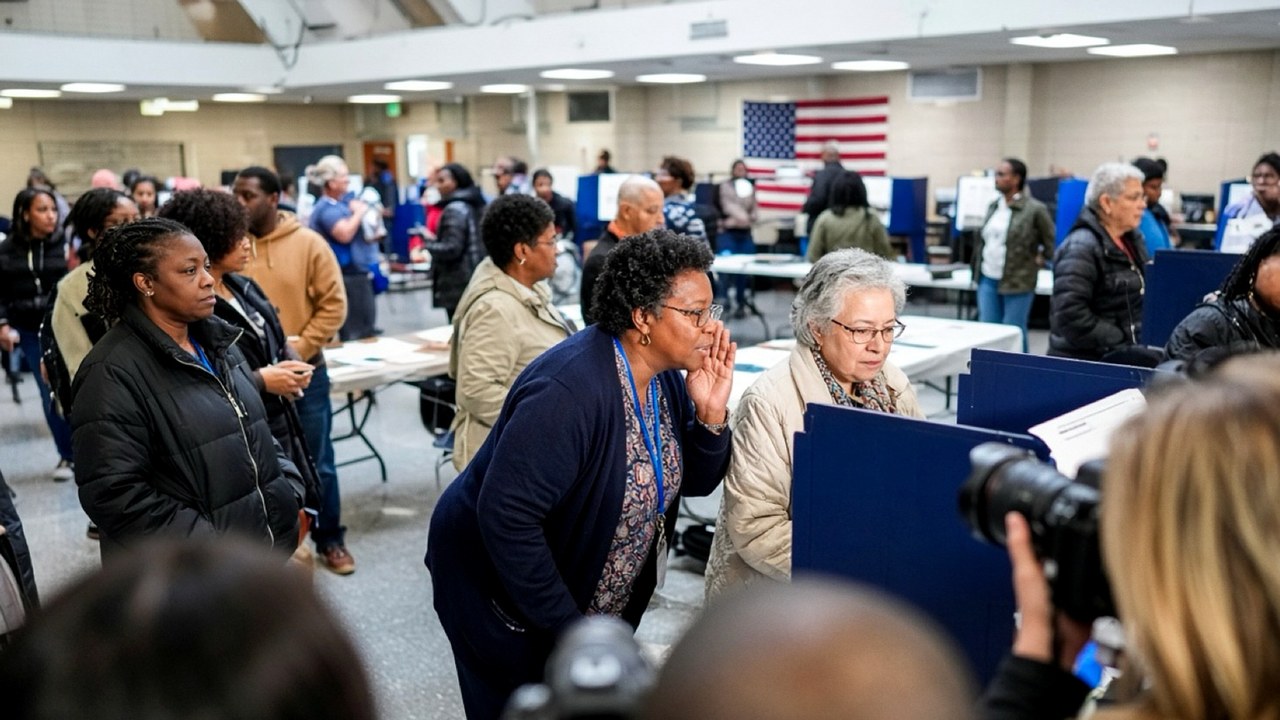
Early-voting figures reveal who cast ballots, not which candidates received them, leaving the final outcome unknown.
Early Turnout Shows Who Voted, Not Who Wins
Millions of early ballots reveal strong voter participation but cannot predict election winners.
In a nutshell
More than 34 million Americans cast early ballots for the 2026 midterm elections, showing heavy initial participation by registered Democrats in several key states. While early numbers reveal how many citizens are participating, secret ballots protect each voter's choices, meaning no lead or winner can be established until all votes are counted on November 3.
Highlights
- More than 34 million Americans had voted in the midterm elections by the afternoon of October 27.
- Registered Democrats made up 45 percent of early voters in 27 reporting states, while Republicans made up 31 percent and unaffiliated voters 24 percent.
- Georgia recorded 188,667 in-person ballots on its opening day, surpassing its 2022 first-day total by roughly 40 percent.
- Texas reported more than 4.2 million early ballots during its first six days of early voting.
Early Voters by Party Registration Across 27 States
%The findingRegistered Democrats accounted for the largest share of early participants in these states, followed by Republicans and unaffiliated voters.
- The share of early ballots cast by voter registration status among 16 million early voters in 27 reporting states as of October 27.
- Party Registration — The political party a voter listed on their registration form, which does not force them to vote for that party
- Early registration shares show which groups showed up early but cannot show candidate votes or predict the final outcome.
From the Editor’s Diary
Early voting statistics measure the calendar of civic participation, not the final verdict of an election. A high turnout before Election Day tells us when people voted, but only the full count after polls close will reveal who won.
Who's involved
University of Florida Election Lab
Academic research group that tracks national voting numbers
goal → Publish accurate turnout data so the public understands how many people have cast ballots
United States state and local election administrators
Public officials who manage voter rolls and voting sites
goal → Run fair elections, protect secret ballots and report accurate results
Democratic Party
Major political party seeking majorities in Congress
goal → Turn early voter turnout into enough actual candidate votes to win office
Republican Party
Major political party defending congressional majorities
goal → Mobilize voters on Election Day to overcome early Democratic participation
Michael McDonald
University of Florida professor who runs the Election Lab tracker
goal → Track national turnout and caution observers against misreading participation as a victory
L2 and TargetSmart
Commercial voter-data firms modeling likely voting behavior
goal → Estimate voter political leanings in states that do not track party registration
Associated Press, ABC News and NPR
National news organizations covering election trends
goal → Explain voting trends clearly without mistaking early participation for counted votes
Charles Stewart
Massachusetts Institute of Technology election data scientist
goal → Distinguish between a genuinely larger turnout and voters who simply chose to vote earlier
In short
Early voting numbers cannot tell us who will win an election, because the secret ballot protects which candidate each person chose. The true winner will be decided only after all regular Election Day ballots are counted on November 3.
Right now, the final outcome remains entirely uncertain because millions of Americans still plan to vote in person on Election Day, when Republicans historically turn out in large numbers.
More than 34 million Americans cast ballots before October 28 in the 2026 midterms, which decide control of the United States Congress. In states tracking party registration, registered Democrats turned out in large numbers. But a voter registered with one party can easily vote for another candidate, and millions of independent voters report no party at all.
How it unfolded
North Carolina Distributes the First Mail Ballots
The voting cycle opened quietly when North Carolina began mailing absentee ballots to voters who requested them. State election officials announced the release two days earlier, setting the earliest administrative date for this midterm. Voters received three choices: return a ballot by mail, cast one in person at early sites, or go to the polls on Election Day.
In-Person Voting Begins Across the Country
In-person voting opened in mid-September as Virginia welcomed voters directly at polling sites, while Minnesota and South Dakota offered in-person absentee options. Across the nation, 47 states permitted early voting without requiring a special excuse. Each state used its own rules, meaning higher turnout in one state often reflected easier access rather than greater partisan excitement.
Key Battleground States Set Turnout Records
Turnout rose sharply once heavily populated swing states opened their polling stations in mid-October. Georgia broke its first-day midterm record with nearly 189,000 in-person voters, quickly surpassing one million early ballots within a week. National participation passed 12.6 million ballots as Texas and North Carolina joined in, prompting early speculation about which party was ahead.
Early Democratic Turnout Meets Voting Habits
By late October, more than 18 million Americans had voted, with data showing a higher proportion of registered Democrats casting ballots than at this stage in recent elections. Yet election researchers cautioned that early participation does not reveal candidate choice. Democrats often vote early or by mail, while Republicans typically favor voting in person on Election Day itself.
High Early Turnout Reflects State Election Rules
Turnout continued climbing across the South, with Texas recording more than 4.2 million votes in its first six days and South Carolina setting a midterm early-voting record. Election administrators warned that large numbers do not guarantee record overall turnout once polls close. In many cases, these figures simply showed that regular voters were choosing to vote earlier under new, convenient rules.
Millions of Ballots Cast Without Revealing Winners
National early voting passed 34 million by October 27, with registered Democrats making up 45 percent of early voters in 27 reporting states, compared with 31 percent for Republicans. In Florida, however, registered Republicans narrowly led early participation. Ballots remain sealed until after polls close, meaning early numbers show only who participated, not who won.
We checked again
No new developments at this moment.
Checked CBS News' October 28 election coverage and the University of Florida Election Lab tracker: more than 35 million early ballots were confirmed as of October 27, but no developments strictly after October 28 are verifiable as of this check. Sources: https://www.cbsnews.com/live-updates/2026-elections-midtems-house-senate-trump/ and https://election.lab.ufl.edu/early-vote/2026-early-voting/
Where things stand
Early voting continues across the United States ahead of Election Day on November 3. More than 34 million people have cast ballots, and in several states that publish party registration, Democrats make up a larger share of early voters than Republicans.
These statistics show participation, not results. Party registration does not guarantee candidate support, and many voters remain unaffiliated. Furthermore, Republicans often turn out heavily on Election Day. Official candidate votes remain secret and will be tallied only after the polls close.
US midterm elections 2026
Texas and Georgia voters halt artificial intelligence data centers
4 November 2026Democratic gubernatorial upsets in Texas and Georgia threaten rapid artificial intelligence data center construction.Gold tops 4,000 dollars as election gridlock spurs rally
4 November 2026Bullion recovered lost ground on November 4, 2026, after early US midterm election tallies pointed to a divided Congress.OpenAI blocks midterm voter suppression queries
3 November 2026Artificial intelligence labs ran round-the-clock command centers to police model abuse during the 2026 voteTrump warns of post-election Iran strikes
31 October 2026Washington resists claims of a fast pre-election pact as Gulf partners prepare for potential military action.Democrats threaten Republican Senate grip in red states
6 October 2026Polling across five conservative strongholds shows unexpected Democratic leads, putting the Republican majority in jeopardy.Trump starts 32-day midterm campaign blitz
4 October 2026President takes battle for Congress to Texas and Oklahoma factory floorsTrump demands party unity to defend majorities
1 October 2026The president is ordering Republicans to back candidates they dislike to prevent Democratic gains in November.Bettors put Democrats at 91 percent for House
1 October 2026A surge in wagers leaves Republicans facing steep odds to keep control of the chamber.
Trump backs Paxton in tight Texas Senate race
30 September 2026The endorsement aims to secure conservative turnout against Democrat James Talarico as midterm polling narrows.Pete Hegseth sends military cyber units into midterm elections
30 September 2026United States defense chief deploys military intelligence abroad to protect November voting systems while civilian channels shrink at homeNicki Minaj Urges Young Americans to Vote Republican
29 September 2026Rap star tells youth to vote red in 2026 congressional electionsTrump faces sweeping House Democratic oversight threat
26 September 2026Democratic lawmakers have drafted an extensive investigative agenda targeting the administration if they flip the chamber in November.Virginia opens early voting for US midterm elections
18 September 2026Polling sites launched a 45-day voting window that could help decide control of the U.S. Congress.Musk super PAC deploys $800,475 in battleground races
7 September 2026America PAC launches its 2026 midterm drive with direct-mail buys in contested Senate and House districtsElon Musk readies midterm ground force
27 August 2026Billionaire revives political group for Republican voter turnout as unverified spending targets reach nine figures.Trump backs Paxton to oust Cornyn
27 May 2026Endorsement seals primary upset, setting up costly November fight