We analyzed this claim: is it true that
Chinese warplanes repeatedly crossed the Taiwan Strait median line during coordinated patrols, while Chinese naval ships and coast guard vessels operated nearby?
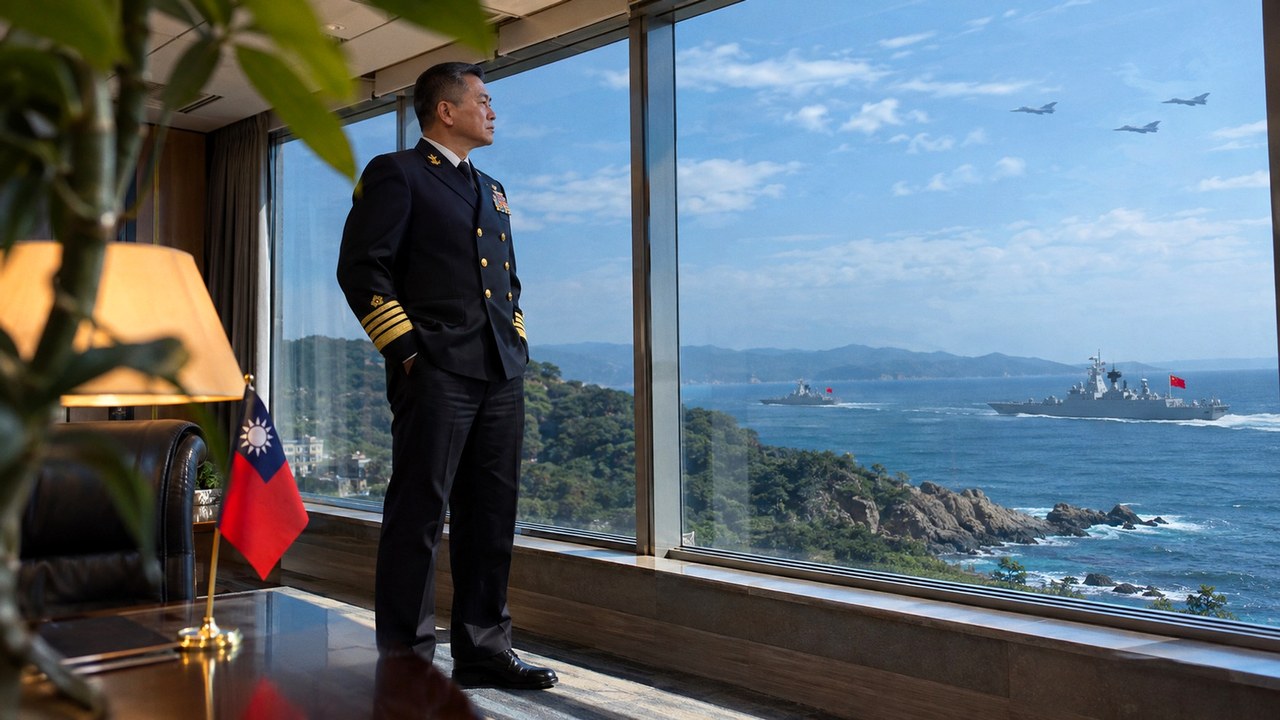
Taiwan documented Chinese combat patrols on October 31 and November 4, followed by a November 5 report of 21 air sorties, 19 line crossings, eight warships, eight official vessels, and four Chinese coast guard ships near Kinmen
China pushes 49 warplanes toward Taiwan
Beijing steps up military flights and sea patrols around the self-ruled island, raising the risk of accidental clashes.
In a nutshell
China has intensified military flights and naval movements around Taiwan, sending dozens of fighter jets and surveillance aircraft across the Taiwan Strait's median line while coast guard ships probe islands held by Taipei. Taiwan responds by tracking every flight and shadowing every vessel. While neither side has opened fire and an invasion has not begun, the near-constant close encounters erode long-standing safety buffers, raising the danger that a single accident or misread order could trigger a military crisis.
Highlights
- Taiwan tracked 49 Chinese military aircraft flights on November 3, the highest daily count reported in 2026.
- China sent 18 planes across the Taiwan Strait median line on October 31, followed by 12 on November 4 and 19 on November 5.
- Four Chinese coast guard vessels entered restricted waters off Taiwan's Kinmen islands three times between late October and early November.
- Taiwan monitored the operations using fighter patrols, navy ships, and coastal missile batteries without any exchange of fire.
Daily Chinese military aircraft tracked by Taiwan
| 24-hour reporting period | Aircraft sorties |
|---|---|
| Nov 1 | 32 |
| Nov 2 | 19 |
| Nov 3 | 49 |
| Nov 4 | 22 |
| Nov 5 | 21 |
- The table shows the number of Chinese military flights recorded by Taiwan's defence ministry during five consecutive 24-hour reporting windows.
- It shows that Chinese military activity around Taiwan remained persistent, spiking to a yearly high on November 3 before leveling off.
From the Editor’s Diary
When military forces turn once-exceptional boundary crossings into daily routine, peace depends less on political agreements and more on whether two armed pilots or captains can avoid a split-second mistake.
Who's involved
People's Republic of China
The central government in Beijing, which claims Taiwan and directs China's armed forces
goal → Enforce its claim over Taiwan and demonstrate that it controls the surrounding seas and skies
People's Liberation Army
China's military, including its air force and navy
goal → Run regular combat patrols around Taiwan to build fighting skills and sustain pressure without starting a war
Taiwan Ministry of National Defense
Taiwan's government department responsible for military security and tracking Chinese forces
goal → Detect Chinese flights and ships, defend Taiwan's airspace, and keep forces ready for any sudden move
China Coast Guard
China's civilian maritime police, which operates ships separately from the navy
goal → Patrol the waters around Taiwan-held islands to assert Beijing's legal authority
Taiwan Coast Guard Administration
Taiwan's maritime police force that patrols territorial waters
goal → Monitor foreign vessels, order unauthorized Chinese ships to leave, and avoid clashes
Joseph Wu and Taiwan's National Security Council
Taiwan's top national-security official and his advisory team
goal → Track large-scale Chinese military movements and alert the public and international partners
Zhang Xiaogang and China's Ministry of National Defense
A spokesperson for China's military and the ministry he represents
goal → Describe the operations as lawful, routine exercises that threaten no outside country
In short
This news matters because China is turning heavy military pressure around Taiwan into an everyday routine, steadily narrowing the physical cushion that keeps both sides apart.
The most likely outcome next is continued near-daily air and sea patrols that force Taiwan's military to stay on constant alert.
That outcome is near-certain because Beijing uses these recurring operations to challenge the boundary without starting a shooting war.
Flagged by: Geopolitics Barometer · 6 November 2026
Previously in this story
Taiwan tracks 28 Chinese warplanes as pressure mounts
22 September 2026Chinese military pressure keeps Taiwan on high alert even as an online report of a weekend patrol proves false.Taiwan tracks Chinese warships near median line
18 September 2026Taiwan deployed patrol vessels after tracking Chinese naval warships and military aircraft operating near the strait median line following coordinated readiness drills.
How it unfolded
China sends an aircraft carrier into the Pacific
The wider build-up began on October 14, when China's navy announced that a carrier strike group led by the Liaoning was heading into the western Pacific for annual exercises. Beijing called the voyage routine training aimed at no specific country. Two weeks later, on October 28, Taiwan's security chief Joseph Wu published a map showing dozens of Chinese naval and government ships across regional waters. Taiwan's defence ministry then began tracking individual patrol waves crossing toward the island.
Sea drills turn into air patrols near Taiwan
The carrier deployment soon merged into direct pressure around Taiwan. Wu's map placed 53 Chinese naval and government vessels across the western Pacific, though Beijing insisted the carrier was not targeting anyone. The activity then closed in on Taiwan itself. Chinese coast guard boats approached the Taiwan-controlled islands of Kinmen, and on October 31 China launched a joint air-and-sea patrol. Taiwan counted 22 aircraft flights, with most crossing the median line.
Warplane flights spike to a yearly high
The pressure grew over the first days of November. Taiwan logged 32 military flights on November 1, with 26 crossing the median line. On November 2, four Chinese coast guard ships entered restricted waters near Kinmen before turning back. Activity peaked on November 3, when Taiwan recorded 49 Chinese aircraft flights in 24 hours, the highest daily count reported in 2026. Wu also warned that over 100 Chinese military and government vessels were operating across the wider ocean.
Fighter jets and coast guard boats press close
On November 4, China staged another joint combat patrol. Fighter jets, refuelling tankers, and early-warning planes flew alongside warships, sending 12 sorties across the median line. That same afternoon, four Chinese coast guard ships entered restricted waters off Kinmen for over two hours before Taiwanese patrol craft escorted them out. By the morning of November 5, Taiwan's 24-hour report showed 21 Chinese aircraft flights, 19 line crossings, eight warships, and eight official vessels.
Where things stand
As of November 5, 2026, Chinese warplanes and ships continue to operate near Taiwan's airspace and islands on a daily basis. Taiwan's forces monitor each patrol with fighter jets, patrol boats, and land-based missiles, but neither side has used force.
Important questions remain open. Taiwan's data shows the movements but cannot confirm China's underlying battle orders, whether the air patrols and coast guard moves are run by a single commander, or if these drills precede a larger operation.