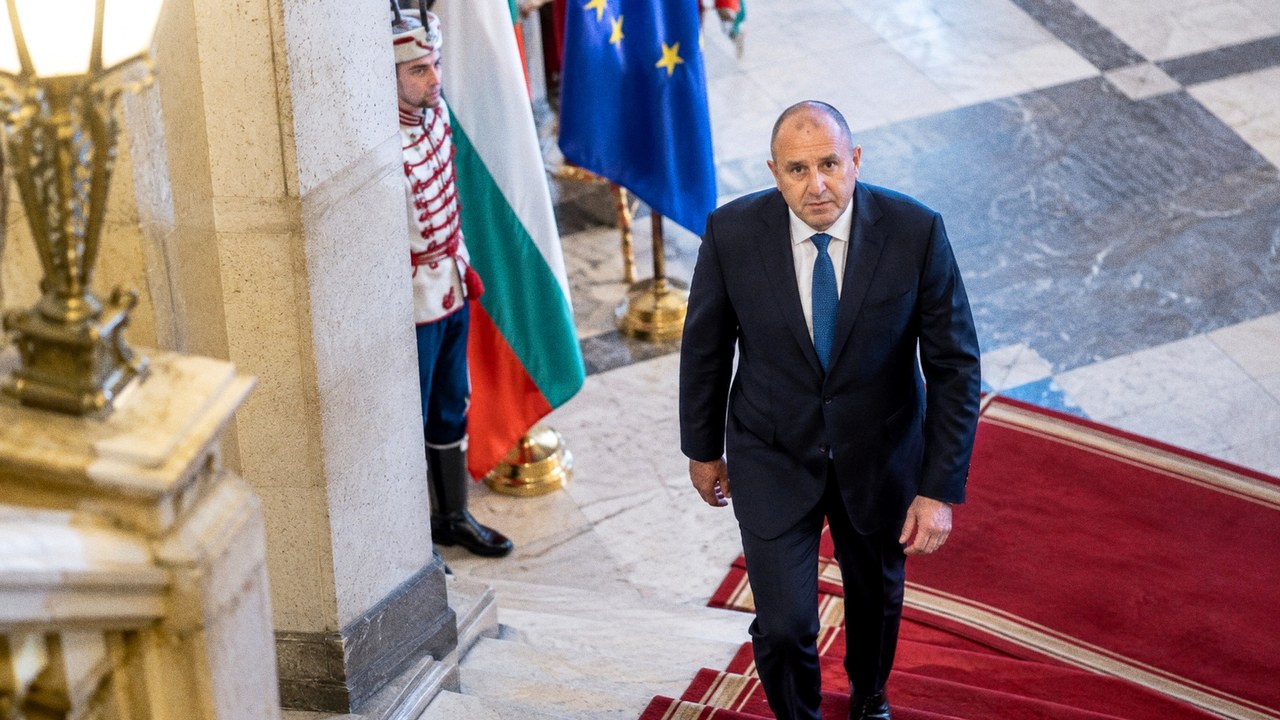
Bulgaria Plans Sweeping Overhaul of Security Services
Prime Minister Rumen Radev pushes deep intelligence changes, but legal hurdles and timeline gaps leave the plan unfinished.
The story continues
Bulgaria security chief cuts 30% of agency managers
21 September 2026Domestic intelligence service DANS eliminates administrative jobs to shift staff toward cyberdefense and field operations.Bulgaria intelligence chief defends reshuffle under lawmaker scrutiny
17 September 2026The domestic security service is reorganizing personnel to streamline counterintelligence workflows, rejecting claims of budget cuts.
In a nutshell
Bulgarian Prime Minister Rumen Radev has initiated a structural overhaul of the country's security apparatus following high-profile operational failures and inter-agency disputes between domestic intelligence and the police. The restructuring encompasses administrative mergers within the State Agency for National Security (DANS) and statutory reforms inside the Ministry of Interior (MVR). However, the initiative is not a finalized package: key elements depend on a contested legislative draft open for public comment through September 28, classified regulatory annexes, and interior ministry execution targets extending through mid-2028.
Highlights
- Government Decree No. 132 amended DANS operating regulations on September 8 alongside a classified secret annex.
- The draft DANS legislation remains under open public consultation through September 28 before any submission to parliament.
- The cabinet management programme schedules the removal of duplicate interior ministry units for June 2027.
- Mandatory managerial term limits and expanded integrity testing for police officials are targeted for June 2028.
From the Editor’s Diary
Announcing administrative consolidation can project momentum, but durable security reform depends on statutory parliamentary approval, institutional transparency, and resolving the operational rivalries that public restructuring decrees cannot erase.
Who's involved
Rumen Radev
Bulgaria’s prime minister steering the security-sector overhaul
goal → aims to build efficient, modern security bodies insulated from political factions and criminal syndicates
State Agency for National Security (DANS)
Bulgaria's domestic intelligence and counter-espionage service under the prime minister's cabinet
goal → seeks streamlined internal decision-making, structural autonomy, and expanded operational reach
Ministry of Interior (MVR)
Bulgaria’s central police, border-control, and public-order ministry
goal → must cut duplicate divisions, enforce staff integrity vetting, and improve operational coordination
Plamen Tonchev
Chairman of the State Agency for National Security (DANS)
goal → poised to gain personal control over directorate architecture while defending agency effectiveness
Ivan Demerdzhiev
Bulgaria’s interior minister
goal → tasked with executing the ministry's multi-year restructuring and overcoming systemic police coordination breakdowns
National Assembly
Bulgaria’s unicameral parliament holding statutory oversight of security bodies
goal → holds final authority to debate, amend, or reject the proposed DANS legislation
In short
TL;DR: Prime Minister Rumen Radev has committed Bulgaria to deep reforms across its domestic intelligence and interior services, but key changes face a multi-year timetable, pending legislation, and classified decree details.
Q: What changes are actually happening inside Bulgaria's security services?
- The State Agency for National Security (DANS) faces directorate consolidation under a draft law open for public consultation through September 28.
How it unfolded
Sofia sets multi-year timetable for police overhaul
Bulgaria's reform drive secured its formal foundation on August 12 when the Council of Ministers adopted its 2026-2030 government programme. While the plan made no mention of the sweeping counterintelligence restructuring that followed, it locked the Interior Ministry into firm operational and legislative commitments. The intelligence-specific bill appeared on the state consultation portal two weeks later, followed by Radev’s September 4 remarks in parliament acknowledging a "deep transformation" across the security apparatus. Those early milestones set the stage before online reports incorrectly recast the policy as an abrupt cabinet announcement. That initial timetable turned internal restructuring into an official government obligation.
Intelligence service drafts bid for structural autonomy
The reform drive escalated on August 27 when DANS unveiled draft legislation overhauling its governance, staffing, and statutory functions. By initiating a month-long public consultation, the agency sought consequential amendments across five additional national security laws. The core proposal transfers the authority to name, organize, and direct regional and specialized branches away from the prime minister's cabinet and directly into the hands of the DANS chairman. The bill also introduced contentious measures covering the handling of classified files, investigative surveillance grounds, and commercial passenger reservation records. The move made structural consolidation legally possible while concentrating administrative power inside the agency's executive leadership.
Flawed Sofia operation sparks inter-agency clash
Frictions within the security services broke into public view on September 1 when lawmakers demanded testimony from Interior Minister Ivan Demerdzhiev and DANS chief Plamen Tonchev. The dispute centered on a bungled joint operation targeting illegal GPS-jamming equipment in Sofia’s Dragalevtsi neighborhood, where officers failed to locate the transmitter. Demerdzhiev openly blamed DANS and telecommunications regulators for organizational missteps, insisting internal police reviews found no leaks from his force. The open discord highlighted the operational fault lines dividing the agencies, prompting Radev to announce in parliament that functional and structural overhauls were already underway. What had been a technical administrative package was now an urgent political response to an inter-agency failure.
Radev outlines consolidation as classified rules take effect
The reform gained legal traction on September 8 when Decree No. 132 took effect, altering DANS internal rules alongside classified provisions in a secret annex. Hours later, during a roadside press appearance in Plovdiv, Radev detailed plans to consolidate DANS directorates and regional branches to shorten command chains and modernize hardware. The prime minister hinted at ties between unspecified figures and suspicious groups, though he provided no names or corroborating evidence. State media and major networks reported his remarks from Plovdiv alongside his pledge of an upcoming joint press conference by security heads. The public remarks made structural consolidation the declared policy of the prime minister, even though no comprehensive public blueprint has been approved.
Where things stand
Bulgaria’s actual security reform remains far narrower and more fragmented than social media claims of a sweeping Sofia cabinet package suggest. While Prime Minister Radev has committed to consolidating counterintelligence directorates, the broader modernization program operates on disparate timelines across separate agencies. The interior ministry’s reorganization is staggered across multi-year milestones, with duplicate units facing elimination by June 2027 and executive term limits deferred until June 2028. In contrast, the statutory revisions governing DANS have not yet reached parliament, remaining open for public comment through September 28.
A degree of restructuring has already been formalized under Decree No. 132, but the classification of its operational annex leaves the real extent of the regional consolidation hidden from public view. Furthermore, the joint briefing promised by Radev alongside DANS Chairman Plamen Tonchev and Interior Minister Ivan Demerdzhiev has materialized on no official docket. The trajectory of the reform now hinges on whether the government submits the DANS draft bill to lawmakers after September 28, how parliament navigates the contentious intelligence powers within it, and whether the executive can resolve the inter-agency friction that exposed the system's vulnerabilities.