We checked this claim: is it true that
Bulgaria suffered the highest annual inflation rate in the euro area during September 2026?
Eurostat ranked Bulgaria second highest in the euro area at 5.6 percent behind Lithuania at 6.1 percent
Bulgaria inflation surge strains euro bid
Official EU data shows consumer price growth sped to 5.6 percent, ranking second across the currency union.
In a nutshell
Bulgaria's annual harmonised inflation accelerated to 5.6 percent in September 2026, placing the country second in the euro area behind Lithuania and complicating its effort to meet the price stability rules required for euro adoption.
Highlights
- Bulgaria's annual harmonised inflation rose to 5.6 percent in September from 5.0 percent in August.
- Eurostat data placed Bulgaria second in the euro area behind Lithuania's 6.1 percent rate.
- Across the wider European Union, Romania registered the highest annual inflation rate at 6.5 percent.
- The wider euro area recorded average annual inflation of 3.8 percent in September.
Annual inflation rates across European peers in September 2026
percentThe findingBulgaria's 5.6 percent rate sits well above the 3.8 percent euro-area baseline, trailing only Lithuania among single-currency economies and Romania across the EU.
- The chart compares annual inflation rates across selected European Union member states and the wider currency union for September 2026.
- Euro area — the group of European Union countries that have adopted the euro currency
- Meeting common price targets is essential for euro entry, making the spread between Bulgaria and the currency union a critical test for policymakers.
From the Editor’s Diary
Unverified claims often run ahead of official economic numbers, but hard comparative data reveals the true scale of policy hurdles.
Who's involved
Eurostat
the statistical office of the European Union
goal → delivering standardized cross-border economic data to measure compliance with euro rules
National Statistical Institute of Bulgaria (NSI)
Bulgaria's official state statistics agency
goal → tracking domestic price shifts and calculating European harmonised consumer indices
Lithuania
euro-area member state
goal → documenting the currency union's fastest price growth at 6.1 percent
Romania
European Union member state outside the euro area
goal → recording the highest annual inflation rate across the entire European Union at 6.5 percent
In short
Bulgaria faces a harder path toward adopting the common currency after its annual inflation jumped to 5.6 percent in September 2026, widening the gap with peers across the euro area. The acceleration makes it likely that Sofia will see heightened scrutiny over whether it meets the European Union price stability rules required to join the euro. Whether Bulgaria stays off track remains uncertain, because officials cannot yet tell if late-summer pressure on fuel and transport will persist into late autumn.
The price jump marks a setback for Sofia's preparations to enter the euro area, the group of European countries sharing the single currency. While wider euro-area annual inflation stood at 3.8 percent, Bulgarian prices accelerated from 5.0 percent in August, according to the Harmonised Index of Consumer Prices, an EU-wide metric that tracks consumer costs under identical rules across member states. The surge pushed Bulgaria to second place in the euro area behind Lithuania and third in the wider 27-nation EU behind Romania.
Online commentary initially claimed Bulgaria had suffered the fastest price increases in the entire euro area, but official comparative data showed that assumption was wrong. Although Bulgaria avoided the very top spot, the divergence between its national Consumer Price Index of 5.7 percent and the harmonised 5.6 percent rate leaves the country near the ceiling of European price tables as policymakers prepare for final-quarter assessments.
Flagged by: Global Markets Barometer · 17 October 2026
Previously in this story
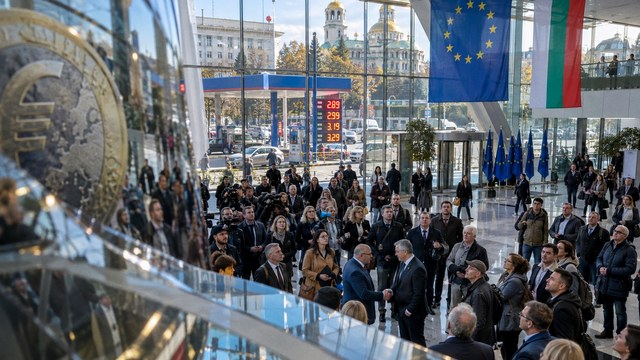
Bulgaria pushes annual inflation to 5.7%
15 October 2026Sharp fuel and transport increases raise living costs for households in their first year using the shared European currency.Bulgaria Sees Inflation Accelerate to 5.6% After Joining Euro
17 September 2026Consumer price growth reached an estimated 5.6% in September as transport and utility costs climbed, leaving Sofia among the euro area's highest inflation outliers.
How it unfolded
Bulgaria NSI reveals faster price growth
On October 14, 2026, Bulgaria's National Statistical Institute reported that domestic inflation accelerated in September, setting expectations for a difficult European comparison. The agency reported headline national consumer price index inflation at 5.7 percent and harmonised price growth at 5.6 percent, leaving markets waiting for European Union authorities to confirm where Sofia stood relative to its peers.
Eurostat confirms Bulgaria near top of European inflation tables
On October 16, 2026, the European Union's statistical agency Eurostat released its comprehensive euro-indicators report, confirming that wider euro-area inflation reached 3.8 percent while Bulgaria climbed near the top of the bloc. The official release dispelled rumors that Bulgaria led the euro zone, placing Sofia's 5.6 percent rate second behind Lithuania at 6.1 percent and third in the wider European Union behind non-euro member Romania at 6.5 percent.
Where things stand
Official Eurostat figures confirm Bulgaria's harmonised inflation reached 5.6 percent in September 2026, establishing the country as the second highest in the euro area and third in the broader European Union. The readings have seen no revisions since their October 16 release.
Economists and government officials are now waiting for mid-November flash estimates for October to see whether rising transport costs and autumn energy tariffs keep Bulgarian inflation running above the euro-area baseline.