Black Sea Attacks Leave Drifting Hazards
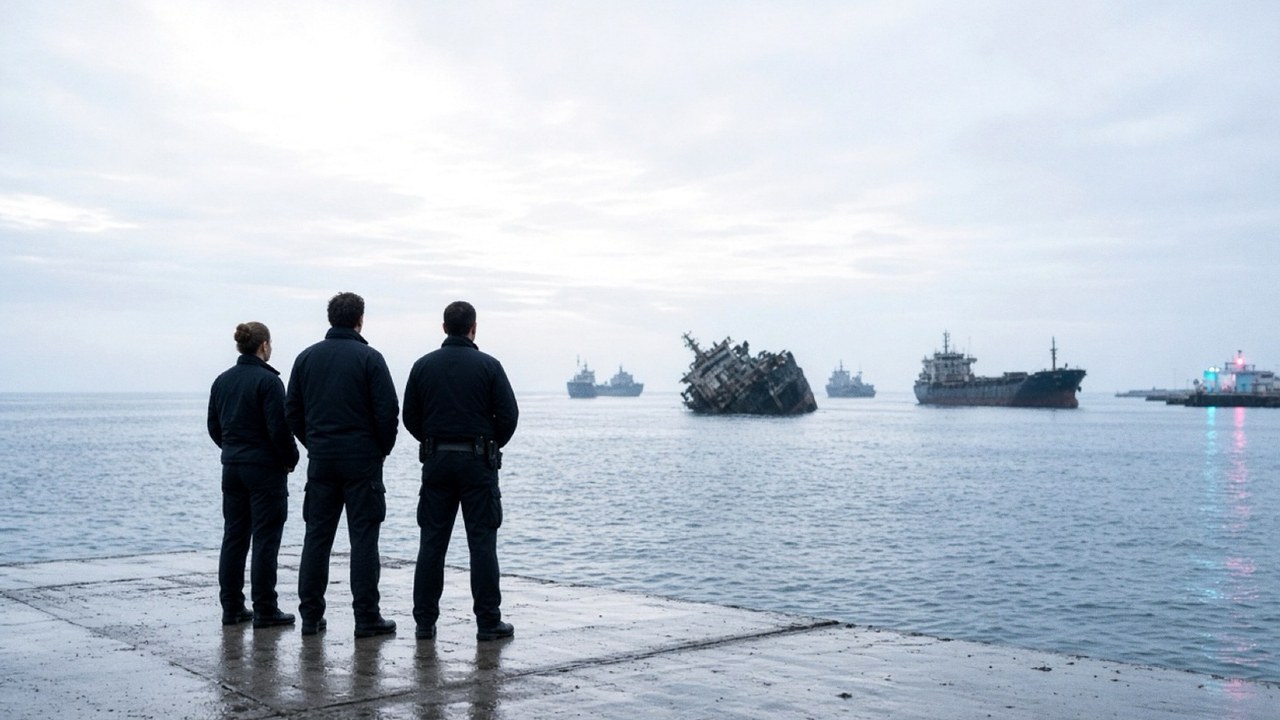
Stricken commercial ships now drift and capsize across busy western shipping lanes.
In a nutshell
Repeated strikes on merchant shipping in the western Black Sea have created a moving belt of navigation hazards along the coasts of Romania and Bulgaria. Stricken vessels like KHORYV have overturned and drifted rather than sunk to the seabed, forcing maritime authorities to update emergency exclusion zones daily. Coastal water tests remain clear, but missing fuel inventories leave offshore pollution risks unverified.
Highlights
- Official warnings confirm that the attacked carrier KHORYV remains capsized and afloat, drifting across shipping corridors.
- Bulgarian laboratory tests from coastal seawater found no petroleum products exceeding legal environmental limits.
- Salvage crews successfully towed the damaged freighter CHELSEA-3 into port, recovering drone fragments for testing.
- Navigational notice ARN 152/2026 ordered ships to keep two nautical miles away from an unidentified drifting object.
From the Editor’s Diary
A military strike at sea does not end when the smoke clears. Until navies locate, secure, or sink damaged hulls, the wreckage itself becomes an unguided threat to neutral maritime trade.
Who's involved
Romanian Naval Authority and Maritime Hydrographic Directorate
Romania's maritime safety agency that coordinates rescues and publishes navigational warnings
goal → Keep sea lanes safe and steer commercial vessels away from drifting wrecks
Bulgarian Maritime Administration and Ministry of Transport
The Bulgarian government agency overseeing port safety and maritime salvage
goal → Protect coastal waters, rescue endangered crews, and tow disabled ships into port
Bulgarian Ministry of Environment and Water
Bulgaria's environmental oversight body and testing laboratory network
goal → Check coastal waters for fuel leaks and verify if shorelines are safe
Operators of the attacking drones
The military forces launching strikes against commercial vessels
goal → Conduct drone operations across the shipping corridor
Merchant-ship owners, operators and crews
Commercial shipping firms and seafarers moving cargo through the Black Sea
goal → Deliver goods safely while protecting lives and ships from attack
Romanian, Bulgarian and Turkish navies
Three NATO allied navies running joint mine-clearing patrols
goal → Locate and clear drifting mines and other navigation hazards
Ukraine
The neighboring nation relying on Danube river ports for international grain trade
goal → Maintain commercial trade routes and document attacks on shipping
Ambrey
A private maritime security firm that tracks risks to commercial vessels
goal → Alert ship captains to unexploded weapons and secondary blast dangers
In short
Merchant ships damaged by recent drone attacks are turning the western Black Sea into an obstacle course of capsized hulls and drifting wreckage. When an attack damages a vessel, the danger does not stop at the impact. Abandoned freighters drift across busy commercial lanes, while overturned ships float just below the surface where radar can miss them.
The most likely next step is an increase in formal exclusion zones and rerouted shipping along the Romanian and Bulgarian coasts.
Whether commercial traffic slows significantly remains uncertain until navies can locate, secure, or sink the drifting hazards. Official alerts have already forced vessels to keep miles away from moving wreckage. Coastal water tests have so far shown no chemical pollution, but the amount of fuel trapped in damaged tanks offshore remains unverified.
How it unfolded
A burning freighter triggers a rescue emergency off Romania
The crisis began when the cargo ship ROYAD MAMMADOV caught fire near Romania's offshore platforms. Rescuers evacuated 11 crew members, but two died. Initial alerts did not name the attacker or weapon, but the burning freighter became the first in a line of damaged ships that turned a busy waterway into a hazard zone.
From isolated emergencies to wrecks and water testing
The strikes quickly spread south. A day after the first blaze, attacks hit two more freighters off Bulgaria. ALFA WATAN sank, while the burning ABLE lost its crew to rescue boats. Bulgarian environmental inspectors tested coastal waters for oil slicks, finding normal readings near shore. Allied navies activated mine patrols, but the strike sites far out at sea remained untested.
New wrecks, moving hazards and a gap in the measurements
A second round of attacks multiplied the hazards. CHELSEA-3 was crippled, and HS DIGNITY sank, leaving 11 sailors missing after rough seas halted search efforts. Meanwhile, the abandoned ABLE, laden with barley, drifted unguided across maritime boundaries. Official warnings marked danger zones around each vessel, but authorities lacked data on how much fuel remained inside sunken hulls.
Fires near Sulina and the race to secure a drifting ship
The threat closed in on the Danube entrance. An explosion struck YARA J near the Romanian port of Sulina, followed hours later by a fire on WINE TRADER. Both vessels were empty of commercial cargo, though residual fuel remained an open question. Southward, Bulgarian tugs fought rough weather to catch CHELSEA-3, successfully towing the damaged vessel into Burgas before it ran aground.
One vessel disappears and investigators examine the fragments
Safely docking CHELSEA-3 allowed investigators to inspect damage holes and collect drone fragments. The abandoned ABLE met a different fate, vanishing from tracking screens near Türkiye and likely sinking without a formal seabed survey. In Bucharest, Romanian leaders referred the maritime strikes to the national security council, treating drifting hazards and drone wreckage as an enduring defense problem.
The capsized ship that had not actually disappeared beneath the sea
The ore-and-oil carrier KHORYV was hit near Constanța on October 23, leaving one dead and three missing. Though early reports claimed it sank, official notices showed the hull overturned and drifting southwest. Romania mandated a one-mile buffer around the hull and tracked an unidentified drifting object nearby. While military patrol flights monitored the corridor, claims of oil slicks near KHORYV remained unverified.
We checked again
No new developments at this moment.
A check of Romanian hydrographic warnings, Maritime.bg's October 25 report and October 26 maritime coverage found no new wreck position, salvage operation, pollution measurement, confirmed recovery or mine-disposal outcome after October 25; official warning ARN 155/2026 still identifies Khoryv as capsized and afloat, with a one-nautical-mile exclusion recommendation, while the reported pollution near Costinești remains independently unverified (https://www.dhmfn.ro/en/public-information/radio-na
Where things stand
The immediate threat in the western Black Sea is physical navigation: capsized hulls and unidentified floating objects are active, moving hazards across commercial lanes. Official Romanian warnings continue to track KHORYV as a drifting, overturned hull requiring a wide berth.
Environmental risks remain largely unknown rather than confirmed. Coastal tests by Bulgaria show no illegal contamination, and authorities have not ordered beach closures or fishing bans. However, missing fuel tallies, unverified tank integrity, and the absence of offshore water tests leave open the question of whether sunken ships are leaking far from shore.
Black Sea ship strikes off Romania and Bulgaria
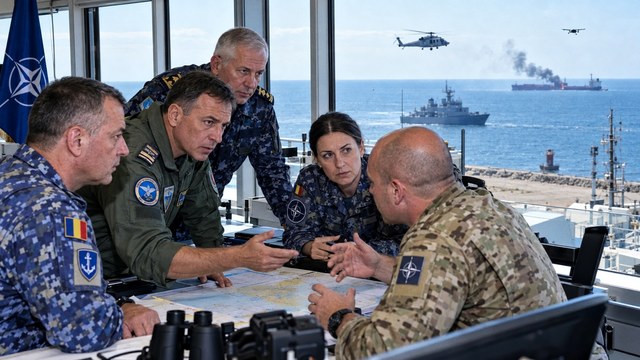
NATO adds Black Sea patrols after deadly ship strike
25 October 2026The Western military alliance sends planes and radar after commercial vessels face strikes and stray drones reach Baltic soil.Bulgaria stalls Black Sea security hub launch
25 October 2026Commercial shipping faces ongoing sea drone risks while a planned coastal monitoring base remains trapped in planningEuropean Parliament rebukes Bulgaria in 432-52 vote
24 October 2026Lawmakers censured Sofia over delayed Black Sea defenses as drone strikes on commercial ships spread.Russian strike sinks merchant ship off Romania
24 October 2026A drone attack claims a civilian life and disrupts western Black Sea trade routes.Bulgarian Navy clears over 100 Black Sea drones
23 October 2026Explosive remnants drifting south from Ukraine force round-the-clock naval sweeps to protect commercial shipping corridors.US Navy resumes Black Sea air patrols
20 October 2026A maritime surveillance aircraft flew low off Bulgaria following strikes on commercial vessels.Romania shoots down two Black Sea drones
18 October 2026Romanian fighter jets destroyed two incoming drones over sovereign waters on Saturday after Bucharest warned allies of mounting risks to commercial shipping.Bulgaria probes drone strike on ship
18 October 2026Military prosecutors open a war-crimes inquiry into an attack on the cargo vessel Chelsea 3 in the Black SeaBulgaria seeks NATO shield after sea strikes
16 October 2026Sofia will seek entry to the Western alliance's counter-drone project by October 30 after attacks sank a merchant ship.Drones sink cargo ship off Bulgaria leaving 11 missing
16 October 2026Attacks on two merchant vessels in Bulgarian waters draw NATO into Black Sea crisisBulgaria rallies Black Sea allies against drone strikes
14 October 2026Defence chiefs from Sofia, Bucharest and Ankara unite to demand an immediate halt to attacks threatening commercial shipping lanes.
Bulgaria splinters over response after drone strikes sink ship
9 October 2026Drone attacks sank one cargo vessel and damaged another off Bulgaria, leaving 12 crew missing and political leaders divided over who to blame.Russia targets Black Sea grain corridor
21 September 2026Moscow fires 174 drones in barrage claiming hits on commercial shippingRussian strike kills ship captain in Black Sea
18 September 2026A drone hit on a Tanzanian-flagged vessel risks raising shipping insurance costs along Ukraine's export corridor.